The debate around the U.S. 340B prescription drug discount program is once again heating up in court and in Congress. A day after the American Hospital Association called on the FTC and Department of Justice to investigate alleged antitrust issues with the rebate models a few drug companies have proposed, some members of Congress raised concerns Sept. 9 about how providers are abusing the program. Meanwhile, a U.S. appellate court heard arguments that same day on whether states can speak in the silence of the federal law that created the program more than 30 years ago.
The U.S. FDA issued new guidance for the development of non-opioid analgesics for chronic pain indications, with specific details on trial design, patient populations and meaningful outcomes, including reducing the nation’s reliance on opioids.
It took a memo from the president for the U.S. FDA to begin reining in direct-to-consumer prescription drug advertising with its feel-good messaging and hurried recitation of a few serious adverse events.
Less than two months after receiving priority review status for an NDA, Johnson & Johnson won U.S. FDA approval of Inlexzo, its intravesical gemcitabine-releasing system previously known as TAR-200, to treat adults with Bacillus Calmette-Guérin-unresponsive, non-muscle invasive bladder cancer (NMIBC) with carcinoma in situ, with or without papillary tumors.
Speaking at a Sept. 9 media briefing on the newly released Make America Healthy Again Strategy, U.S. Health and Human Services Secretary Robert Kennedy confirmed what could be the worst fears of many vaccine experts.
The U.S. FDA issued a complete response letter (CRL) for the NDA to privately held Saol Therapeutics Inc.’s rare disease treatment, sodium dichloroacetate (SL-1009), for pyruvate dehydrogenase complex deficiency. The inhibitor of pyruvate dehydrogenase kinases is the only drug in development for treating the rare genetic disorder, according to Cortellis. There are no FDA-approved treatments for the disease.
The U.S. Federal Trade Commission has opened a docket for comment on noncompete employment contracts, a move which suggests that the agency may revert to evaluating these practices on a case-by-case basis rather than by issuing sweeping rules.
After July’s first-ever release of more than 200 complete response letters (CRLs) by the U.S. FDA, the agency now says it will release letters shortly after sponsors receive them. In addition, the FDA released a new batch of 89 CRLs from 2024 to now that are tied to pending or withdrawn applications.
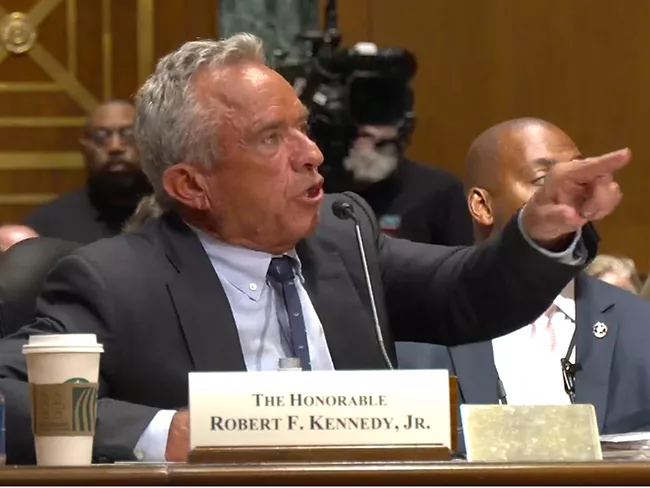
Sparks flew both ways Sept. 4 as Democratic senators pushed for Robert Kennedy to resign as secretary of the U.S. Department of Health and Human Services (HHS) during a Senate Finance Committee hearing ostensibly held to discuss the Trump administration’s 2026 health care agenda. But with Kennedy the only witness, the hearing focused on Kennedy’s perceived failings as HHS secretary. “The United States is in the midst of a health care calamity,” Ranking Member Ron Wyden, D-Ore., said in his opening comments, which were laden with personal attacks.

 RSS
RSS