With increasing competition from China and other countries, the U.S. Department of Health and Human Services is rolling out Operation Trailblazer, a department-wide strategy to once again make the U.S. the go-to destination for early stage drug development.
China’s National Medical Products Administration approved Carsgen Therapeutics Holdings Ltd.’s NDA for satricabtagene autoleucel (satri-cel, CT-041), marking the first global approval of a CAR T therapy for solid tumors. The autologous Claudin18.2-targeted CAR T was approved for patients with Claudin18.2-positive, HER2-negative advanced gastric/gastroesophageal junction adenocarcinoma who have failed at least two prior lines of therapy.
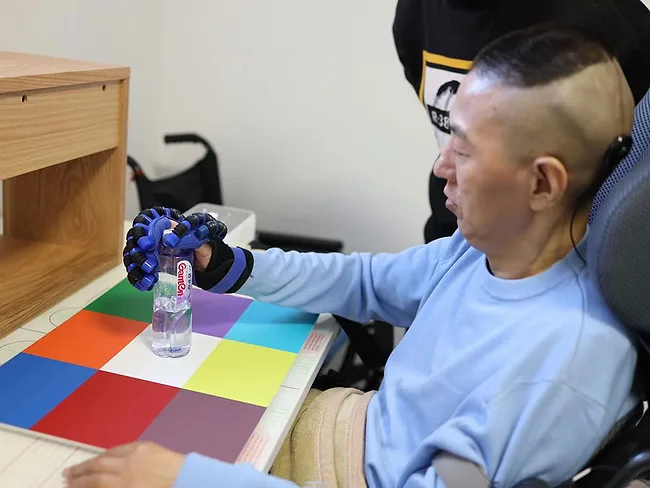
Decades of research are helping unravel the “black box” of the brain. The second article in BioWorld’s series on the Brain-Computer Interface (BCI) field looks at how simultaneous breakthroughs in AI technology are pushing the BCI field from a theoretical concept to a potential real-world, clinical option for individuals, particularly in China where the National Medical Products Administration greenlighted the world’s first invasive BCI system – Neuracle Medical Technology Co. Ltd.’s Neural Electronic Opportunity – for clinical use in March 2026.
Although shot down last year by the U.S. Court of Appeals for the Ninth Circuit, a constitutional challenge to a state law requiring biopharma companies to disclose trade secrets could live to see another court battle.
Four years after the U.S. FDA issued a complete response letter for Spero Therapeutics Inc.’s oral antibiotic, tebipenem pivoxil hydrobromide, to treat complicated urinary tract infections (cUTI), including pyelonephritis, the agency approved the drug based on phase III data showing noninferiority to intravenous imipenem-cilastatin.
The U.S. FDA’s Vaccines and Related Biological Products Advisory Committee voted unanimously in favor of Moderna Inc.’s trivalent mRNA flu vaccine, mRNA-1010, which the company wants to brand as Mflusiva. On the question of whether the benefits of the product outweigh the risks in people ages 50 to 64, balloting was 9-0, and on whether the same is true in those 65 and older, the tally was again 9-0.
In a little more than a month, 17 big biopharma companies will be subject to U.S. President Donald Trump’s long-promised section 232 global biopharma sector tariff. But instead of paying the 100% duty on imported patented drugs and their key ingredients, most of those companies, if not all, will pay much reduced rates or no tariff at all, based on where the imports are coming from, what type of drug is being imported, and whether the companies have signed onshoring and most-favored-nation pricing agreements with the administration.
Another day, another about-face by the U.S. FDA on Uniqure NV’s Huntington’s disease gene therapy. But this latest shift brings good news for the company’s AMT-130, for which the FDA says three-year analysis data from the phase I/II study will be acceptable for an accelerated BLA filing, now expected to be submitted in the third quarter.
On the eve of the June 17 Vaccines and Related Biological Products Advisory Committee (VRBPAC) meeting, which will discuss Moderna Inc.’s mRNA-1010, researchers at Washington University School of Medicine in St. Louis have reported that the vaccine conferred broader and more durable protection than a standard flu shot.
The EMA’s 2025 annual report highlights the pressure it is under to streamline and simplify assessment processes, and the expanded – and explicit – role the agency now has in boosting the competitive position of the EU in the development and manufacturing of drugs.
 RSS
RSS