Nearing the end of 2023, South Korea’s National Assembly approved hiked-up budgets for three of its major health care agencies. Its health policy think tank also forecast an uptick in industry exports in 2024.
Natera Inc., said it has won a preliminary injunction against Neogenomics Inc., which halts any distribution of the latter’s RaDaR (Residual Disease and Recurrence) assay for detection of residual cancer DNA. The matter is anything but closed, and Neogenomics stated that it will appeal the decision, suggesting that this dispute will roll into and play out through much of 2024.
Regulation of medical devices is always a messy and complicated task, but that has proven to be particularly true of the European Union’s (EU) Medical Device Regulation (MDR). Thanks largely to problems with the capacity of notified bodies (NBs) to review renewals of existing CE marks, patients in the EU may experience a significant dearth of medical devices over the next couple of years, a nightmare scenario that has all stakeholders scrambling for solutions.
As calendar year 2023 limps to the finish line, a number of important regulatory developments emerged and then submerged, but one development that is also a non-development took center stage in the world of med tech. The U.S. FDA has proposed a regulation for lab-developed tests (LDTs), an issue that has been simmering for the better part of a decade thanks in no small part to Congress’ failure to pass legislation that would eliminate the FDA’s controversial approach to rulemaking.
In the latest salvo of the ongoing battle between Apple Inc. and Masimo Corp. over the use of a blood oxygen technology, a U.S. federal appeals court paused an International Trade Commission (ITC) ban on Apple’s watches. Apple reported on Dec. 19 that it would pull the Apple Watch Ultra 2 and Apple Watch Series 9 from its website on Dec. 21 and from its retail locations after Dec. 24, in response to an exclusion order issued by the ITC in October.
Regulatory snapshots, including global submissions and approvals, clinical trial approvals and other regulatory decisions and designations: Coherus, Cvrx, Sofwave Medical.
With the clock ticking down on 2023, the U.S. FDA seems to be scurrying to push final guidances out the door before the new year. This week, the agency has finalized several guidances, ranging from the use of digital health technology in clinical trials to the use of real-world data (RWD) in drug development.
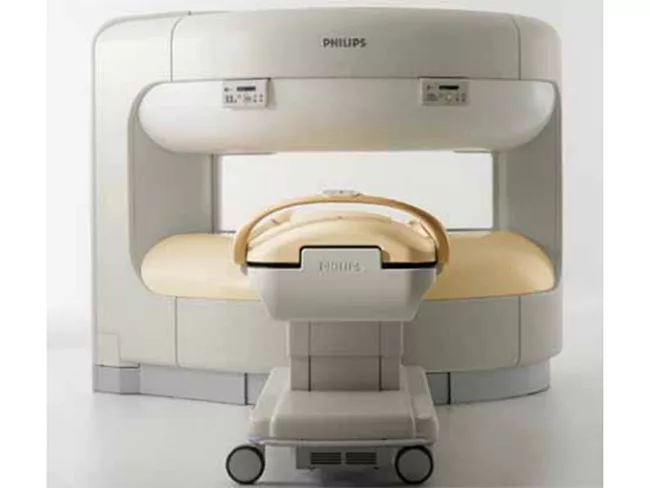
More bad news on the recall front for Royal Philips NV, as the U.S. FDA this week categorized the company’s voluntary recall of its Panorama 1.0T HFO open magnetic resonance (MR) system as a class I action. Class I recalls indicate the “use of the devices may cause serious injuries or death,” the FDA noted.
Glaukos Corp. brought home a nice year-end gift for investors with a broad U.S. FDA approval for the Idose TR. Indicated for use in patients with primary open-angle glaucoma or ocular hypertension across the full range of disease severity, the device/drug combo provides continuous release of a prostaglandin analog that reduces intraocular pressure via a titanium device implanted through a corneal incision for up to three years.

 RSS
RSS