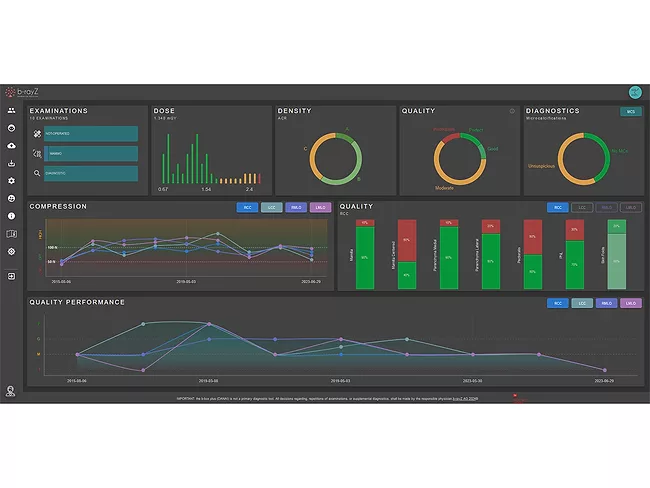
B-rayz AG received CE mark for its Data Adaptive Neural Artificial Intelligence (DANAI) technology that helps clinicians with breast cancer detection. The company hopes that DANAI, which introduces a custom AI-based framework that can adapt to clinicians needs and grow smarter in the process, will revolutionize the diagnostic landscape for breast imaging and transform the lives of millions of women.
Is it an unconstitutional taking when U.S. FDA reviewers disclose a brand company’s claimed trade secrets or confidential commercial information to would-be competitors? That’s a question the U.S. Court of Federal Claims has yet to answer. While the court dismissed some of Vanda Pharmaceuticals Inc.’s claims against the FDA, its Jan. 18 opinion left open the debate of whether such disclosures, intentional or inadvertent, are a per se or regulatory taking.
The U.S. Congress has passed a continuing resolution (CR) for the fiscal 2024 budget, an exercise that has become all too common as a substitute for a full suite of spending bills in an era of growing deficits.
One of the more significant enforcement actions to date in 2024 is the $13 million hit taken by the owner of a clinical lab in New Jersey for allegations of payment of kickbacks for unnecessary testing, suggesting that this new year will be a robust one for federal fraud enforcement in the U.S.
In a boon to older women worldwide, Bone Health Technologies Inc. received U.S. FDA clearance for its Osteoboost device, which reduces loss of bone strength in postmenopausal women. It is the first device cleared for intervention to slow loss of bone density or osteopenia before it advances to osteoporosis.
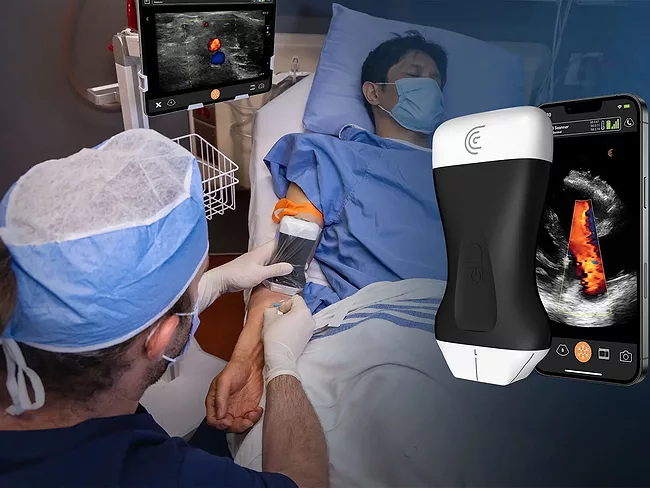
Clarius Mobile Health Inc. received CE mark for its latest wireless hand-held whole-body ultrasound scanner, the Clarius PAL HD3. The scanner combines both phased and linear arrays on a single head which provides high image quality of superficial and deep anatomy allowing for better diagnostic capabilities and patient care.
The question of the U.S. FDA’s statutory authority to regulate lab-developed tests (LDTs) is still percolating, and the FDA and the Centers for Medicare & Medicaid Services (CMS) have issued a joint statement that takes aim at that very question.
The U.S. FDA issued a complete response letter to Shin Nippon Biomedical Laboratories Ltd.’s U.S. subsidiary, Satsuma Pharmaceuticals Inc., for its NDA for dihydroergotamine nasal powder (STS-101) for acute treatment of migraine, with or without aura, in adults. Shin Nippon acquired Satsuma for $220 million in April 2023 and gained rights to STS-101.
Sometimes a small change of wording has a big effect on the implications of a U.S. FDA guidance, a notion that may apply to the U.S. FDA’s final guidance for the use of computational modeling in device premarket submissions.
U.S. physicians who provide radiation services for cancer patients have a long-running feud with the Centers for Medicare & Medicaid Services over a series of payment rate cuts for their services, but these medical societies are now teaming up to address the issue. These medical societies are making the case that payment reform is not only critical for the future of radiation oncology but are also optimistic that congressional interest in the dilemma has quickened sufficiently to suggest that a congressional response may be on tap in 2024.
 RSS
RSS