With key officials yet to be confirmed at the U.S. Department of Health and Human Services, the acting secretary imposed an immediate pause throughout the department on publicly issuing any document or communication without first getting it approved by a presidential appointee.
The backlog of requests for Medicare national coverage analyses is a matter of record, but a new analysis highlights how deep that backlog runs. CMS declared it will review a petition from Impulse Dynamics to consider coverage of cardiac contractility modulation, responding to a request the company filed more than two and a half years ago.
Roche AG secured U.S. FDA 510(k) clearance for its cobas liat sexually transmitted infection (STI) multiplex assay panels. The tests, which also received a Clinical Laboratory Improvement Amendments waiver, will enable clinicians to detect several STIs including chlamydia, gonorrhea and Mycoplasma genitalium, in as little as 20 minutes.
Ravgen Inc. prevailed in a hearing at the Federal Circuit over Labcorp Inc., seemingly bringing a close to a long-running dispute over patents for non-invasive prenatal tests. Ravgen has won damages that will likely exceed $400 million over alleged infringement of its patents for these tests, proof once again that a solid understanding of prior art is essential to avoid costly litigation.
Device makers know all too well the hazards of liability where their products are concerned, but those liabilities may soon balloon dramatically in the EU. Two pieces of EU legislation are in development, including the AI Liability Directive, which may have the effect of forcing the defendant in a liability case to prove that its product was not the cause of the alleged harm.
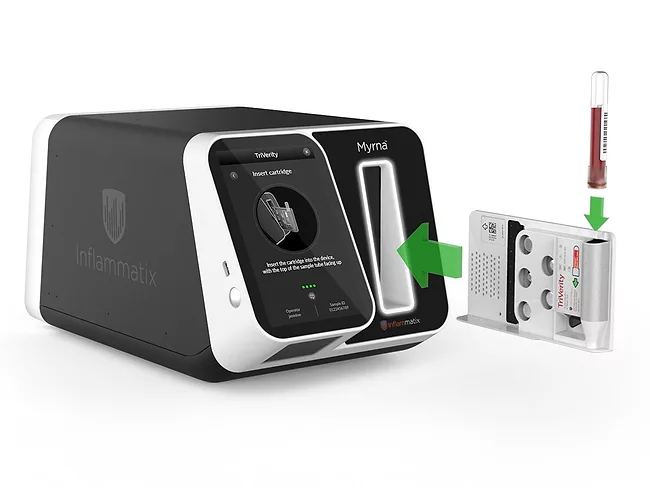
Just a few weeks later than expected, Inflammatix Inc. secured U.S. FDA clearance of the Triverity test system for use in emergency triage of patients with suspected acute infection or sepsis. The molecular blood test is the first to identify bacterial and viral infections and provide an all-cause risk evaluation of the likelihood of developing severe illness.
The European Union has implemented legislation governing artificial intelligence (AI) with more on tap, but the U.S. has to date lagged in that area. However, the House of Representatives has assembled a bipartisan task force for AI, one of several developments suggesting that 2025 will be an even more AI-focused year than 2024.
Regulatory approval for medical products can rely on real-world data (RWD) typically only for expanded indications for use, but payers have been missing in action where this data source is concerned. The U.S. CMS has floated a guidance to facilitate the use of RWD in coverage decisions, providing a long-overdue update to Medicare clinical trial policy.
China is deepening its regulatory reforms of drugs and devices to foster a globally competitive innovation ecosystem to transform China from a major pharmaceutical manufacturer into a global pharmaceutical powerhouse.
The Medicare coverage story of the Cardiomems device has a Homeric air about it, spanning nearly a decade starting with an adverse local coverage determination in 2016. Abbott Park, Ill.-based Abbott Laboratories finally brought the story full circle with a successful national coverage determination that gives the device nationwide coverage for Medicare patients without the need to wrangle with Medicare administrative contractors.
 RSS
RSS