The Senate passed by a vote of 96-1 the spending bill for the outbreak of the new coronavirus (COVID-19), which will be on President Donald Trump’s desk by week’s end. The bill provides $7.8 billion in new funds to tackle the outbreak and another $490 million in existing funds for telehealth, all with the aim of speeding the response to the pathogen.
The March 4 congressional hearing on the budget for the NIH was peppered with questions about the COVID-19 outbreak, although the general sentiment is that the agency will receive yet another boost in appropriations in fiscal 2021.
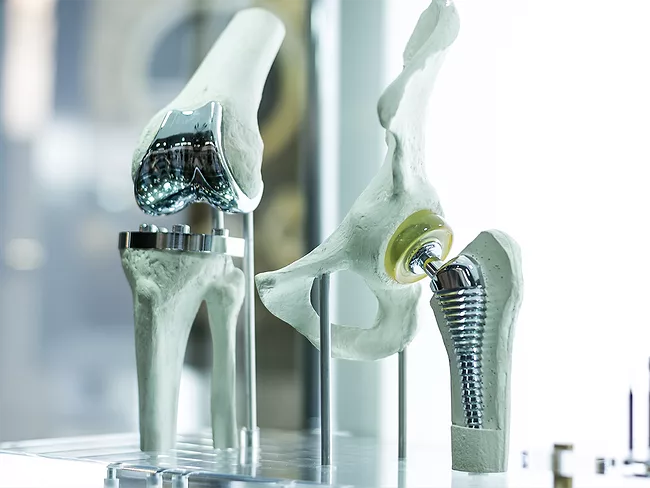
The U.S. Centers for Medicare and Medicaid Services (CMS) announced it may tack on another three years to the Comprehensive Care for Joint Replacement (CJR) program, proposing among other things to drop the 50% cap on gainsharing payments. Analysts with Cowen Washington Research Group, of New York, said post-acute care providers are at greater risk than device makers with the extension, however, due to the fact that hospitals have several choices in terms of discharge destination, including the patient’s home.
The 2.3% medical device tax is a thing of the past, and now Medicare coverage is one of the issues that is front and center for the Medical Device Manufacturers Association. MDMA President and CEO Mark Leahey told BioWorld also that while member companies are keen on regulatory harmonization, the struggles in standing up the new European regulatory framework is a far more pressing concern.
Medicare coverage of ventricular assist devices assumes the patient is either in end-stage heart failure or could become a candidate for transplant, but that approach may soon change. Abbott Laboratories, of Abbott Park, Ill., has asked that Medicare coverage assume the patient can recover myocardial function, a paradigm shift that is backed by clinical evidence.
Syncardia Systems LLC, of Tucson, Ariz., has petitioned the Centers for Medicare and Medicaid Services (CMS) to drop the coverage with evidence development (CED) mandate for artificial hearts, stating that multiple studies have demonstrated that artificial hearts meet the reasonable and necessary standard. Syncardia said its temporary Total Artificial Heart (TAH-t) should thus be available “unencumbered by the existing requirement for evidence development,” a change that could modestly bolster utilization and sales of these devices.
The U.S. Centers for Medicare and Medicaid Services (CMS) has significantly relaxed the national restrictions on coverage of next-generation sequencing for cancer, affirming that early-stage breast and ovarian cancer patients will be covered. However, Medicare administrative contractors can cover tests that have not been reviewed by the FDA, a move that should also significantly boost utilization for makers of next-generation sequencing systems in clinical labs.
Jenavalve Technology Inc., of Irvine, Calif., has won an FDA breakthrough device designation for its namesake transcatheter aortic valve replacement device, but Jenavalve said it will file for a humanitarian device exemption in the second half of 2020, suggesting that the device won’t be commercially available for at least another year.
The draft rules for the Stark and Anti-Kickback statutes (AKS) seem to have excluded makers of devices, but Meena Datta of Sidley Austin told BioWorld MedTech that while these agencies have plenty of reasons to rethink that notion, the final rules are unlikely to emerge in 2020 simply because of the complexity of the undertaking. While the final rules may reverse the drafts’ exclusion of makers of devices and diagnostics, device makers were upbeat at the prospect that they could engage in value-based payment arrangements with providers.
The exclusion of makers of devices and drugs from a proposed overhaul of the Anti-Kickback Statute (AKS) probably took many in industry by surprise, but Premier Inc., of Charlotte, N.C., argued that this approach fails to capitalize on an opportunity to hold manufacturers accountable for clinical outcomes in value-based arrangements.
 RSS
RSS