Patient perspectives on medical device development are becoming much more central to the U.S. FDA’s regulation of devices, thus the August 2020 draft guidance for selection of patient-reported outcome (PRO) instruments for device evaluation. However, the draft is sufficiently vague on the question of when an existing PRO can be tweaked without an entirely new validation study to prompt the Advanced Medical Technology Association (Advamed) to press the agency for more clarity on that point.
PERTH, Australia – With the approval of cystic fibrosis treatment Bronchitol (mannitol), Sydney-based Pharmaxis Ltd. joins a small group of elite Australian biotech companies to take their drugs all the way to FDA approval.
Shares of Tricida Inc. (NASDAQ:TCDA) fell 47.2% to $4.37 on Oct. 29 after the company said the FDA would require data on how veverimer, its investigational therapy for metabolic acidosis in patients with chronic kidney disease (CKD), impacts CKD progression to support an accelerated approval. The news followed a complete response letter that met the NDA in August.
The PMA for the Neovasc Reducer device for treatment of drug-refractory angina faltered at an Oct. 27 U.S. FDA advisory committee, but it wasn’t for lack of support from star-power cardiologists. Gregg Stone, of the Cardiovascular Research Foundation, gave an impassioned plea for approval, pointing out that these patients have few options if they are poor candidates for bypass grafting or percutaneous coronary intervention. Stone said, “this is really a desperate patient cohort,” adding that a two-class improvement in angina severity “is a robust reduction.”
The latest global regulatory news, changes and updates affecting medical devices and technologies, including: Advisory hearing gives Neovasc Reducer poor marks for efficacy; CMS eyes expanded DME coverage of CGMs; APEC launches Vision 2025 for business ethics; Innovation Alliance voices support for Iancu, PTAB changes.
The past two device user fee schedules have essentially doubled the volumes collected in the prior fee agreements, a pace that some in industry have described as unsustainable. That issue was front and center again in the first public meeting for the next user fee agreement, with FDA commissioner Stephen Hahn saying the agency’s device center needs more money, and industry representatives arguing that the bulk of the device center’s funding must be obtained through congressional appropriations, not from industry-funded user fees.
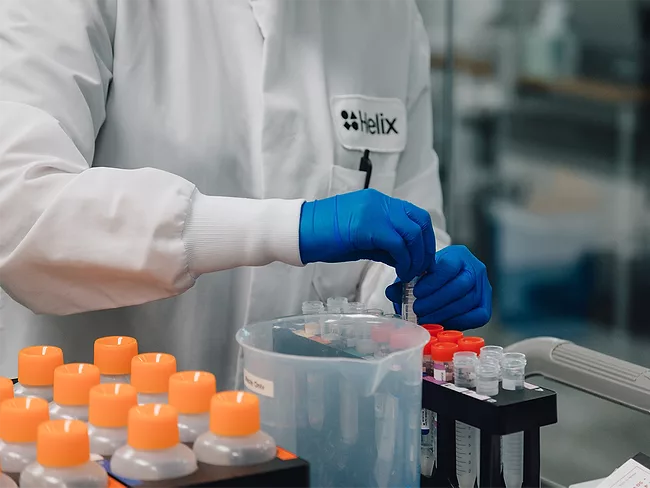
The U.S. FDA moved the goal posts for other companies with its expansion of the emergency use authorization for Helix Opco LLC’s COVID-19 test to include both unsupervised self-collection of samples and testing of asymptomatic individuals. The new indications promise to make the Helix test the preferred tool for schools, universities, and work settings by reducing costs and increasing flexibility.
Virtual Incision Corp. revealed that it had received a green light from the U.S. FDA to begin its study of its miniaturized in vivo robotic assistant (MIRA) Platform. Initially, the company will focus the platform on minimally invasive laparoscopic colon surgery. With the MIRA Platform, the company will aim to enter a growing market in the U.S., where more than 400,000 colon resection procedures are performed each year.
The latest global regulatory news, changes and updates affecting medical devices and technologies, including: HHS provides details of Binax test distribution.
Kala Pharmaceuticals Inc.’s anticipated win with Eysuvis (loteprednol etabonate ophthalmic suspension) 0.25% for the short-term (up to two weeks) treatment of the signs and symptoms of dry eye disease (DED) didn’t help shares (NASDAQ:KALA), which closed Oct. 27 at $6.28, down $1.44, or 18.7%, on word of the FDA approval.

 RSS
RSS