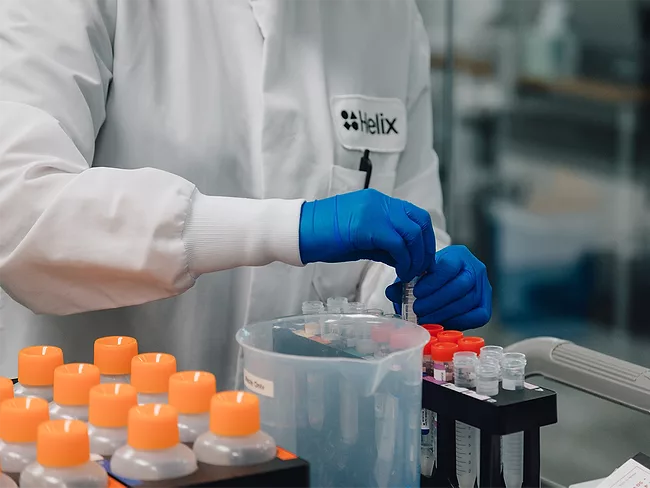
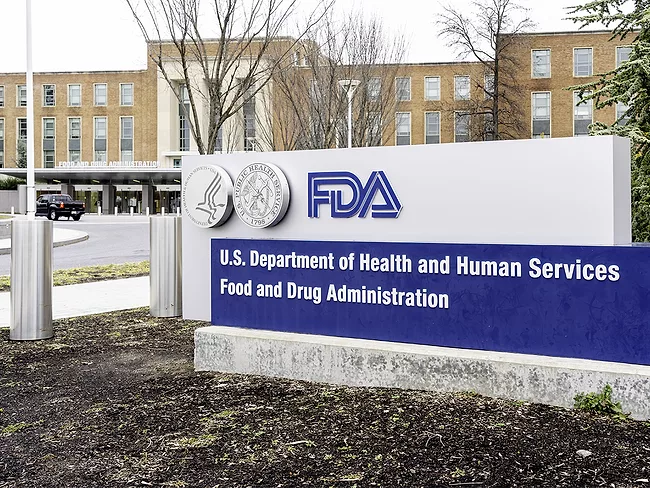
The U.S. FDA moved the goal posts for other companies with its expansion of the emergency use authorization for Helix Opco LLC’s COVID-19 test to include both unsupervised self-collection of samples and testing of asymptomatic individuals. The new indications promise to make the Helix test the preferred tool for schools, universities, and work settings by reducing costs and increasing flexibility.
Virtual Incision Corp. revealed that it had received a green light from the U.S. FDA to begin its study of its miniaturized in vivo robotic assistant (MIRA) Platform. Initially, the company will focus the platform on minimally invasive laparoscopic colon surgery. With the MIRA Platform, the company will aim to enter a growing market in the U.S., where more than 400,000 colon resection procedures are performed each year.
The latest global regulatory news, changes and updates affecting medical devices and technologies, including: HHS provides details of Binax test distribution.
Kala Pharmaceuticals Inc.’s anticipated win with Eysuvis (loteprednol etabonate ophthalmic suspension) 0.25% for the short-term (up to two weeks) treatment of the signs and symptoms of dry eye disease (DED) didn’t help shares (NASDAQ:KALA), which closed Oct. 27 at $6.28, down $1.44, or 18.7%, on word of the FDA approval.
Premarket approval by the U.S. FDA of a new venous stent system made by Medtronic plc could blast through impediments for patients who suffer from complex deep vein obstruction. Less than 1% of patients with iliofemoral venous outflow obstruction currently receive treatment, despite the risk of serious complications and sharply reduced quality of life. Approval of the Abre stent was based on a 200-patient clinical study.
The U.S. FDA draft guidance for select updates for premarket evaluation of class II atherectomy devices arrived with a lack of clarity that prompted device makers and clinicians alike to request the FDA address several sources of ambiguity. One of these is whether the agency should distinguish between particulate matter from the device vs. calcium particulates from the treated artery, while another is whether particulate evaluation is required only for devices with a coating.
Abiomed Inc. has won the U.S. FDA’s nod for its Breethe Oxy-1 device, an all-in-one, compact cardiopulmonary bypass system designed for easy mobility. The company plans a controlled release at U.S. hospitals between now and March of 2021, with widespread availability later that year.
The latest global regulatory news, changes and updates affecting medical devices and technologies, including: Medtronic advises of problems with Interstim leads; Palmetto eyes coverage of CT for cerebral perfusion.
Aidoc Inc., a provider of artificial intelligence (AI) solutions in radiology, has won U.S. FDA clearance to market the first software solution for flagging and triaging incidental pulmonary embolism (PE). The AI technology, which includes triaging and notification algorithms, is an “always on” technology that analyzes chest CT scans in real time and alerts the radiologist to any potentially abnormal findings – possibly speeding up diagnosis by hours.
Drug and medical device manufacturers have several compliance matters to deal with under the False Claims Act (FCA), only one of which is the Anti-Kickback Statute (AKS). Nonetheless, the AKS might be a good area for members of industry to emphasize, given that it accounted for the vast majority of federal enforcement actions in fiscal year (FY) 2019, according to a new report by Gibson, Dunn & Crutcher LLP.
 RSS
RSS