Recent U.S. FDA actions could transform decades of prostate cancer care. Two companies focused on prostate cancer received good news from the FDA for their artificial intelligence (AI)-driven software. Bot Image Inc. gained FDA clearance for its medical device computer-aided detection and diagnostic tool, Prostatid. The agency also provided FDA investigational device exemption for Avenda Health Inc.’s Focalpoint ablation system that enables more accurate mapping of a patient’s prostate cancer for better surgical results.
The U.S. FDA granted digital therapeutics company Bodyport Inc. 510(k) clearance for its heart monitoring weight scale. The digital solution includes sensors and algorithms that measure hemodynamic biomarkers to assess heart function and fluid status when patients take their daily weight. San Francisco-based Bodyport told BioWorld the platform is for heart failure (HF) patients in the U.S.
An investor’s wish to know more about the total landscape of a drug candidate is not enough, on its own, to make a company’s disclosures about the drug and its development materially misleading. So said the U.S. Court of Appeals for the First Circuit in affirming the dismissal of a shareholder suit against Karyopharm Therapeutics Inc. and its executive officers.
The U.S. FDA has approved Daiichi Sankyo Co. Ltd. and Astrazeneca plc’s Enhertu (fam-trastuzumab deruxtecan) as the first HER2-directed therapy for patients with HER2-low metastatic breast cancer.
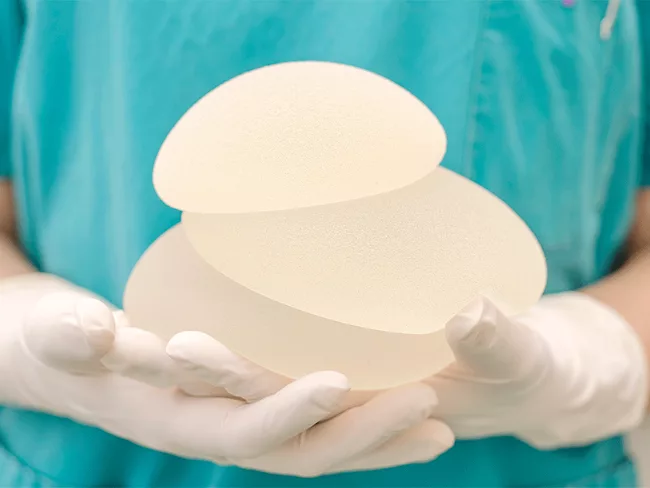
The U.S. FDA has updated its data on the number of fatalities across globe associated with breast implant-associated anaplastic large cell lymphoma (BIA-ALCL), which has now reach 59 fatalities. That number is up from 33 reported in July 2019 but is also a number the agency continues to assert may be a significant undercount.
The FDA granted Adherium Ltd. 510(k) clearance for its next-generation Hailie sensor that connects with Glaxosmithkline plc’s Ellipta inhaler to enable monitoring of medication use for asthma and chronic obstructive pulmonary disorder (COPD).
The U.S. Senate and House of Representatives have not yet come to terms on FDA user fee legislation, a quinquennial source of melodrama that leaves the agency in an awkward position with current employees. However, FDA principal deputy commissioner Janet Woodcock said recently that prospective employees are also watching how Congress handles its business, adding that some of these pending hires may take jobs elsewhere rather than wait on Congress to send a user fee bill to the White House.
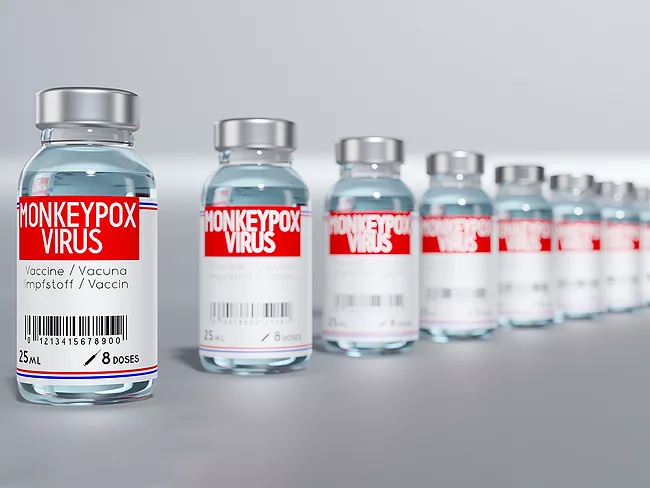
Now that the U.S. Department of Health and Human Services (HHS) has declared monkeypox a public health emergency, nearly two weeks after a similar declaration from the World Health Organization, the way is cleared for a coordinated response and emergency use authorizations to address supply challenges that could limit the availability of currently approved vaccines. It also has several companies ready to leap into the fray if their preclinical studies show a path to approval. HHS said it just shipped more than 602,000 doses of the Jynneos vaccine to states and jurisdictions, an increase of 266,000 in the past week.
Amylyx Pharmaceuticals Inc. got good news when the Institute for Clinical and Economic Review posted a revised evidence report Aug. 4 that assessed the comparative clinical effectiveness and value of the company’s AMX-0035 and Mitsubishi Tanabe Pharma America Inc.’s Radicava (edaravone) in treating amyotrophic lateral sclerosis.
The FDA’s ability, or lack thereof, to churn out guidances is not always the stuff of industrial outrage, but manufacturers of laser-assisted in situ keratomileusis (LASIK) systems might find the timing of a new draft guidance on the procedure somewhat odd. The draft guidance arrives nearly a decade and a half after an April 2008 advisory hearing.
 RSS
RSS