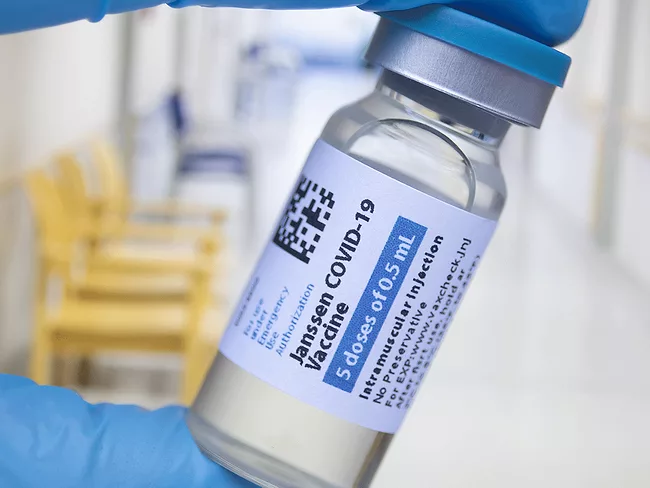
The FDA’s Vaccines and Related Biological Products Advisory Committee unanimously agreed to recommend a booster dose of Janssen Biotech Inc.’s COVID-19 vaccine for those age 18 years and older at least two months following the first dose. In the end, the vote swung on numbers from Janssen showing a booster significantly improved efficacy among study participants. Janssen’s data leaped to 94% protection after a booster dose, up from 70% efficacy following the first dose. That higher efficacy rate nearly matches that of the mRNA vaccines from Moderna Inc. and Pfizer Inc.-Biontech SE.
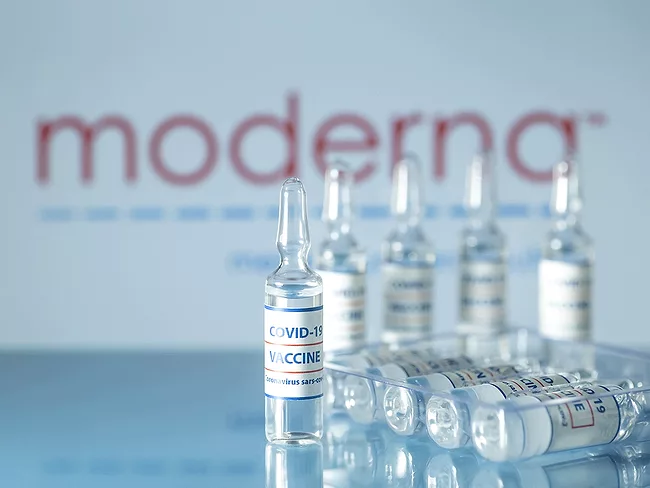
Given the FDA’s Vaccines and Related Biological Products Advisory Committee’s unanimous vote last month to recommend use of a booster dose of the Pfizer Inc.-Biontech SE COVID-19 vaccine in certain high-risk groups, it came as no surprise when the committee again voted unanimously Oct. 14 for a mirror use of Moderna Inc.’s proposed booster.
The FDA’s device center has posted a draft guidance that addresses unique device identifier (UDI) code requirements applied to low-risk products. The select update offers enforcement discretion in some instances for class I consumer health products, a switch partly justified by the exceedingly low risk presented by such products.
Device makers have argued for years that not all medical device recalls are the same, and thus the FDA should be more forthcoming with the public about the difference between a recall that is accompanied by a market withdrawal and a recall that driven by something as innocuous as a minor adjustment to the product label.
Alpha Tau Ltd. has secured a second breakthrough device designation for its Alpha Dart radiation treatment for solid cancer tumors. The FDA has granted the Jerusalem-based company’s technology a designation for the treatment of patients with recurrent glioblastoma multiforme (GBM), an aggressive malignant brain tumor. GBM has an average five-year survival rate of less than 10% and is the most common malignant tumor of the brain or central nervous system. According to the designation, the Alpha Dart system can be used to treat recurrent GBM as an adjunct to standard medical therapies or as a standalone therapy after standard medical therapies have been exhausted.
Should Johnson & Johnson’s (J&J) COVID-19 vaccine be a two-dose series? While not directly asked, that question almost lurks between the lines of the FDA’s briefing document for the Oct. 15 meeting of its Vaccines and Related Biological Products Advisory Committee. The document referred to J&J’s proposed second dose as a “booster,” but the FDA isn’t asking the committee the questions it posed for the Moderna Inc. and Pfizer Inc.-Biontech SE boosters. Instead, it is inviting VRBPAC to advise on whether the second J&J dose should be administered two months or six months following the first shot.
If the FDA follows the advice of its Antimicrobial Drugs Advisory Committee, Takeda Pharmaceutical Co. Ltd.’s antiviral drug, maribavir, will become the first drug approved in the U.S. to treat resistant or refractory cytomegalovirus infection and disease in both solid organ and hematopoietic stem cell transplant recipients. The committee voted 17-0 that the overall benefit-risk assessment favors the use of maribavir for transplant patients with refractory CMV infections both with and without genotypic resistance to the four antivirals currently used off-label to treat the infections – ganciclovir, valganciclovir, foscarnet and cidofovir.
The least burdensome principle is a critical component in industry’s understanding of the proper role of government regulation, but this principle is the subject of considerable tension between the two sides. The latest report on the FDA’s performance under the fourth device user fee agreement noted that device makers raised the least burdensome flag in less than 0.5% of 510(k) submissions filed between February 2019 and April 2021, but the report gives the agency passing grades on its handling of those potentially controversial regulatory encounters.
After nearly two years of waiting, Withings SA won FDA clearance for its Scanwatch, a smartwatch that can take an electrocardiogram and monitor for sleep disturbances indicative of sleep apnea or respiratory illnesses such as chronic obstructive pulmonary disease. The FDA action makes the watch the first cleared for both functions.
 RSS
RSS