There are few guidelines of any sort that are specific to artificial intelligence (AI) for medical devices, but that doesn’t mean there are no signposts for developers. There are existing product marketing authorizations that offer some insights, but the FDA’s Bakul Patel said a risk stratification guidance by the International Medical Device Regulators Forum (IMDF) is an example of a non-AI blueprint for how the FDA will ultimately approach regulation of AI.
The Biden administration may have jumped ahead of the FDA review when it announced last month that it planned to roll out COVID-19 boosters by Sept. 20, but that’s not likely to happen when it comes to the timing of vaccines for young children.
The days may be numbered for drug companies telling the FDA one thing to expedite approval and then telling the U.S. Patent and Trademark Office (PTO) something else to ensure they get a new patent.
The share price of Renovorx Inc. has spiked following FDA clearance for its Renovocath delivery system. Since the company announced the clearance, its stock (NASDAQ:RNXT) has climbed by more than 13%. Last month the company completed an IPO for approximately $16.6 million, issuing shares at $9-$11.
Initial efforts at Humanigen Inc. to win an FDA emergency use authorization (EUA) for treating hospitalized COVID-19 patients with its monoclonal antibody, lenzilumab, have failed to gain the regulator's buy-in, sending company shares (NASDAQ:HGEN) down 47.3% to $7.97 on Sept. 9 after touching a 52-week low during the session, a reaction part of a volatile arc that has seen shares climb as high as $29.20 during the same time span.
The U.S. Department of Health and Human Services (HHS) reported a rescission of a September 2020 policy that would require that the secretary of health and human Services sign off on any rulemaking by HHS agencies. Despite the firestorm of criticism that followed the issuance of the September 2020 policy, attorney Jim Shehan, of Lowenstein Sandler, told BioWorld that the rulemaking process will remain exceptionally cumbersome, leaving in place a status quo that itself has been the target of repeated criticism.
The FDA has put a hold on a clinical study of a rare disease gene therapy BMN-307 from Biomarin Pharmaceutical Inc. after several mice developed liver tumors following a high dose in a preclinical trial.
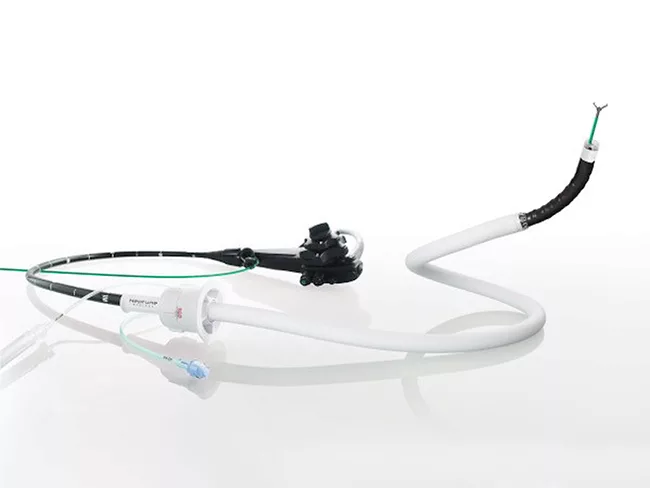
Multiple sizes of Neptune Medical LLC’s overtube for gastrointestinal (GI) procedures that allows thin-walled tubes to toggle between flexible and rigid states received FDA clearance. With the clearance, the Burlingame, Calif.-based company now has nine sizes of cleared single-use overtubes with more in the wings. The Pathfinder endoscope overtube device uses Neptune’s Dynamic Rigidization technology to keep tubes from looping during procedures, a problem that leads to procedure failure, patient pain and complications in colonoscopy and other GI procedures.
The FDA has approved Trudhesa (dihydroergotamine mesylate [DHE]; INP-104) from Impel Neuropharma Inc. for treating acute migraine headaches with or without aura in adults. The approval comes as several competitors, including Axsome Therapeutics Inc and Abbvie Inc., have NDAs submitted or approved for new therapies to treat migraine.
Aatru Medical LLC has received FDA 510(k) class II clearance for a platform that turns its back on electro-mechanical components in other negative pressure wound therapy (NPWT) systems. Deployed for closed surgical incision applications, the Negative Pressure Surgical Incision Management System (NPSIMS) is a single-use, disposable platform that could help reduce the 20% of hospital infections attributed to surgical site infections (SSI).

 RSS
RSS