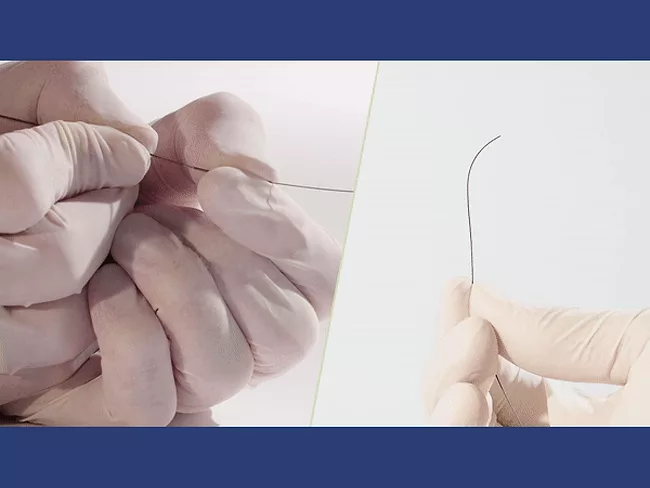
Rapid Medical Ltd.'s journey took a promising turn with a U.S. FDA clearance of Drivewire, the company's steerable guidewire for neuro and peripheral vasculature. Drivewire allows surgeons to adjust the shape of the tip while traversing challenging vasculature. It is the first neurovascular guidewire with a controllable distal end that permits on-demand course and shape changes during a procedure.
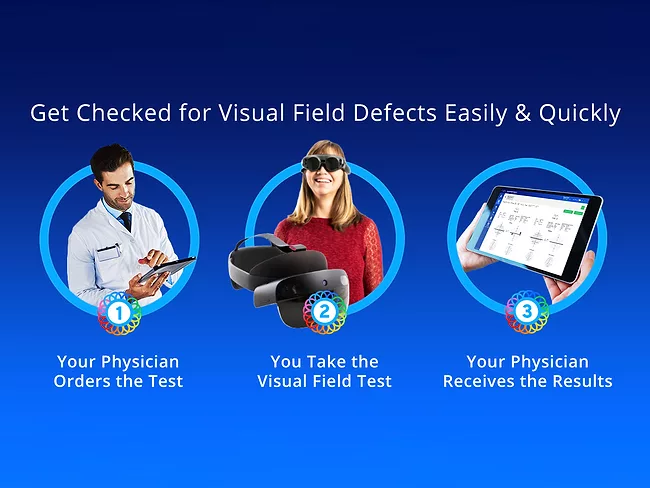
Heru Inc., a medical technology company using artificial intelligence (AI) to advance vision diagnostics and augmentation, has completed class I device registration with the U.S. FDA for its cloud-based diagnostic application for visual field exams. Heru’s software works with commercially available augmented reality or virtual reality (AR/VR) headsets to provide a subjective visual field exam, with results immediately available to clinicians through a web portal.
The U.S. FDA has exercised a considerable degree of enforcement discretion during the COVID-19 pandemic, particularly when it comes to digital health. However, Christine Bump, principal at Penn Avenue Law & Policy, said that this very discretion has an uncertain shelf life and advised industry to remain compliant with the regulations as much as possible to avoid unnecessary enforcement actions by federal agencies.
Following a better-than-expected commercial liftoff for the overactive bladder medicine Gemtesa (vibegron) in its first market, Japan, the Dec. 23 FDA approval for the medicine opens a new commercial chapter for Urovant Sciences, a company that’s on its way to being a wholly owned subsidiary of Sumitomo Dainippon Pharma Co. Ltd.'s Sumitovant Biopharma Ltd.
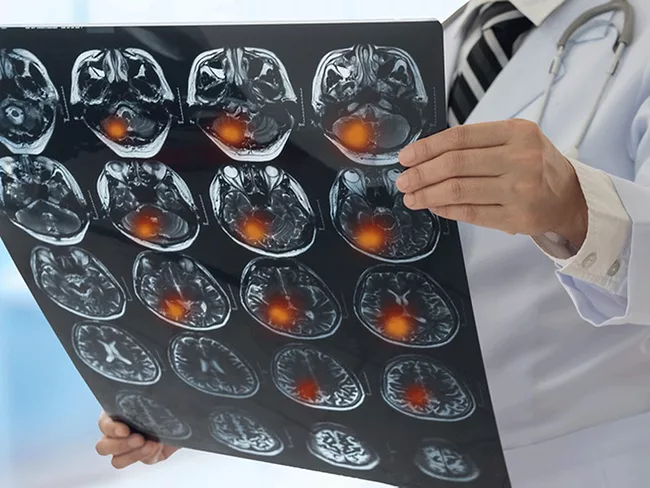
Shares of Voyager Therapeutics Inc. and its partner, Neurocrine Biosciences Inc., fell in early trading Dec. 23 after Voyager announced an FDA clinical hold on the phase II Restore-1 trial of VY-AADC, an adeno-associated virus-based gene therapy Neurocrine is developing as NBIb-1817 for the treatment of Parkinson's disease. The trial had been paused since at least November as its data safety monitoring board reviewed MRI abnormalities in some study participants.
In an exclusive interview with BioWorld on the challenges facing a deeply divided Congress and some of the highlights of his years in the U.S. House, retiring Congressman Greg Walden (R-Ore.) said that once the COVID- 19 pandemic is over, federal policymakers should hold a summit with officials from states and major cities to look at a new preparedness partnership that would ensure the availability of strategic medical supplies.
Miach Orthopaedics Inc. got a leg up on competitors with the U.S. FDA's de novo approval of its Bridge-Enhanced ACL Repair (BEAR) implant. The company achieved a long-term goal in orthopedics, developing a graft-free system that enables the anterior cruciate ligament (ACL) to repair itself. The device represents the first new treatment for ACL tears in three decades.
The U.S. FDA has granted emergency use authorization (EUA) for thousands of products for the COVID-19 pandemic, and the agency is legally required to advise companies of their post-pandemic options for new marketing authorization. Conversely, companies that fail to deal with inventory for expired EUAs may find themselves in the crosshairs of the FDA, whistleblowers, and federal and state attorneys, suggesting that manufacturers of devices should have a plan for dealing with unused inventories once the public health emergency comes to an end.
After nearly three months of the U.S. federal government operating on stopgap spending measures, Congress has agreed to a $1.4 trillion spending bill for fiscal 2021. The omnibus package, which includes $97 billion for the Department of Health and Human Services, gives both the FDA and NIH small increases in funding.
The U.S. FDA has granted emergency use authorization (EUA) for thousands of products for the COVID-19 pandemic, and the agency is legally required to advise companies of their post-pandemic options for new marketing authorization. Conversely, companies that fail to deal with inventory for expired EUAs may find themselves in the crosshairs of the FDA, whistleblowers, and federal and state attorneys, suggesting that manufacturers of devices should have a plan for dealing with unused inventories once the public health emergency comes to an end.
 RSS
RSS