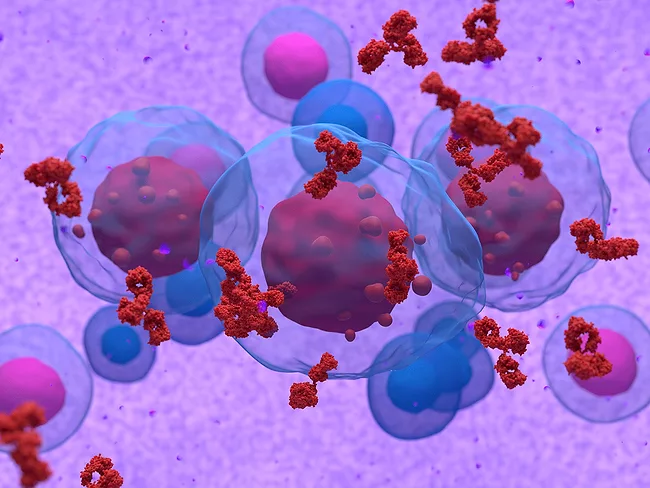
Sarepta Therapeutics Inc. is declining a U.S. FDA request to voluntarily halt shipping its gene therapy, Elevidys (delandistrogene moxeparvovec), in the U.S. On July 18, Sarepta said had it received “an informal request” from the FDA to stop the shipments following a third patient’s death, tied to the gene therapy SRP-9004, which uses the same vector as Elevidys.
The U.S. FDA on July 15 cleared Biocon Biologics Ltd.’s Kirsty (insulin aspart-xjhz) as the first and only interchangeable biosimilar product referencing Novo Nordisk A/S’ Novolog (insulin aspart), a rapid-acting diabetes medication.
Sarepta Therapeutics Inc. made known a third gene therapy death, this time with SRP-9004 for limb-girdle muscular dystrophy. The patient was a late-stage, non-ambulatory 51-year-old man participating in the phase I Discovery trial, who expired about a month ago of acute liver failure, as did the two previous subjects who passed away after they were treated with Elevidys (delandistrogene moxeparvovec), Cambridge, Mass.-based Sarepta’s gene product for Duchenne muscular dystrophy.
In a 10-1 vote, the U.S. FDA’s Psychopharmacologic Drugs Advisory Committee said Otsuka Pharmaceutical Co. Ltd.’s studies of its combination post-traumatic stress disorder (PTSD) treatment did not show enough efficacy. Had the adcom felt otherwise, the path may have been smoother for a new treatment in an indication that hasn’t seen regulatory advancement in decades. The committee’s conclusion, however, is not binding on the FDA, which will make its own decision whether to approve.
SK Bioscience Ltd. announced that the company has submitted an investigational new drug (IND) application to the South Korean Ministry of Food and Drug Safety.
Uromems SAS received investigational device exemption (IDE) approval from the U.S. FDA, and clearance from the French National Agency for the Safety of Medicines and Health Products (ANSM), to begin a pivotal trial of its Uroactive smart implant.
Expanding on guidance issued a dozen years ago, the U.S. FDA released a draft guidance to help sponsors developing cancer drugs for use in novel combinations determine the contribution of the individual drugs’ effect.
Carving out $400 million in annual cost savings is going over well with Sarepta Therapeutics Inc.’s investors, as the company’s stock got a 19.6% boost on July 17. Its big seller, the gene therapy Elevidys (delandistrogene moxeparvovec), continued its revenue numbers decline, so Sarepta chopped operating expenses by letting about 500 employees go in a 36% cutback and pared its development path.
The rough ride presaged by briefing documents came to pass for GSK plc with the drug first approved by the U.S. FDA as Blenrep (belantamab mafodotin, bel-maf), as the agency’s Oncologic Drugs Advisory Committee (ODAC) appraised the possibility that the antibody-drug conjugate could return to market for relapsed/refractory multiple myeloma (r/r MM).
Amphix Bio LLC has been granted U.S. FDA orphan drug designation for its lead candidate AMFX-200 for the treatment of acute spinal cord injury (SCI). AMFX-200 is an FGFR (fibroblast growth factor receptor) and ITGB1 (integrin β1) agonist peptide amphiphile scaffold. In preclinical models of acute SCI, a single injection of AMFX-200 into the spinal cord enabled motor neurons from the brain to regrow past the injury site.

 RSS
RSS