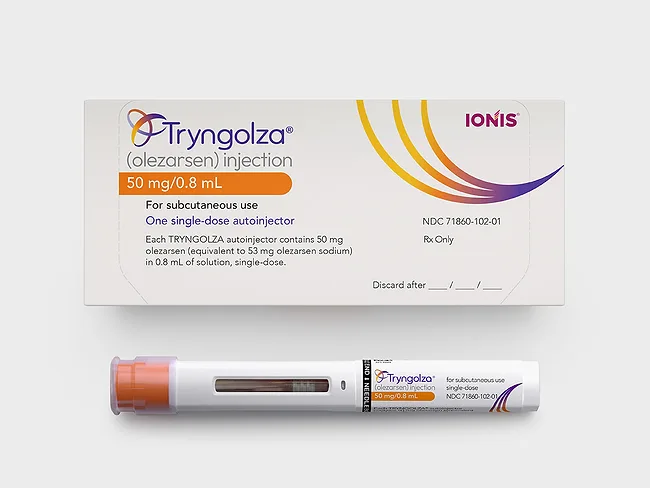
As expected, and following impressive phase III data released last September, Ionis Pharmaceuticals Inc. won U.S. FDA approval of Tryngolza (olezarsen) for adults with severe hypertriglyceridemia, unlocking a larger indication and one that held both priority review and breakthrough therapy designations.
J-Pharma Co. Ltd. is progressing the most clinically advanced L-type amino acid transport 1 (LAT1) inhibitor, nanvuranlat (JPH‑203), in a global phase III Beacon-BTC study of biliary tract cancer following U.S. FDA alignment.
The U.S. FDA approved 24 drugs in May 2026, the busiest month of the year so far. Up from April’s 14, it brings the year-to-date total to 84 approvals. Through May, the agency has cleared 20 new molecular entities, a pace that, if sustained, would put 2026 on track to approach or exceed several recent years.
With increasing competition from China and other countries, the U.S. Department of Health and Human Services is rolling out Operation Trailblazer, a department-wide strategy to once again make the U.S. the go-to destination for early stage drug development.
Anhorn Medicines Co. Ltd. has obtained IND clearance from the FDA for its lead neuroprotective candidate, AH-008, for the prevention of chemotherapy-induced peripheral neuropathy.
J-Pharma Co. Ltd. is progressing the most clinically advanced L-type amino acid transport 1 (LAT1) inhibitor, nanvuranlat (JPH‑203), in a global phase III Beacon-BTC study of biliary tract cancer following U.S. FDA alignment.
Four years after the U.S. FDA issued a complete response letter for Spero Therapeutics Inc.’s oral antibiotic, tebipenem pivoxil hydrobromide, to treat complicated urinary tract infections (cUTI), including pyelonephritis, the agency approved the drug based on phase III data showing noninferiority to intravenous imipenem-cilastatin.
The U.S. FDA’s Vaccines and Related Biological Products Advisory Committee voted unanimously in favor of Moderna Inc.’s trivalent mRNA flu vaccine, mRNA-1010, which the company wants to brand as Mflusiva. On the question of whether the benefits of the product outweigh the risks in people ages 50 to 64, balloting was 9-0, and on whether the same is true in those 65 and older, the tally was again 9-0.
Cenna Biosciences Inc. has obtained IND clearance from the FDA for 8M2D, a first-in-class peptide for the treatment of Alzheimer’s disease. A phase Ia/Ib trial of 8M2D in healthy volunteers and patients with early Alzheimer’s disease is expected to begin dosing late this year.
Beam Therapeutics Inc. has obtained IND clearance from the FDA for BEAM-304 for the treatment of phenylketonuria (PKU). BEAM-304 is a liver-targeting lipid-nanoparticle (LNP) formulation of base editing reagents designed to correct mutations in the phenylalanine hydroxylase (PAH) gene that cause PKU.
 RSS
RSS