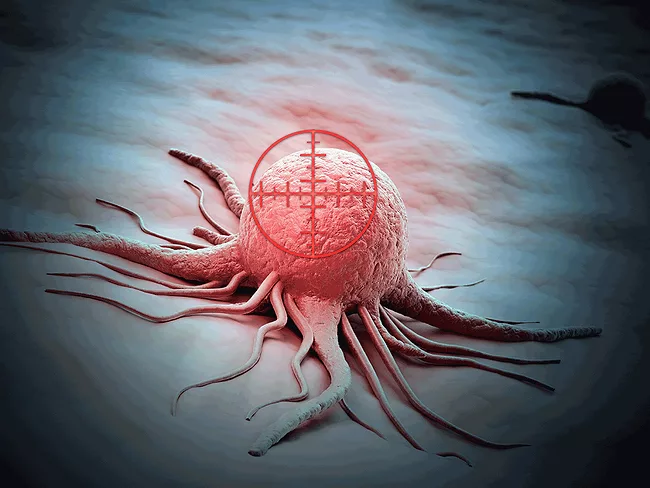
The Biotechnology Innovation Organization (BIO) found in a new study that 77% of clinical programs focused on pain therapeutics five years ago are no longer active and that financings of companies working in the space are lackluster at best. Meanwhile, oncology companies, targeting an overall smaller market, have raised huge sums of venture capital money, $9.7 billion in 2021 vs. pain and addiction companies’ $228 million.
Bone-resorbing osteoclasts are key players in bone remodeling and their dysfunction has been implicated in several bone disorders such as fibrous dysplasia. Osteoclasts derive from monocytes stimulated by several cytokines, such as M-CSF and RANKL.
The U.S. Department of Health and Human Services received low marks on its latest Government Accountability Office (GAO) report card for its oversight of high-risk research involving potential pandemic pathogens, but legislative fixes might be necessary to ensure that all the gaps are closed.
Tucked into the 4,155-page, $1.7 trillion spending bill for fiscal 2023 that U.S. President Joe Biden signed into law Dec. 23 is a small provision that may have outsized impact on future biosimilar and other drug development. Championed by lawmakers on both sides of the political spectrum, the provision modernizes the data that can be used to support drug development, including alternatives to animal studies.
Tucked into the 4,155-page, $1.7 trillion spending bill for fiscal 2023 that U.S. President Joe Biden signed into law Dec. 23 is a small provision that may have outsized impact on future biosimilar and other drug development. Championed by lawmakers on both sides of the political spectrum, the provision modernizes the data that can be used to support drug development, including alternatives to animal studies.
Congress has wrapped up the budget for fiscal year 2023 with yet another significant boost to funds for the National Institutes of Health, but the omnibus legislation also authorizes the U.S. FDA to designate academic research centers as centers of excellence for continuous drug manufacturing. A conspicuous omission from the omnibus was the Verifying Accurate, Leading-edge IVCT Development (VALID) Act for FDA regulation of lab-developed tests (LDTs), an omission that drew both praise and criticism from stakeholders.
Ironically, one of the casualties of the COVID-19 pandemic is an overdue review and revision of U.S. dual use research of concern (DURC) policies, as well as the Department of Health and Human Services’ Potential Pandemic Pathogen Care and Oversight guidance. Consequently, several senators are asking the White House to halt all ongoing and new viral gain-of-function and DURC studies in the life sciences that involve enhanced pathogens of pandemic potential.
Ironically, one of the casualties of the COVID-19 pandemic is an overdue review and revision of U.S. dual use research of concern (DURC) policies, as well as the Department of Health and Human Services’ Potential Pandemic Pathogen Care and Oversight guidance. Consequently, several senators are asking the White House to halt all ongoing and new viral gain-of-function and DURC studies in the life sciences that involve enhanced pathogens of pandemic potential.
Ironically, one of the casualties of the COVID-19 pandemic is an overdue review and revision of U.S. dual use research of concern (DURC) policies, as well as the Department of Health and Human Services’ Potential Pandemic Pathogen Care and Oversight guidance. Consequently, several senators are asking the White House to halt all ongoing and new viral gain-of-function and DURC studies in the life sciences that involve enhanced pathogens of pandemic potential.
Kinimmune Inc. has received US$400,000 in funding from the National Cancer Institute (NCI) at the National Institutes of Health (NIH) for its phase I STTR application to advance the preclinical development of KIN-102, an immunostimulant for intratumoral injection that is designed to turn cold tumors hot for synergy with immuno-oncology drugs, such as checkpoint inhibitors.
 RSS
RSS