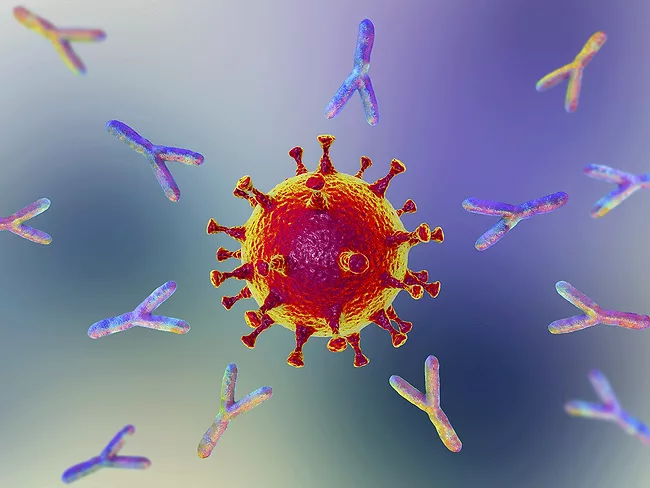
Marking the first time monoclonal antibodies developed by separate companies will be tested in combination against COVID-19, Vir Biotechnology Inc.’s VIR-7831 will be added to Eli Lilly and Co.’s bamlanivimab in the ongoing phase II BLAZE-4 study in low-risk patients with mild to moderate disease. The collaboration comes as early research indicates some antibodies in development appear to lose activity when pitted against emerging SARS-CoV-2 variants. VIR-7831 (also known as GSK-4182136), partnered with Glaxosmithkline plc, is designed to bind to a different epitope of the SARS-CoV-2 spike protein than bamlanivimab. A dual-action antibody, VIR-7831 is designed to both block viral entry into healthy cells and clear infected cells.
About 91% of funds recorded in 2020 for all biopharma collaborations with nonprofit entities and 75% of all grant money went directly to therapeutic and vaccine efforts to fight COVID-19. BioWorld has tracked 912 bio/nonprofit deals worth $19.86 billion and 658 grants awarded to the industry and valued at $12.98 billion for a combined total this year of 1,570 and $32.84 billion.
Biopharma happenings, including deals and partnerships, grants, preclinical data and other news in brief: Advanz, Aeterna, Ajinomoto, Astrazeneca, Benevolent, Citrine, Diurnal, Evotec, Just-Evotec, Heat, Humanigen, Kiromic, Lumen, Medolife, Mindset, Moderna, Scholar Rock, Shasqi, Vaxart, Vaxil.
Clinical updates, including trial initiations, enrollment status and data readouts and publications: Agios, Briacell, Dr. Reddy's, Glaxosmithkline, Immutep, Lead Discovery Center, Lilly, Nervgen, Oncosec, Pfizer, Pharvaris, Qurient, Sorrento, Surface Ophthalmics, Theralase, VBL, Vir.
Health care professionals (HCPs) might prefer a new respirator for each shift, but the ongoing shortage has left clinical sites with a need to employ dry heat for filtering facepiece respirator reuse. The U.S. FDA said on a Jan. 26 town hall that it will stick to an established policy that these devices can be processed with dry heat no more than five times, a practice that is likely to stick for the foreseeable future despite that administrators are required to provide fresh units when possible.
HONG KONG – Shortly after Australia’s recent provisional approval for the mRNA-based COVID-19 vaccine Comirnaty (tozinameran), originally developed by Pfizer Inc. and Biontech SE, Hong Kong has approved it, too, for emergency use ahead of rivals developed in mainland China. It is the first vaccine to be approved in the Chinese territory, made possible through a collaboration between Biontech and Shanghai Fosun Pharmaceutical Group Co. Ltd.
PERTH, Australia – Sydney-based Cyclopharm Ltd. raised AU$30 million (US$23.19 million) in a private placement that will enable the company to launch its Technegas combination product in the U.S.
Med-tech happenings, including deals and partnerships, grants, preclinical data and other news in brief: Asieris, Bc Platforms, Chronomics, Curadigm, Dante Labs, Digbi Health, Echosens, Electrocore, Emocha, Fuzionaire Radioisotope Technologies, Gastrologix, Genedx, Nanobiotix, Nihon Medi-Physics, Nova Mentis Life Science, Orasure, Opko Health, Perkinelmer, Photocure, Qualigen, Sanofi, Soliton, Soundbite, Yi Xin.
Regeneron Pharmaceuticals Inc. posted positive initial results from its ongoing phase III study of its monoclonal antibody cocktail, REGEN-COV (casirivimab and imdevimab), used as a passive vaccine, designed to provide immediate short-term passive immunity to prevent COVID-19 in people at high risk of infection due to household exposure to a COVID-19 patient. Eli Lilly and Co. reported upbeat news the same day, as the phase III Blaze-1 trial testing its antibody cocktail met its primary and key secondary endpoints.
 RSS
RSS