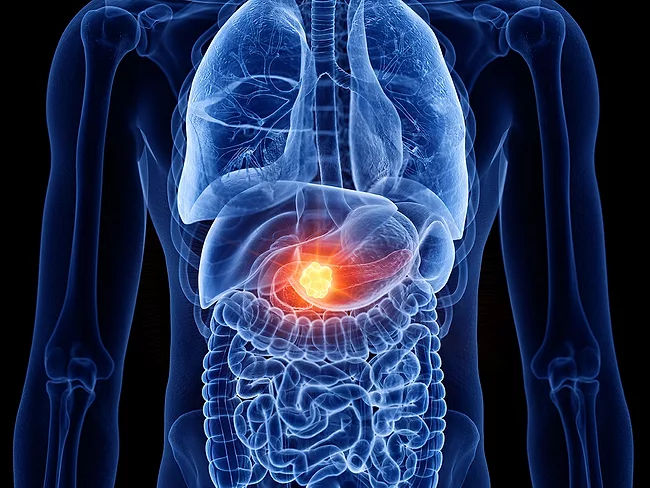
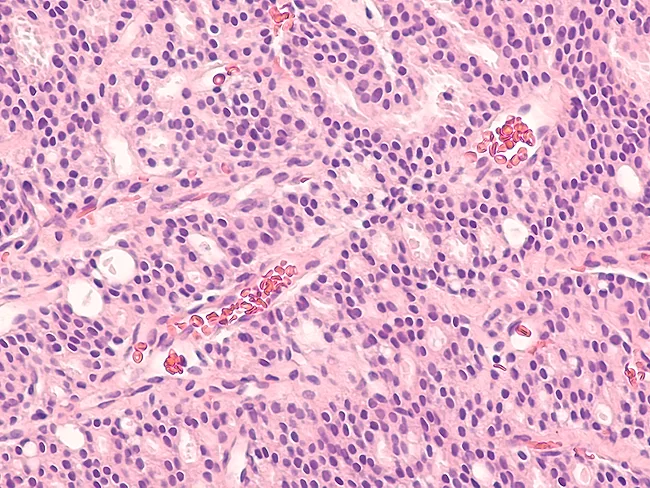
Silexion Therapeutics Corp. has announced an expanded development plan for its next-generation siRNA candidate SIL-204. The new dual-route strategy will integrate intratumoral and systemic administration to target both primary tumors and metastases, respectively, to treat KRAS-driven pancreatic cancer.
Researchers from Tianjin Accendatech Technology Co. Ltd. and collaborators have reported the discovery of a series of novel fluorine-containing parthenolide derivatives designed for use as antitumoral compounds.
Sun Pharma Advanced Research Co. Ltd. has filed an IND application with the FDA for SBO-154 for the treatment of solid tumors. A global phase I study is planned in advanced solid tumors.
At last week’s American Chemical Society Spring meeting, Bristol Myers Squibb Co. discussed the development of a potent, orally bioavailable and highly selective cereblon (CRBN)-mediated ligand-directed degrader (LDD) of B-cell lymphoma 6 protein (BCL6), BMS-986458, for the treatment of B-cell non-Hodgkin lymphoma.
Suzhou Zion Pharma Technology Co. Ltd. has identified GTPase KRAS G12D or G13D mutant and/or KRAS inhibitors reported to be useful for the treatment of cancer.
Kymera Therapeutics Inc. has described proteolysis targeting chimera (PROTACs) compounds comprising an E3 ubiquitin ligase-binding moiety covalently linked to a signal transducer and activator of transcription 6 (STAT6)-targeting moiety.
Scientists at Zhengzhou University and affiliated organizations synthesized and optimized a series of thienopyridine indole derivatives leading to the identification of compound [I] as the lead tubulin polymerization inhibitor with broad-spectrum antiproliferative activity.
Actinium Pharmaceuticals Inc. has unveiled ATNM-400, a novel non-PSMA-targeting, first-in-class radiotherapy for prostate cancer utilizing the Actinium-225 (Ac-225) radioisotope.
Research published online in Nature on March 19, 2025, closely examines the changes occurring in the gastric epithelium during the progression toward cancer development. Certain mutations that occur in normal, nonreproductive cells over time can make these cells more prone to becoming cancerous later. The project began as a collaboration between the labs of Mike Stratton at the Sanger Institute and Suet Yi Leung from the University of Hong Kong, funded by the Wellcome Trust and the Kadoorie Charitable Foundation.
Work at Purdue Research Foundation has led to the identification of prodrugs of nicotinamide N-methyltransferase (NNMT) inhibitors reported to be useful for the treatment of cancer.
 RSS
RSS