Les Laboratories Servier SAS and Vernalis (R&D) Ltd. have described induced myeloid leukemia cell differentiation protein Mcl-1 inhibitors acting as apoptosis inducers reported to be useful for the treatment of cancer and autoimmune diseases.
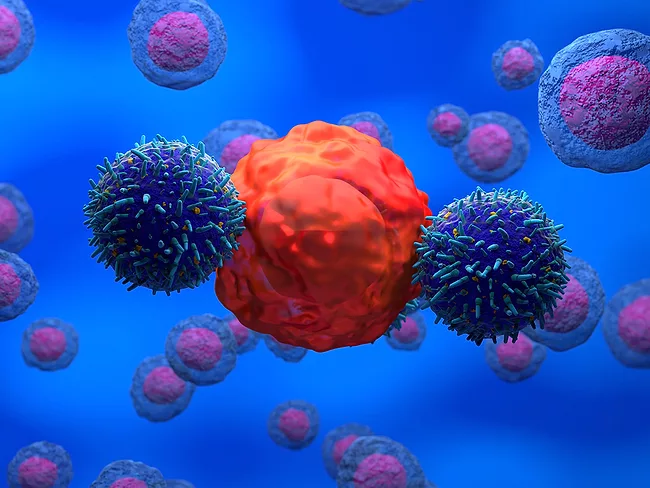
Elicera Therapeutics AB has received approval from the Swedish Medical Products Agency to start a phase I/II study of chimeric antibody receptor (CAR) T-cell therapy ELC-301 in patients with refractory or relapsed B-cell lymphoma.
Early steps in cancer development are closely linked to fibroblast senescence and their transformation into tumor-promoting cancer-associated fibroblasts (CAFs).
Biopsies from up to 14% of patients with non-small-cell lung cancer (NSCLC) showing resistance to epidermal growth factor receptor (EGFR) tyrosine kinase therapy ascertain histologic transformation (HT) to SCLC, which is estimated to kill around 250,000 patients globally, every year. In a study published in Science on Feb. 9, 2024, researchers from Weill Cornell Medicine have dissected that complex process using a genetically engineered mouse model of pulmonary HT.
F. Hoffmann-La Roche Ltd. and Hoffmann-La Roche Inc. have patented phosphorylpurinone compounds acting as Toll-like receptor 7 (TLR7) agonists reported to be useful for the treatment of cancer.
Incyte Corp. has developed fused tricyclic compounds acting as GTPase KRAS (mutant) inhibitors. As such, they are reported to be useful for the treatment of cancer, inflammation and immunological disorders.
Protein arginine N-methyltransferase 5 (PRMT5) inhibitors have been disclosed in an Abbisko Therapeutics Co. Ltd. patent and described as potentially useful for the treatment of cancer.
F. Hoffmann-La Roche Ltd. and Hoffmann-La Roche Inc. have described new 5’-nucleotidase (CD73) inhibitors reported to be useful for the treatment of cancer.
Researchers from National Taiwan University combined the structural features of purine-type microtubule-disrupting compounds and histone deacetylase (HDAC) inhibitors, which led to the discovery of a novel series of dual-targeting compounds, with the purine-hydroxamate conjugate [I] selected as the lead candidate.

 RSS
RSS