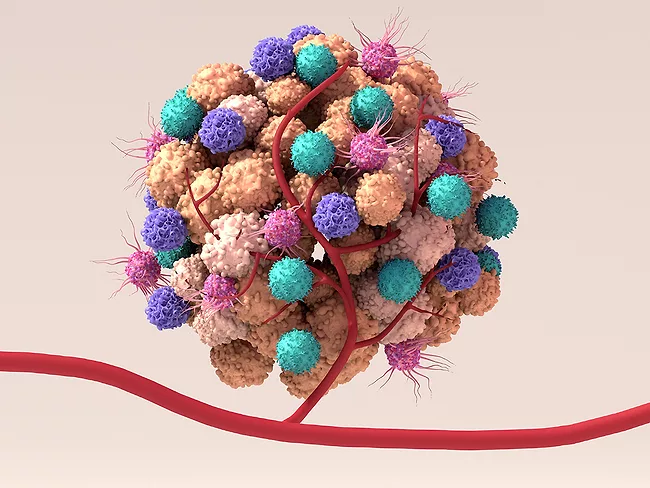
Researchers at GSK plc have developed cytotoxicity targeting chimeras (CyTaCs) or antibody recruiting molecules (ARMs) consisting of a cell-surface protein targeting moiety (particularly, folate receptors) covalently linked to a moiety targeting an exogenous antibody (such as anti-cotinine antibody) through a linker.
Ephrin type-A receptor 2 (EphA2) is a type I transmembrane glycoprotein highly expressed in a wide range of tumors such as bladder, pancreatic, esophageal, colorectal, or non-small-cell lung cancer, among others. Furthermore, in most normal tissues, EphA2 is found at low levels and plays a relevant role in carcinogenesis control and tumor progression modulation.
Bicycle radionuclide conjugates (BRCs) have been developed as a unique radiotheranostic modality for imaging and targeting of proteins overexpressed by tumors, and they possess favorable drug-like properties allowing for effective delivery of radioisotopes. Researchers from Bicycletx Ltd. recently presented a new BRC that targets ephrin type-A receptor 2 (EphA2), named BCY-18469.
Researchers at the University of Bonn and Westfälische Wilhelms-Universiteit Münster have prepared labeled compounds acting as 5’-nucleotidase (CD73) inhibitors.
Amgen Inc. has patented new quinazoline compounds acting as GTPase KRAS (G12D mutant) inhibitors and thus reported to be useful for the treatment of cancer.
Carbonic anhydrase IX (CAIX) is a transmembrane protein involved in cell proliferation and transformation that is expressed in clear-cell renal cell carcinoma (ccRCC), colorectal cancer (CRC), and other hypoxic tumor types, but has low expression in healthy tissues.
Targeting rearranged during transfection (RET) proto-oncogene may be an effective therapeutic strategy for acute myeloid leukemia (AML) patients with mutations in FLT3 and activated RET. However, few RET-targeting agents have been approved for clinical use, and no FLT3/RET dual-targeting drugs have been identified.
Previous research has validated hematopoietic progenitor kinase 1 (HPK1) as a target in immune oncology, and pharmacological inhibition of HPK1 has been shown to enhance effector T-cell function and antitumor activity.
Hoth Therapeutics Inc. has reported promising results from sponsored preclinical research conducted at NC State University (NCSU) with HT-KIT, the company’s new molecular entity for the treatment of advance systemic mastocytosis. HT-KIT is an antisense oligonucleotide that targets the proto-oncogene c-Kit by inducing mRNA frame shifting.
Lipids are “very diverse, but also vastly understudied,” Anne Brunet told the audience at the recent meeting on Aging Research and Drug Discovery. Advances in the ability to predict protein structures have fueled a much better understanding of the human proteome and its estimated 20,000 members. The lipidome is much larger, numbering maybe 100,000 total. And what those lipids do remains much more fuzzy. “Very little is known about their function, and especially their function during aging,” Brunet said. Slowly, however, technological advances are enabling researchers to understand the roles of lipids as well.

 RSS
RSS