Philochem AG has disclosed conjugates comprising fibroblast activation protein α (FAP) ligands covalently linked to radiolabeled payloads through a linker. They are reported to be useful for the diagnosis of atherosclerosis, cancer, fibrosis, inflammation and keloids.
The B-raf kinase (BRAF oncogene) controls cell proliferation and survival through the mitogen-activated protein kinase (MAPK) pathway. By contrast, constitutively activated mutated BRAF causes uncontrolled tumorigenesis while small-molecule inhibition arrests growth to cause tumor regression.
T-cell exhaustion is a differentiation state of T cells associated with tumor progression in the context of cancer. One of the co-stimulatory molecules in the tumor microenvironment, 4-1BB, triggers a signaling cascade resulting in cytokine secretion and upregulation of antiapoptotic molecules.
Although FMS-like tyrosine kinase 3 (FLT3) inhibitors have shown success treating FLT3-mutated acute myeloid leukemia (AML), around 30% to 50% of patients show primary resistance to both type I and type II inhibitors. Therefore, identifying therapeutic strategies to overcome this resistance and enhance the efficacy of FLT3 inhibitors remains an urgent need.
XNK Therapeutics AB has entered into a preclinical research agreement with a global pharma company to study XNK’s autologous natural killer (NK) cell therapy candidate XNK-04 in combination with a well-documented PD-L1 antibody in liver cancer.
Researchers from Hangzhou Polymed Biopharmaceuticals Inc. have reported the discovery and preclinical evaluation of HPB-092, an FMS-like tyrosine kinase 3 (FLT3) and interleukin-1 receptor-associated kinase 4 (IRAK-4) dual inhibitor, being developed for the treatment of acute myeloid leukemia (AML).
The use of therapies based on immune checkpoint blockade (ICB) in melanoma patients has greatly improved survival rates; however, many individuals either develop resistances or are nonresponsive to treatment.
The activation of GPR65 on tumor-associated macrophages (TAMs) is a key tumor-promoting process and GPR65 has been previously described as a genetically validated target in cancer. It was demonstrated that GPR65 functions as an immune checkpoint in acidic tumor microenvironment (TME), as it is activated by low pH in the TME.
Halda Therapeutics Opco Inc. has divulged proteolysis-targeting chimeric (PROTAC) compounds comprising an E3 ubiquitin ligase binding moiety covalently bonded to a protein targeting moiety via linker; they are reported to be useful for the treatment of cancer.
Tumor-infiltrating myeloid cells such as tumor-associated macrophages (TAMs) can suppress T-cell recruitment and function and promote the expansion and dissemination of cancer cells depending on their functional states. In hepatocellular carcinoma (HCC), TAMs are associated with resistance to sorafenib, the first-line treatment for advanced HCC.

 RSS
RSS
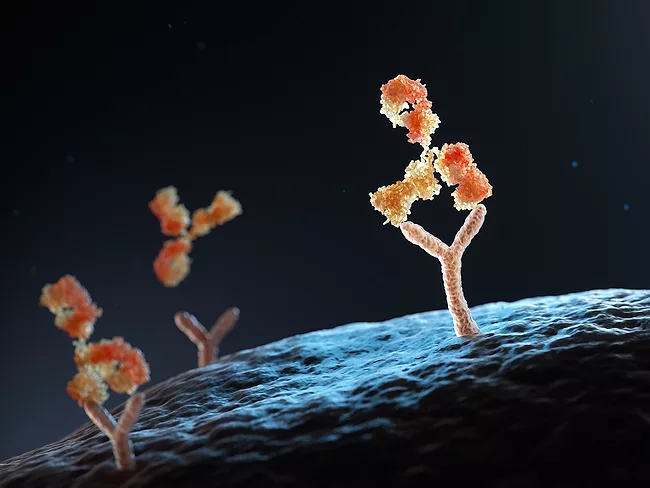
.webp?height=488&t=1670008838&width=650 "Acute myeloid leukemia")


