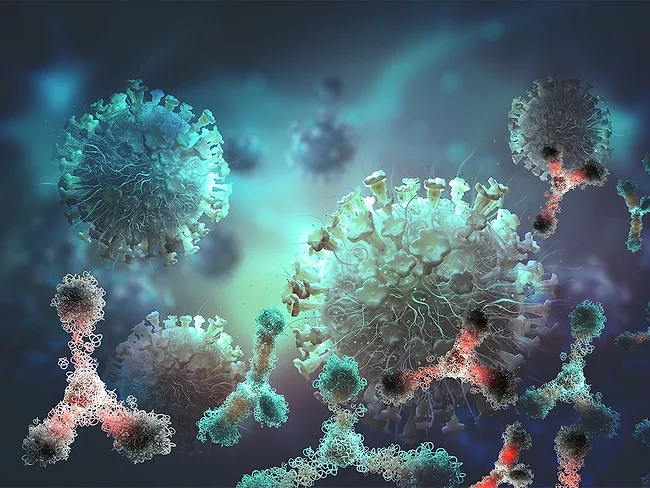
Recent findings are reshaping current understanding of the post-infection landscape of SARS-CoV-2. Although previous studies had already suggested that autoimmunity might underlie the persistent neurological symptoms seen in long COVID, researchers at Yale University and Mount Sinai now reinforce this hypothesis. SARS-CoV-2 infection appears to trigger an autoimmune mechanism that drives chronic pain, fatigue and cognitive impairment in some patients.
Cavalon Therapeutics Inc. and Northwestern University have disclosed new voltage-gated calcium channel Cav1.3 blockers potentially useful for the treatment of Parkinson’s disease and aldosteronism.
AAV-based therapies for Duchenne muscular dystrophy (DMD) have shown efficacy, but have limitations such as poor delivery to target tissues and toxicity associated with the vector. Gemma Biotherapeutics Inc. has developed a gene therapy candidate, GB-703, which uses a new myotropic, integrin-binding AAV capsid containing a codon-optimized, deimmunized hybrid payload.
Pfizer Inc. has reported new triggering receptor expressed on myeloid cells 2 (TREM2) agonists potentially useful for the treatment of neurodegeneration.
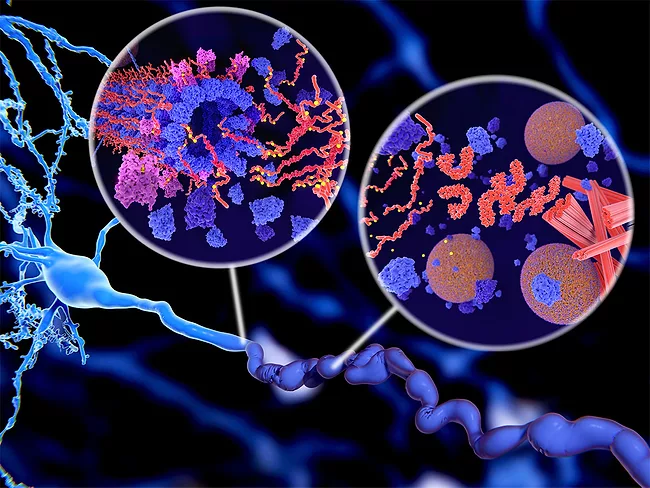
Tau pathology, driven by MAPT, is central to Alzheimer’s disease (AD) and closely associated with cognitive decline. Supported by extensive preclinical evidence across tauopathies, reducing MAPT expression represents a promising disease‑modifying strategy for AD, frontotemporal dementia (FTD), primary progressive aphasia (PPA) and related disorders. Researchers at Aviadobio Ltd. presented the preclinical characterization of AVB‑406, an intravenously administered gene therapy developed using its proprietary vMiX RNAi gene silencing platform, designed to lower tau production and reduce neurofibrillary tangle formation.
Sangamo Therapeutics Inc. discussed gene regulation approaches for neurodegenerative diseases when presenting findings on their clinical candidate ST-506 for the treatment of prion disease.
Researchers at UCLA have shown that divergent neuronal signaling in fragile X mice converges on EPAC2, a druggable target whose inhibition restores circuit activity and alleviates core behavioral impairments.
F. Hoffmann-la Roche Ltd. and Hoffmann-La Roche Inc. have identified new triggering receptor expressed on myeloid cells 2 (TREM2) agonists potentially useful for the treatment of rheumatoid arthritis, amyotrophic lateral sclerosis, frontotemporal dementia, multiple sclerosis, prion disease, stroke, Parkinson’s and Alzheimer’s disease.
Researchers at the University of London and collaborating institutions have developed a gene and cell therapy approach that enables sustained systemic frataxin protein delivery, improving motor performance and tissue pathology, and supporting a promising translational strategy for long-term disease stabilization in Friedreich’s ataxia patients.
 RSS
RSS