Researchers from Washington University presented data from a study that aimed to identify myeloid-derived suppressor cell (MDSC) markers in patients with multiple sclerosis (MS).
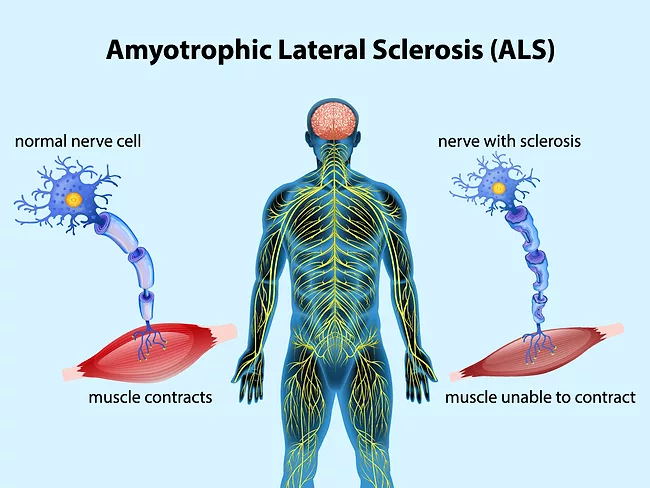
The FDA has awarded orphan drug designation to Eikonoklastes Therapeutics Inc.'s ET-101 program for the treatment of amyotrophic lateral sclerosis (ALS).
Small nuclear RNAs (snRNAs) play a crucial role in RNA splicing and cell functioning. The transcription of these RNAs is initiated by small nuclear RNA activation protein complex (SNAPc), and SNAPC4 is the subunit in charge of SNAPc-DNA binding. Previous studies have found that SNAPC4 deficiency led to decreased expression of these RNAs in animal models.
The Alborada Drug Discovery Institute (ADDI) will collaborate with YD Global Life Science Co. Ltd. (YDGLS) to develop inhibitors of the unfolded protein response for the treatment of diseases that cause dementia.
Neuropn Therapeutics LLC has divulged piperidine urea derivatives as bifunctional epoxide hydrolase 2 (EPHX2; sEH) inhibitors reported to be useful for the treatment of Parkinson's disease, pain, inflammation and neurodegeneration.
G protein-coupled receptor 183 (GPR183/EBI2) is one of the key regulators of the innate immune system, and it has been shown to be upregulated in multiple sclerosis (MS) plaques. In a recently reported study, researchers from Medical University of Gdansk evaluated the effects of pharmacological modulation of GPR183 signaling on remyelination.
One way psychiatric disorders differ from neurological disorders is by the absence of anatomically defined neuropathology. “Alzheimer's disease, Parkinson's disease or stroke have a very clear picture of what cells are changing and how they're changing. The specific changes are very clear under a microscope, but in psychiatric diseases one hasn't been able to see that,” Daniel Geschwind told BioWorld.
Sunovion Pharmaceuticals Inc. has identified substituted sulfonamide-chroman compounds reported to be useful for the treatment of essential tremor, among others.
Sunovion Pharmaceuticals Inc. has divulged new trace amine-associated receptor 1 (TAAR1; TAR1) agonists and/or 5-HT2A and/or 5-HT7 receptor antagonists reported to be useful for the treatment of bipolar and autism spectrum disorders, schizophrenia, substance abuse and dependence, Alzheimer's, Parkinson's and metabolic diseases.
The University of Texas System and Massachusetts Institute of Technology (MIT) have synthesized transcription factor PU.1 inhibitors reported to be useful for the treatment of Alzheimer's disease.

 RSS
RSS