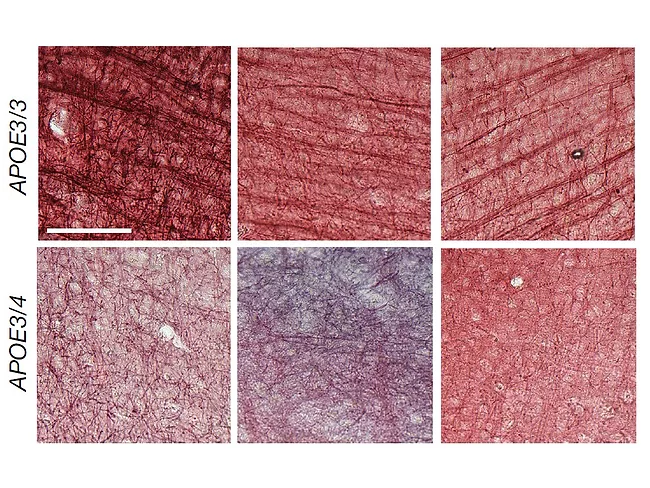
Carrying the apolipoprotein E4 allele (APOE4), and not the APOE3 variant, is the strongest risk factor for developing Alzheimer’s disease (AD). But the underlying mechanism has remained elusive. Now, researchers at MIT and Mount Sinai have found that in brains carrying the APOE4 allele, lipid and cholesterol processes were dysregulated in oligodendrocytes and that this effect reduced myelination.
Leitat Technological Center has patented 1H-pyrazole derivatives acting as sigma nonopioid intracellular receptor 1 (SIGMAR1) and/or sigma intracellular receptor 2 (TMEM97) ligands reported to be useful for the treatment of pain and neurological disorders.
The FDA has awarded orphan drug designation to Canbridge Pharmaceuticals Inc.'s CAN-106, a clinical-stage long-acting recombinant humanized monoclonal antibody targeting C5, for the treatment of myasthenia gravis.
Researchers have identified miR-124 signaling and its effects on AMPA receptor neurotransmission as a biological mechanism linking the shared risk scores of schizophrenia and bipolar disorders to their shared symptoms. The work, which appeared online in Neuron on Nov. 14, 2022, focused on schizophrenia and bipolar disorder, which are both highly heritable disorders that share substantial risk. Beyond their implications for those two specific disorders, the findings illustrate a path to connecting risk scores and behaviors via their biological link.
Neurons are specialized cells with a high metabolic demand to fulfill their function, survive or keep a healthy half-life. In this sense, the anabolism and catabolism of proteins and lipids could be associated to different neurodegenerative diseases. At the 2022 annual meeting of the Society for Neuroscience, scientists reported the latest discoveries on neuron metabolic needs at a session on 'Powering Thoughts: The Regulation of Neuronal Energy Metabolism and Mitochondria.'
Eleusis Therapeutics US Inc. has synthesized aryl-ring-substituted 3-phenylazetidines acting as 5-HT2 receptor ligands reported to be useful for the treatment of chronic pain, depression, atherosclerosis, chronic obstructive pulmonary disease, conjunctivitis, type 2 diabetes, multiple sclerosis and rheumatoid arthritis, among others.
Ono Pharmaceutical Co. Ltd. has entered a worldwide drug discovery collaboration agreement with Captor Therapeutics SA to develop novel small-molecule degrader drugs against a currently undrugged target of interest in neurodegenerative diseases.
Stimulating the brain via implanted electrodes is used to treat both movement disorders such as Parkinson’s disease, and some psychiatric conditions such as obsessive compulsive disorder. But researchers are also working on ways to make such implanted electrodes listen instead of talk – and translate neuronal signals for people that have lost the ability speak, or the ability to move. At the Neurophysiology: Decoding and Neural Processing II session of the 2022 Annual Meeting of the Society for Neuroscience in San Diego, researchers from the Wyss Center for Bio and Neuroengineering (Switzerland) presented a device implanted in the brain that allowed restoration of movement and speech.
Medshine Discovery Inc. and Jiangsu Chia Tai Tianqing Pharmaceutical Group Co. Ltd. have disclosed bicyclic substituted aromatic carboxylic acid compounds acting as complement factor B (CFB) inhibitors reported to be useful for the treatment of Parkinson's disease.
 RSS
RSS