Tohoku University has divulged quinoline compounds acting as histamine N-methyltransferase (HNMT) inhibitors reported to be useful for the treatment of narcolepsy, Alzheimer's disease and attention deficit hyperactivity disorder (ADHD).
For a long time, α2-adrenoceptor antagonists have been successfully used as adjunct therapy to improve pharmacotherapy of antipsychotics, antidepressants or anti-parkinsonian drugs.
Leucine-rich repeat kinase 2 (LRRK2) mutations adversely impair multiple physiological processes, and gain-of-function mutations in the LRRK2 gene are common in familial forms of Parkinson’s disease (PD).
Cell cycle-associated protein 1 (CAPRIN1) is an ubiquitously expressed protein, the levels of which are usually high in tissues with an elevated cell turnover; it is also abundant in the brain, where it regulates the transport and translation of synaptic protein mRNA.
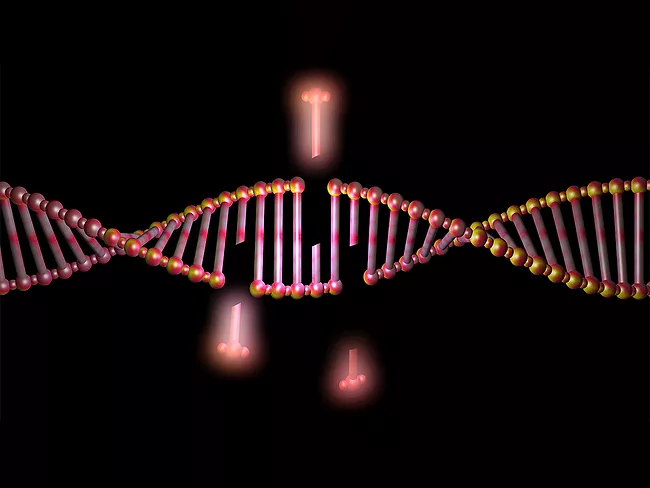
New research indicates faults in repairing DNA breaks that are caused by oxidative stress in the noncoding parts of the genome are directly involved in the development of neurological diseases. The discovery of the significance of problems in repairing single-strand breaks in ‘junk’ DNA opens up a new area of biology that will lead on to new drug targets, according to Sherif El-Khamisy, professor of molecular medicine and deputy director of the Health Lifespan Institute at the University of Sheffield, U.K., who is co-author of a Sept. 29, 2022, paper in Nature describing the discovery of a gene that sits at the heart of the repair process.
Mindset Pharma Inc. has patented indole derivatives acting as 5-HT2A receptor agonists reported to be useful for the treatment of neurological disorders and psychosis, among other disorders.
Variants in a newly discovered microprotein affected the risk of Alzheimer’s disease more than any other known risk variant besides ApoE. The protein, dubbed SHMOOSE by its discoverers, was identified in a mitochondrial-wide association study (miWAS). The researchers reported their findings in the Sept. 21, 2022, issue of Molecular Psychiatry. The newly identified variant is not rare – it occurs in about a quarter of the Caucasian population, slightly more than the ApoE4 allele. Its effects are also not subtle – in their paper, the team estimated that those with the high-risk variant SHMOOSED47N were roughly 30% more likely to develop AD than those without.
The mutant gene causing Huntington’s disease (HD) is active from the earliest stages of brain development, even though the pathology is not evident until between 30 and 50 years of age. That delay is ascribed to plasticity enabling the brain to compensate to such an extent that overt signs of disease take time to develop. As a result, it is difficult to plot a route from early molecular defects to development of HD several decades later.