Altamira Therapeutics Ltd. has entered into a collaboration and option agreement with Heqet Therapeutics srl, a spin-out from King’s College London, to utilize the company’s proprietary Oligophore delivery platform in cardiovascular research.
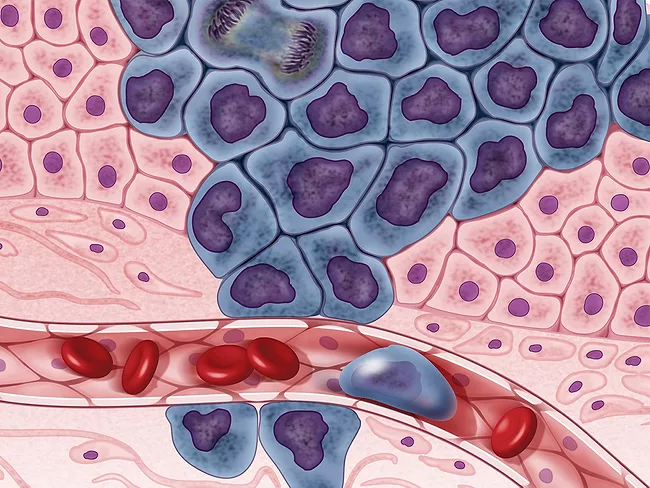
Lift Biosciences Ltd. has announced successful proof-of-concept production of its patented cancer-killing alpha neutrophils from induced pluripotent stem cells (iPSCs). The proof of concept using In-Lift, the company’s second-generation platform which is derived from iPSCs, has shown that the alpha neutrophil type cells produced from iPSCs are able to be activated by chemokines released by tumors and that the cells actively destroy cancer cells.
Propanc Biopharma Inc. has announced the successful production of synthetic recombinant proenzymes trypsinogen and chymotrypsinogen via the Proenzyme Optimization Project 1 (POP1) joint research and drug discovery program with the Universities of Jaén and Granada.
Hepatocellular carcinoma (HCC) is the most frequent tumor of the liver, and in contrast to the reduction in the number of deaths in many common cancers, HCC’s mortality rates have gone up in recent years. One of the features that characterizes HCC is the activation of the Wnt/β-catenin signaling. Recent preclinical testing in HCC models has shown a reduction in tumor growth using siRNA or ASOs acting as β-catenin inhibitors.
Poseida Therapeutics Inc. has received FDA clearance of its IND application for P-CD19CD20-ALLO1, an allogeneic dual chimeric antigen receptor (CAR) T-cell product candidate being developed for relapsed or refractory B-cell malignancies in partnership with F. Hoffmann-La Roche Ltd. The company is actively focused on opening clinical sites for a phase I study in adults with relapsed or refractory B-cell malignancies.
Researchers from the Chinese Academy of Medical Sciences and Peking Union Medical College reported on the development of a novel EDB-FN-targeted Gd-based contrast agent, named EDB-Gd-DOTA-Cy7, for imaging and treatment planning of pancreatic ductal adenocarcinoma (PDAC).
The FDA has cleared C4 Therapeutics Inc.’s IND application for CFT-8919, an orally bioavailable Bidac (bifunctional degradation activating compound) degrader designed to be potent and selective against EGFR L858R for non-small-cell lung cancer (NSCLC).
It has been previously demonstrated that the WNT gene/protein family member WNT5A is down-regulated in leukemia, and low expression of this tumor suppressor has been correlated with disease progression and poor prognosis. In a recent study, researchers from Universidade Estadual de Campina aimed to assess the role of WNT5A in leukemia and evaluate the effects of Foxy-5, (Wntresearch AB) a WNT5A-mimicking compound, on the progression of this disease.
Researchers from Stanford University and affiliated organizations have provided details on the discovery and preclinical evaluation of [11C]MGX-10S, a novel PET tracer for GPR84, which is a G protein-coupled receptor (GPCR) expressed predominately on myeloid cells.
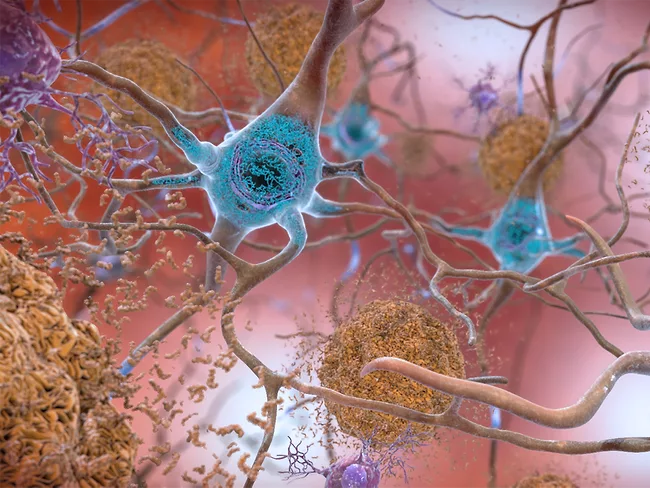
With the approval of Aduhelm (aducanumab, Eli Lilly & Co.) and Leqembi (lecanemab, Eisai Co. Ltd.), there are finally amyloid-targeting drugs available for Alzheimer’s disease (AD). What’s not available, though, are rose-colored glasses of the prescription strength that would make these approvals look like AD’s happy ending. The biopharma industry is already well aware of the need for broader horizons. Roughly three-quarters of drugs now in clinical development for AD target neither amyloid-β (Aβ) nor tau. Still, the genetic evidence from familial AD strongly implicates Aβ processing in AD’s origins. In his opening plenary talk at the European Academy of Neurology 2023 annual conference, Thomas Südhof suggested new ways to look at the clinical data.
 RSS
RSS




.webp?height=488&t=1670008838&width=650 "Acute myeloid leukemia")