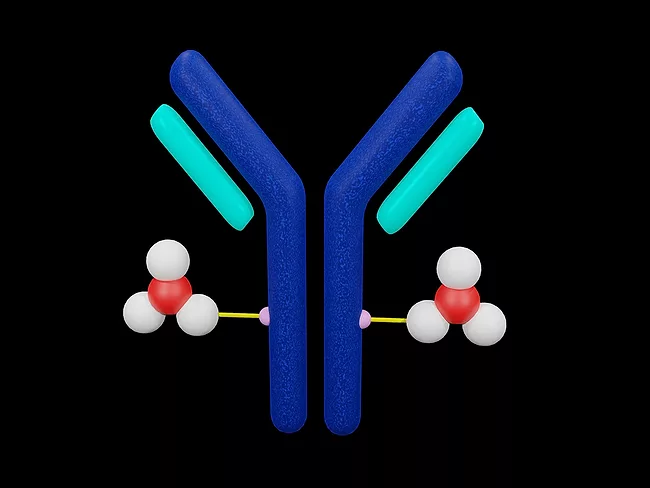
Legochem Biosciences Inc. has entered into a license agreement with Elthera AG to develop and commercialize a novel antibody-drug conjugate (ADC) therapy using a monoclonal antibody developed by Elthera.
Hillstream Biopharma Inc. has announced initial results evaluating the synergy of ferroptosis inducer HSB-1216 (quatramer salinomycin) with anti-PD-1 antibody pembrolizumab in the Calu-1 KRAS G12C-mutated non-small-cell lung cancer (NSCLC) cell line.
Researchers from The Salk Institute have described a signaling pathway that sets off an unusual, autophagy-dependent cell death mechanism as a fail-safe for cells that have evaded senescence mechanisms. The scientists found a tumor suppression mechanism mediated by telomere signaling, which activated an innate immune response through mitochondrial and telomere complexes to eliminate cells with shortened telomeres.
A study by researchers in Spain suggests that current metagenomic analyses of the microbiome can yield erroneous results, largely due to the incomplete databases that are used to identify microbial DNA sequences. A team led by Clemente Fernández Arias and Federica Bertocchini at the Centro de Investigaciones Biológicas Margarita Salas, Madrid, evaluated current microbiome analysis techniques on computer simulations of microbial communities in a report published on Feb. 8 in PLOS ONE.
Gluetacs Therapeutics (Shanghai) Co. Ltd. has described proteolysis targeting chimera (PROTAC) compounds comprising E3 ubiquitin ligase binding moiety covalently linked to a Bruton tyrosine kinase (BTK) and eukaryotic peptide chain release factor GTP-binding subunit ERF3A (GSPT1) targeting moiety through a linker reported to be useful for the treatment of cancer, anemia, transplant rejection, neurodegeneration, infections, autoimmune, inflammatory and metabolic disorders.
Scripps Research Institute and Shangpharma Innovation have divulged cyclic GMP-AMP synthase (MB21D1; cGAS) inhibitors reported to be useful for the treatment of autoinflammatory interferonopathy, autoimmune and neurological disorders.
The University of Hong Kong has identified reactive oxygen species (ROS)-responsive prodrugs reported to be useful for the treatment of rheumatoid arthritis, cancer and hypertension.
 RSS
RSS