Researchers have gained new insights into both genetic and nongenetic factors affecting life span, and how they differ between males and females. Several genes were correlated with longevity, according to a study by the École Polytechnique Fédérale de Lausanne (EPFL). However, some did not affect life span until males reached a certain age. Early access to nutrients during growth also affected longevity, as they saw in their study of more than 3,000 mice and verified with human data. “This study is one of the biggest studies on mass longevity. We were looking for genetic determinants of longevity but there are non-genetic determinants affecting longevity,” the first author Maroun Bou Sleiman, researcher at EPFL, told Bioworld.
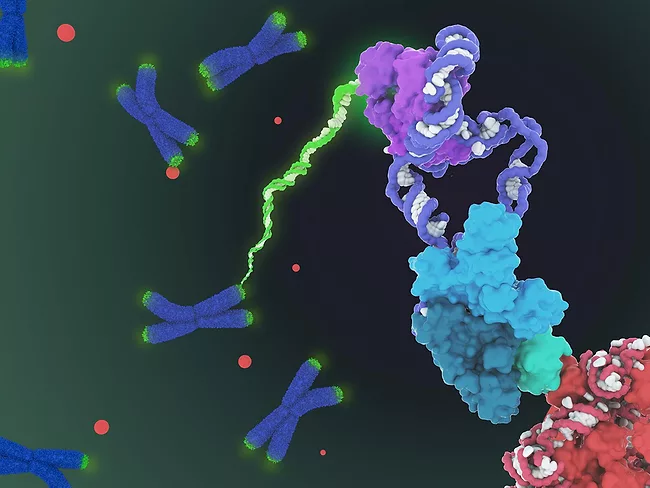
Arizona State University scientists have discovered an unprecedented pathway in a fungus to produce telomerase RNA (TER) from a protein-encoding messenger RNA (mRNA). Unlike in animals and other fungi, this fungal TER is transcribed by RNA polymerase III, lacks a protective 5′ cap and it is processed from the 3′-untranslated region of an mRNA transcript. This telomerase has two essential structural domains that keep it active. For now, scientists have only observed this process in the fungus Ustilago maydis, or Mexican truffle. “In animals, and even in Ascomycota, which is another fungal phylum, the telomerase RNA is transcribed by RNA polymerase II as an independent gene. This is the only case among all different kingdoms in eukaryotes that the telomerase RNA is processed from the mRNA molecule. It is a very unusual biogenesis pathway.” Julian Chen told BioWorld.
Sichuan Kelun-Biotech Biopharmaceutical Co. Ltd. has synthesized new heterocyclic RAF kinase and/or Ras GTPases inhibitors reported to be useful for the treatment of cancer.
Wigen Biomedicine Technology (Shanghai) Co. Ltd. has identified new histone deacetylase 1 (HDAC1) and/or HDAC3 inhibitors reported to be useful for the treatment of cancer.
Leitat Technological Center has patented 2,3-dihydro-1h-pyrrolo[3,2-b]pyridine derivatives acting as sigma non-opioid intracellular receptor 1 (SIGMAR1) and sigma intracellular receptor 2 (TMEM97) ligands reported to be useful for the treatment of pain, hyperalgesia, depression, anxiety and attention deficit hyperactivity disorder (ADHD).

 RSS
RSS