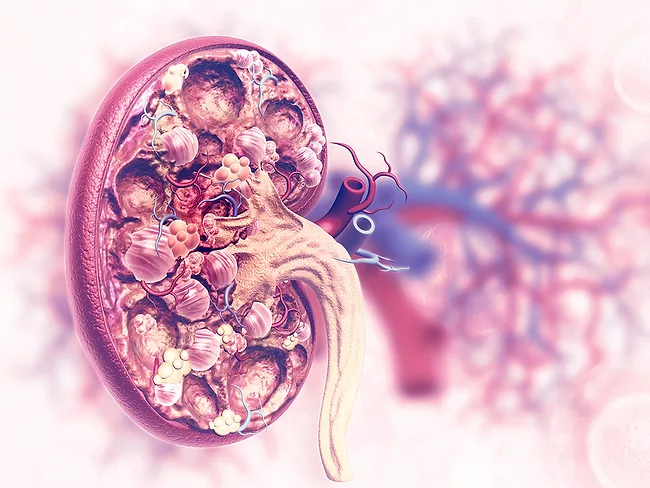
Genescience Pharmaceuticals Co. Ltd. has been developing an SLC6A19 inhibitor – Gensci-144 – for the potential treatment of chronic kidney disease (CKD).
Prostate cancer is a leading cause of cancer-related deaths among men and is a cancer type that shows genomic heterogeneity and several molecular alterations. By analyzing available microarray and next-generation transcriptome sequencing data, researchers at the University of Alabama at Birmingham found that thyroid hormone receptor-interacting protein 13 (TRIP13), a member of the AAA ATPase family, was overexpressed in prostate cancer, making it a potential therapeutic target.
Neurodegenerative disorders such as Alzheimer’s disease (AD) and frontotemporal dementia are characterized by the accumulation of hyperphosphorylated tau protein, forming neurofibrillary tangles, ultimately leading to synaptic dysfunction and cognitive decline.
Chronic activation or upregulation of interleukin-1 receptor-associated kinase 4 (IRAK4) has been linked to several diseases, including systemic lupus erythematosus, rheumatoid arthritis, atopic dermatitis, Alzheimer’s disease and atherosclerosis. Researchers from the Ocean University of China aimed to address the limitations of traditional small-molecule inhibitors by designing novel proteolysis targeting chimeras (PROTACs) for IRAK4 degradation.
ALK5 mediates the core profibrotic TGF-β signaling cascade that promotes fibroblast activation, myofibroblast differentiation and extracellular matrix production, ultimately leading to persistent tissue remodeling and lung fibrosis.
Onco-Innovations Ltd. has announced the initiation of hepatocyte and liver microsome metabolism studies for ONC-010, the company’s lead nanoparticle-formulated PNKP inhibitor. The studies will evaluate the metabolic stability of ONC-010 across human, rat and dog systems.
Up to 90% of people with dementia develop at least one behavioral or psychological symptom, such as psychosis, anxiety or agitation/aggression, which often overlap and worsen both patient quality of life and caregiver burden. Based on preclinical evidence, dual 5-HT2A/7 receptor antagonism may represent a rational strategy to modulate psychosis, agitation and mood-related symptoms.
The gut microbiota may be altered in people with depression as a result of treatment. These microorganisms reorganize differently in individuals who respond to therapy. In a multiomics study of antidepressant-naive patients presented at the 2026 World Congress of Neuropsychopharmacology (CINP), scientists from National Taiwan University found that patients who improved after antidepressant treatment maintained a more balanced and functional microbial ecosystem, recovered beneficial metabolites, and displayed blood-based biological signals that aligned with these changes.
A year and a half from its formation, Oblenio Bio has generated positive nonhuman primate data for LBL-051 in chronic autoimmune diseases and closed a $62 million series B to move the trispecific T-cell engager into the clinic.
Laekna Pharmaceutical Ningbo Co. Ltd. has disclosed Werner syndrome ATP-dependent helicase (WRN; RECQ3; RECQL2) inhibitors found to be potentially useful for the treatment of cancer.
 RSS
RSS