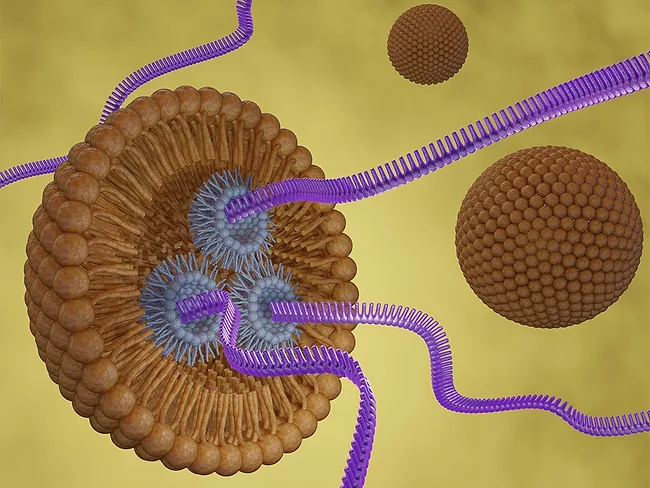
In Parkinson’s disease, α-synuclein accumulates in neurons and may thereby contribute to their degeneration. Reducing expression of α-synuclein may be an effective therapy, but delivering short interfering RNA (siRNA) to the brain noninvasively is notoriously ineffective, in part because siRNA does not pass the blood-brain barrier efficiently.
Evolveimmune Therapeutics Inc. has gained IND clearance from the U.S. FDA for EVOLVE-104, a novel trispecific T-cell engager for the treatment of solid tumors. The company will begin a phase I trial this year.
Colorectal cancer is among the most common malignant tumor types and the second leading cause of tumor-related deaths worldwide. Tumor necrosis factor α-induced protein 8-like protein 2 (TIPE2) is a protein member of the TIPE family and highly expressed in immune cells. The prognostic impact and the relationship with tumor immunity of TIPE2 plus other immune markers such as CD8, CD20 and CD66b were evaluated in colorectal cancer by researchers from First Affiliated Hospital of Anhui Medical University and collaborators.
A little-known tissue composed of a cluster of immune cells could offer novel insights into the development of neurological disorders. Meninges' immune system changes with age and neurodegeneration. Are they protecting the brain or fueling disease? Mapping and analyzing the so-called ectopic lymphoid structures (ELSs) in the meninges at different ages in preclinical models of neurodegenerative diseases such as Alzheimer's may help clarify whether they are good, bad, or ugly, as in the iconic film by Sergio Leone.
The U.K. Medicines and Healthcare products Agency (MHRA) is calling for more research into the vaginal microbiome as a way to redress the historic under-representation of women in clinical studies, which it said has contributed to “critical shortcomings” in understanding of female-specific conditions.
F. Hoffmann-La Roche Ltd. and Hoffmann-La Roche Inc. have divulged monoglyceride lipase (MGLL; MAGL) inhibitors reported to be useful for the treatment of cancer, amyotrophic lateral sclerosis, multiple sclerosis, pain, neuroinflammation, neurodegeneration, Alzheimer’s disease and inflammatory bowel disease, among other disorders.
Suzhou Zion Pharma Technology Co Ltd. has identified KRAS inhibitors, in particular GTPase KRAS G12D mutant and/or G13D mutant, reported to be useful for the treatment of cancer.
The Ohio State University has synthesized dual specificity protein kinase TTK (MPS1; MPS1L1) inhibitors reported to be useful for the treatment of cancer.
Stanford University has disclosed leucine-rich repeat kinase 2 (LRRK2; dardarin) inhibitors reported to be useful for the treatment of cancer, Crohn’s disease, leprosy, neurodegeneration, immunological disorders, Parkinson’s disease and Alzheimer’s disease.
 RSS
RSS