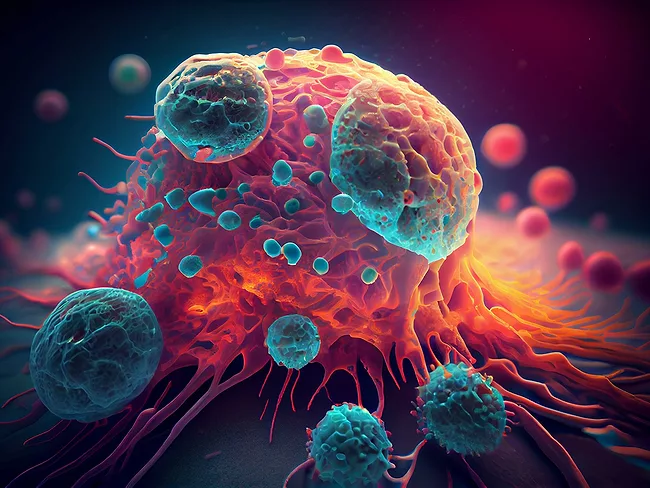
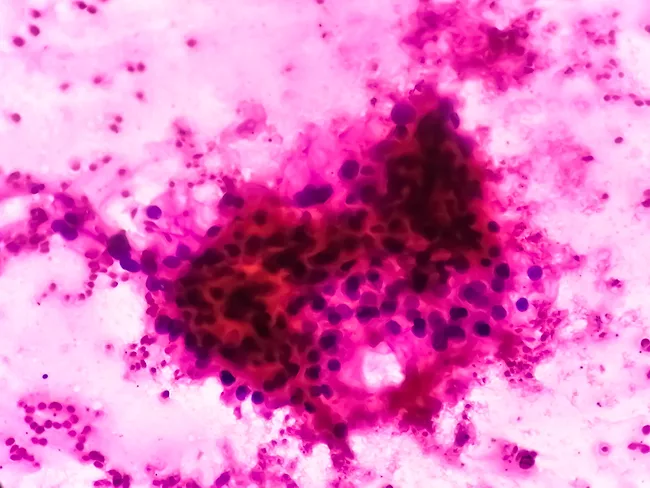
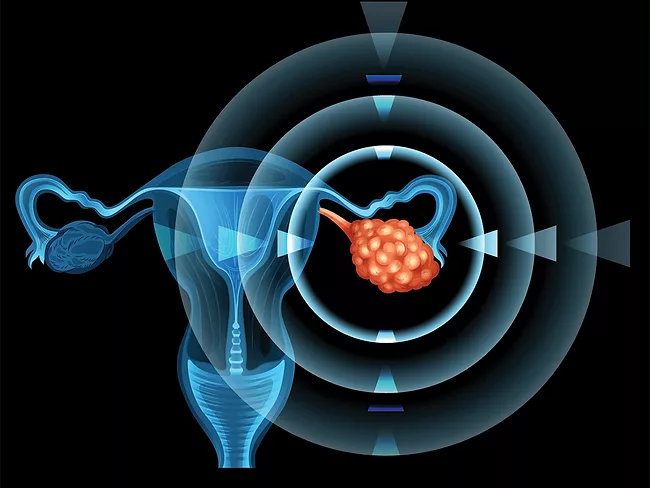
A newly developed oncolytic virus, SKV-012, has demonstrated promising results in preclinical studies and a phase I clinical trial for the treatment of advanced solid tumors.
Glucagon-like peptide 1 receptor (GLP-1R) agonism is a validated approach for treating obesity. ECC-4703 is a small molecule and liver-targeting compound developed by Eccogene Co. Ltd. It is an agonist of thyroid hormone receptor β (THR-β) and its metabolic impact on preclinical models of obesity in combination with semaglutide was investigated.
Chinese researchers from Huazhong University of Science and Technology have developed a novel carbonic anhydrase IX (CAIX)-targeting radiotracer, [68Ga]NXK-44, for the imaging of hypoxic tumors and renal cell carcinoma (RCC).
Researchers from the University of Oslo and Oncoinvent ASA present a new PTK7-targeted α therapy using a lead-212 (212Pb)-labeled antibody, potentially offering a novel approach for treating PTK7-expressing malignancies, and its assessment in a preclinical study.
Researchers from Grey Wolf Therapeutics Ltd. presented the preclinical characterization of GRWD-0715, a selective ERAP1 inhibitor developed as a disease-modifying therapeutic approach aimed at preventing CD8+ T-cell activation and the subsequent tissue inflammation and damage associated with autoimmune conditions.
Boehringer Ingelheim Pharma GmbH & Co KG has selected a third oncology drug candidate to advance into IND-enabling studies under its ongoing collaboration with Oxford Biotherapeutics Ltd.
Aussie researchers have used CRISPR gene editing tools to “armor” chimeric antigen receptor (CAR) T cells to activate additional cancer-fighting proteins at the tumor site, enabling them to target cancer cells in solid tumors.
Unnatural Products Inc. notched another collaboration by signing on with Argenx SE in a multitarget research collaboration. Unnatural Products, which is getting up-front, near-term payments and R&D funding, could end up with about $1.5 billion in milestones and options payments plus tiered royalties on net sales.
 RSS
RSS