Capsida Biotherapeutics Inc. has gained IND clearance from the FDA for CAP-002, its first-in-class, intravenously administered gene therapy for syntaxin-binding protein 1 developmental and epileptic encephalopathy (STXBP1-DEE). Dosing in the phase I/IIa SYNRGY trial will begin in the third quarter of this year.
Among the most significant genetic risk factors for age-related macular degeneration is the Y402H variant of complement factor H, which, along with its splice isoform FHL-1, impairs binding to the retinal surface.
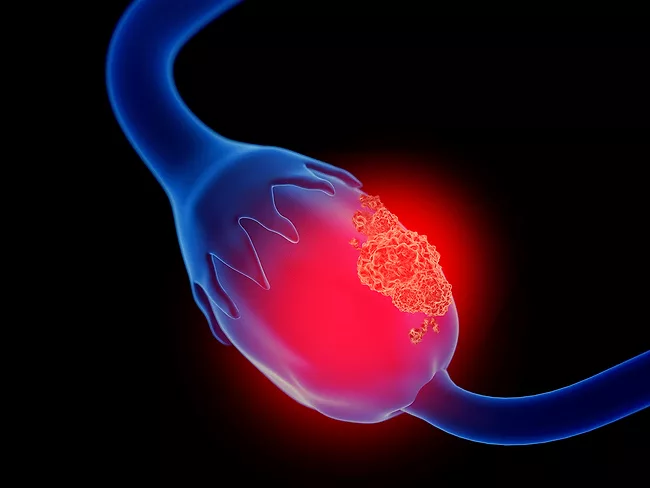
Researchers from Trinity College Dublin, Princeton University and collaborators have discovered that blocking the uptake of lipids by immune cells within the ascites microenvironment could reshape treatment for advanced ovarian cancer.
Work at The Cleveland Clinic Foundation has led to the identification of new 3β-hydroxysteroid dehydrogenase/delta 5-->4-isomerase type 1 (3β-HSD1, HSD3B1) inhibitors reported to be useful for the treatment of cancer.
A Merck Sharp & Dohme LLC patent details new GTPase KRAS and its G12C, G12D, G12V and/or G13D mutant inhibitors reported to be useful for the treatment of cancer.
The Research Foundation of State University of New York and the U.S. Department of Health and Human Services have jointly developed prazole-based compounds acting as H+/K+-ATPase inhibitors and thus reported to be useful for the treatment of viral infections.
Arrepath Inc. has patented new UDP-2,3-diacylglucosamine hydrolase (LpxH) (bacterial) inhibitors reported to be useful for the treatment of gram-negative bacterial infections.
Researchers from Osaka University have developed a novel approach to target nicotinamide N-methyltransferase (NNMT), an enzyme implicated in cancer progression, using antisense oligonucleotides (ASOs).
Traditional neoantigen prediction methods primarily rely on HLA-peptide binding databases, often producing false positives. This challenge highlights the need for improved strategies to identify truly immunogenic neoantigens. Neoantigen-based cancer vaccines have shown promising efficacy in recent clinical trials for treating solid tumors, offering a potential solution.
 RSS
RSS