Researchers from the Cyprus Institute of Neurology and Genetics and collaborators report the development of a gene silencing therapy for Charcot-Marie-Tooth type 1A.
Gilead Sciences Inc. has exercised its option to exclusively license KT-200, a first-in-class, oral CDK2 molecular glue degrader development candidate discovered and characterized by Kymera Therapeutics Inc. under the parties’ strategic collaboration agreement.
Researchers from Singlomics Zhuhai Danxu Biopharmaceuticals Co. Ltd. presented DXP-006, a humanized antibody targeting IL1RAP, a shared co-receptor required for IL-1, IL-33 and IL-36 cytokines.
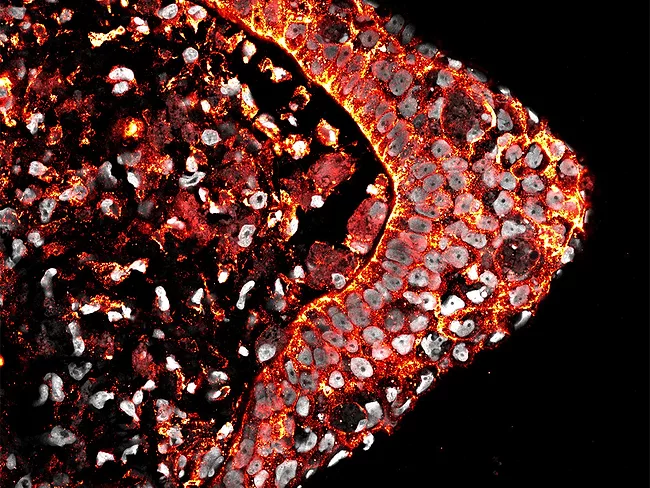
The loss of regenerative capacity in mammals over the course of evolution may be linked to certain environmental conditions rather than to a genetic limitation. Tissue stiffness around an amputated area, oxygen availability, or epigenetic regulation could determine this ability, according to two simultaneously published but independent studies published in Science today.
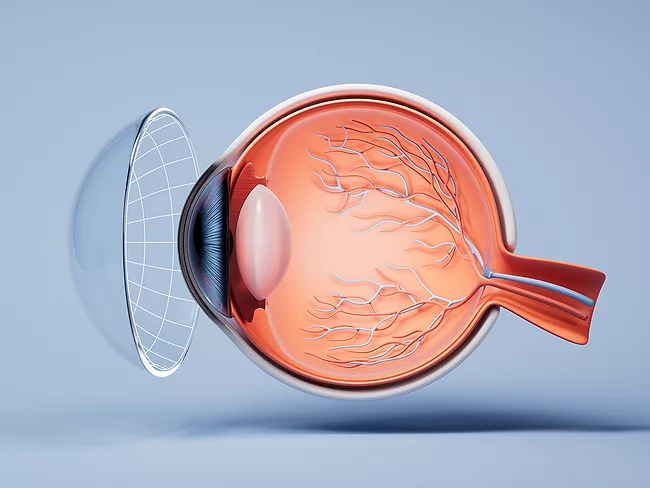
A smart polymer contact lens measures intraocular pressure (IOP) in real time and automatically releases medication into the eye when IOP goes beyond a critical limit. This technological advance, developed by scientists at the Terasaki Institute for Biomedical Innovation (TIBI), could enable personalized glaucoma therapy, avoiding poor patient adherence to their prescribed regimen and eliminating the need for bulky electronic devices. Animal models tolerate it well and, although the load is concentrated at the edges of the lens, it is still unknown how it could affect visual acuity.
Founded amid the booming next-generation antibody-drug conjugate (ADC) space, Sidewinder Therapeutics Inc. has emerged from stealth with an oversubscribed $137 million series B round and plans to advance a lead program into the clinic in 2027.
Affirma Biotech SL has disclosed new programmed cell death 1 (PDCD1; PD-1; CD279)/PD-1 ligand 1 (PD-L1; CD274) interaction inhibitors potentially useful for the treatment of cancer, bacterial, fungal and viral infections.
Merck Sharp & Dohme LLC (MSD) has synthesized new indazole derivatives acting as potassium/sodium hyperpolarization-activated cyclic nucleotide-gated channel 1 (HCN1) and HCN2 blockers potentially useful for the treatment of pain, tinnitus, neurological and mood disorders.
Ewha Womans University and Gachon University have discovered new pyrazinocarbazole derivatives acting as transcriptional coactivator YAP1/transcriptional enhancer factor (TEAD) interaction inhibitors potentially useful for the treatment of colorectal cancer.

 RSS
RSS