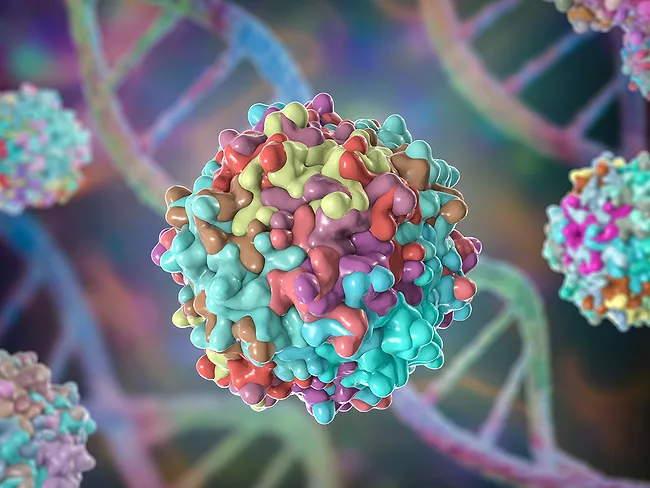
Blackfinbio Ltd. has obtained IND clearance from the FDA for its novel AAV gene therapy, BFB-101, for hereditary spastic paraplegia type 47 (SPG47), which is caused by changes in the AP4B1 gene. A phase I/II trial will be conducted in the U.S. at Boston Children’s Hospital.
The Mediator complex is a system that regulates protein-coding gene transcription, where mediator of RNA polymerase II transcription subunit 16 (MED16) is a subunit belonging to this system. Pathogenic genetic variants in Mediator complex subunits usually lead to neurodevelopmental and neurodegenerative diseases with a variety of clinical symptoms, usually designated as MEDopathies.
A recent study by researchers from Texas A&M University presented a new vaccine designed to target the ligand-binding domain of the serotonin 2A receptor (5-HT2AR), which resides in the second extracellular loop (EL2) and was previously identified as the key region for receptor activation. The new candidate, called EL2-5HTVac, was shown to provide a long-lasting and selective therapeutic approach to avoid increased bleeding risk complications.
Research of the neuroimmune mechanisms involved in stress-related fear revealed how astrocytes interact with neurons in the amygdala. The study, led by Harvard scientists, also unveiled that this interaction recruited monocytes to the meninges during chronic stress and showed how psychedelic compounds reversed monocyte accumulation in the meninges and reduced fear behavior.
A quarterly dynamic table featuring new molecular entities (NMEs) revealed for the first time in current literature, at congresses and in company communications during the quarter. NMEs include compounds chosen for further pharmacological evaluation or as clinical candidates; new leads whose structural optimization could provide new therapeutic agents; new additions to the structural diversity of known mechanistic classes of drugs; and new pharmacological tools for investigating drug targets.
Synthetic Design Lab Inc., which emerged from stealth with a $20 million seed round and a platform technology aimed at advancing the antibody-drug conjugate (ADC) space, began with its founders identifying a single clear goal: how to deliver more payload to a target cancer cell.
Pliant Therapeutics Inc. has described integrin αvβ1, integrin αvβ6 and/or integrin αvβ8 antagonists reported to be useful for the treatment of cancer and fibrosis.
CSPC Zhongqi Pharmaceutical Technology (Shijiazhuang) Co. Ltd. has identified proteolysis targeting chimeras (PROTACs) comprising an E3 ubiquitin ligase cereblon binding moiety coupled to an EGFR-targeting moiety via a linker reported to be useful for the treatment of non-small-cell lung cancer.
Duality Biologics (Suzhou) Co, Ltd. has synthesized proteolysis targeting chimera (PROTAC) compounds comprising an E3 ubiquitin ligase binding moiety covalently linked to a eukaryotic peptide chain release factor GTP-binding subunit ERF3A (GSPT1)-targeting moiety through a linker reported to be useful for the treatment of cancer.
 RSS
RSS