Shanghai Helioson Pharmaceutical Co. Ltd. has synthesized molecular glue degraders comprising an E3 ubiquitin ligase coupled to a eukaryotic peptide chain release factor GTP-binding subunit ERF3A (GSPT1) targeting moiety acting as GSPT1 degradation inducers reported to be useful for the treatment of cancer.
“Men in general have been playing golf for a longer time – in those old boy networks we still haven’t tapped into.” It may seem far-fetched, but that is put forward as a reason for underinvestment in women’s health companies. The argument goes that women heading women’s health startups find it hard to raise money because their networks are weaker, making it harder to tap into investment networks.
Neurodegenerative pathologies, once primarily associated with protein alterations, should be revisited in the context of lipidopathies, researchers argued at the 2025 International Conference of Alzheimer’s & Parkinson’s Disease and Related Neurological Disorders (AD/PD 2025).
Malignant melanoma (MM) is among the most lethal cutaneous neoplasms, frequently tied to metastasis and poor outcomes. Neural cell adhesion molecule L1 (L1CAM) is a protein that has been associated with poor prognosis in several cancer types, but its association with MM is poorly understood.
The I148M mutation in the PNPLA3 gene, which encodes patatin-like phospholipase domain-containing protein 3, is known to confer risk of fatty liver, cirrhosis and hepatic inflammation, which may lead to hepatocellular carcinoma or metabolic dysfunction-associated steatohepatitis (MASH).
Using its proprietary FBDD platform, Blacksmith discovered FG-2101, the prodrug form of FG-960, the first known non-hydroxamate LpxC inhibitor that exerted activity against LpxC at the nanomolar range.
ALX Oncology Holdings Inc. has received FDA clearance for the IND application for ALX-2004, the company’s potential best- and first-in-class antibody-drug conjugate (ADC) for the treatment of epidermal growth factor receptor (EGFR)-expressing solid tumors.
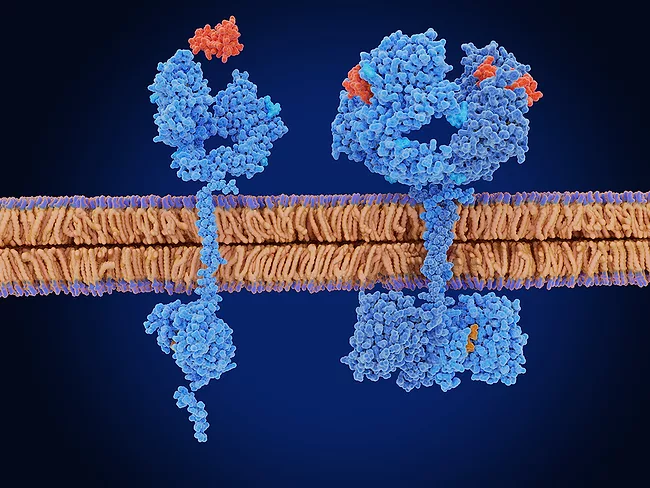
The survival and plasticity of neurons depends on the signaling of the nerve growth factors BDNF and NGF acting through TRK receptors, which is crucial in neurological disorders such as Alzheimer’s disease (AD). Alzecure Pharma’s ACD-856 is a positive allosteric modulator (PAM) of TRK receptors that is in phase I trials for AD, and has shown good safety, pharmacokinetics and target engagement in the central nervous system.
Ibio Inc. has announced data from a non-GLP, nonhuman primate (NHP) pharmacokinetic (PK) study of IBIO-600, the company’s lead asset and a potentially best-in-class long-acting anti-myostatin antibody designed for subcutaneous administration. Results suggest the antibody could provide a significantly extended half-life in humans and a weight loss treatment option while preserving and promoting muscle growth.

 RSS
RSS