Hypertrophic cardiomyopathy (HCM) is a condition that limits tolerance to exercise and predisposes people to sudden cardiac death due to mutations in sarcomeric genes. Researchers from Cedars-Sinai Medical Center have tested TY-1, a chemically modified oligonucleotide-based drug inspired by the previously tested EV-YF1, in mice with HCM.
Marvel Biosciences Corp., together with its wholly owned subsidiary Marvel Biotechnology Inc., has announced nondilutive funding from the Alberta Innovates CarE (AICE) market access program to support progression into the clinic and phase I testing of lead compound, MB-204. MB-204, a fluorinated derivative version of istradefylline, offers potential as a new approach totreating autism spectrum disorders and related conditions, addressing socio-behavioral symptoms through a differentiated mechanism.
Aktis Oncology Inc. has obtained IND approvals from the FDA enabling the company to proceed to a phase Ib trial with AKY-2519, a miniprotein radioconjugate targeting B7-H3-expressing tumors, including prostate, lung and other solid tumors. Specifically, the IND clearances relate to [64Cu]Cu-AKY-2519 for imaging and [225Ac]Ac-AKY-2519 for therapeutic use.
Hidradenitis suppurativa (HS) is a chronic inflammatory skin disease characterized by dysregulated T-cell-mediated immune responses and suboptimal outcomes with current therapies. Increased expression of OX40 and OX40L in lesional HS skin suggests a contributory role for this pathway in disease-associated inflammation.
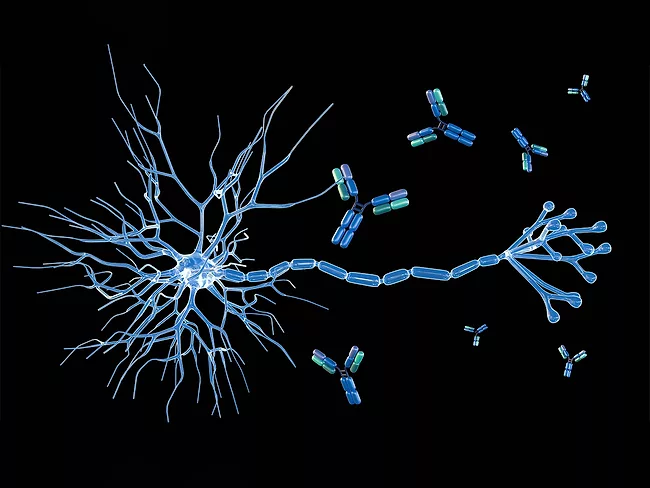
Certain cancers, such as triple-negative breast cancer, produce antibodies that, although they help fight the tumor, can cross the blood-brain barrier and alter the function of NMDA receptors (NMDAR) in the brain, which are essential for neuronal signaling. Scientists at Cold Spring Harbor Laboratory (CSHL) have identified their origin and described how this process is linked to the maturation of these antibodies, which can activate or inhibit the receptor, causing neurological and psychiatric symptoms.
Nanjing Sanhome Pharmaceutical Co. Ltd. has synthesized new Werner syndrome ATP-dependent helicase (WRN; RECQ3; RECQL2) inhibitors potentially useful for the treatment of cancer.
Work at Ventus Therapeutics US Inc. has led to the identification of new caspase-4 allosteric and/or caspase-5 inhibitors reported to be useful for the treatment of sepsis, stroke, myocardial infarction, acute respiratory distress syndrome, inflammatory bowel disease, hidradenitis suppurativa, diabetic nephropathy and diabetic retinopathy, among others.
Rapt Therapeutics Inc. has patented new fused ring imidazole compounds acting as TNF-α modulators and thus reported to be useful for the treatment of cancer, pain, metabolic and autoimmune disease, inflammation, neurological, cardiovascular and eyes disorders.
A University of Texas System patent describes new radiolabeled positron emission tomography (PET) imaging agents targeting receptor-interacting serine/threonine-protein kinase 1 (RIPK1; RIP-1). As such, they are potentially useful for the diagnosis of cancer, retinal and autoimmune diseases, neurological and inflammatory disorders.
 RSS
RSS