Modified vaccinia Ankara immunization in nonhuman primate models of lethal mpox virus infection, although effective to some extent, has been linked to breakthrough lesions and throat swab viremia.
Data from preclinical studies conducted to evaluate the activity of NKT-3964, a first-in-class, orally bioavailable CDK2-selective PROTAC degrader being developed for the potential treatment of cancer, were reported by Nikang Therapeutics Inc.
SOS1 is a guanine nucleotide exchange factor (GEF) that activates KRAS, and recent preclinical studies have demonstrated that combining KRAS and EGFR inhibitors with SOS1 inhibitors can overcome resistance and achieve durable responses.
Anti-HER2 antibody-drug conjugates (ADCs) have proven effective in multiple tumor types. However, between 64% and 85% of HER2+ breast and gastric cancer patients retain HER2 expression after treatment with trastuzumab deruxtecan (T-Dxd), which includes a topoisomerase I inhibitor payload.
Nimbus Therapeutics LLC reported the identification of an allosteric, potent, selective, highly efficacious and noncovalent Werner syndrome helicase (WRN) inhibitor, NTX-452, for the potential treatment of microsatellite instability high (MSI-H) tumors.
Belief Biomed Inc.’s gene therapy drug BBM-D101 has been awarded U.S. orphan drug and rare pediatric disease designations by the FDA for the treatment of Duchenne muscular dystrophy (DMD).
Researchers from Congruence Therapeutics Inc. have described the development of a mouse model of genetic obesity with a clinically relevant, naturally occurring human melanocortin MC4 receptor (MC4R) mutation.
Duality Biologics Ltd. presented preclinical data on DB-1419, a potentially first-in-class bispecific antibody-drug conjugate (ADC) consisting of a humanized antibody targeting B7-H3 and PD-L1 conjugated to a DNA topoisomerase I inhibitor under development for the treatment of cancer.
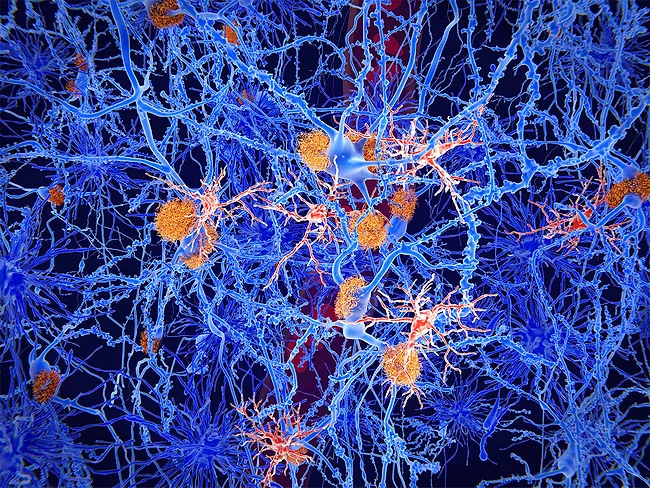
Reducing microglial activity in the presence of apolipoprotein E4 (APOE4) has uncovered a mechanism associated with the deposition of misfolded amyloid and tau in a novel mouse model of Alzheimer’s disease. By transplanting human neurons into the mouse brain and eliminating the mouse microglia, scientists at the Gladstone Institutes in San Francisco observed that amyloid and tau deposition was reduced. These results support therapeutic strategies that target APOE4 and microglia.
Researchers from Duality Biologics (Suzhou) Co. Ltd. presented the discovery and preclinical characterization of DB-1314, a novel delta-like ligand 3 (DLL3)-targeting antibody-drug conjugate (ADC) for the treatment of cancer.
 RSS
RSS