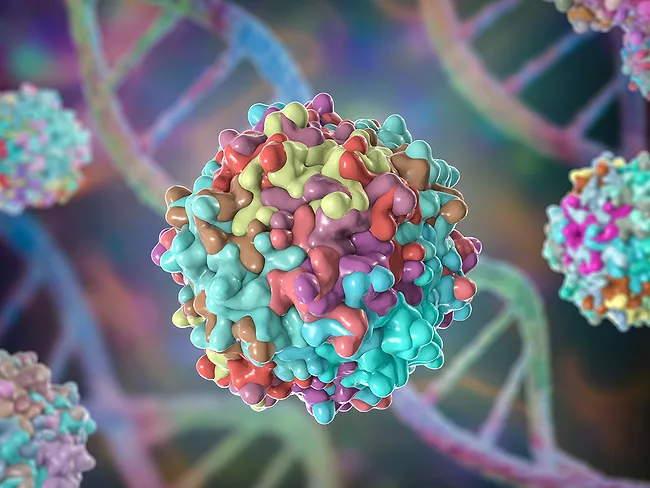
Privately held Dyno Therapeutics Inc. has added another notch to its adeno-associated virus (AAV) vectors development portfolio in a deal with the Roche Group that includes $50 million up front and ultimately could top $1 billion. Dyno will help in developing next-generation AAV vectors, optimized by artificial intelligence, to target neurological diseases.
Beijing Primegene Therapeutics Co. Ltd. has patented macrocyclic compounds acting as non-receptor tyrosine-protein kinase TYK2 (JH2 domain) allosteric inhibitors reported to be useful for the treatment of neurodegeneration, cancer and autoimmune disease.
Jiangsu Xingsheng Xinhui Pharmaceutical Co. Ltd. has synthesized new membrane-associated tyrosine- and threonine-specific Cdc2-inhibitory kinase (PKMYT1) inhibitors that are potentially useful for the treatment of cancer.
An Acerta Pharma BV patent describes new 1-H-pyrrolo[2,3-c]pyridine compounds acting as menin (MEN1)/MLL interaction inhibitors and thus reported to be useful for the treatment of cancer.
Aevisbio Inc. and the Korea Research Institute of Chemical Technology have jointly developed new compounds targeting protein cereblon (CRBN) reported to be useful for the treatment of cancer.
The serotonin 5-HT2B receptor is widely expressed in the brain, including on serotoninergic, GABAergic and dopaminergic neurons, on astrocytes and microglia, and neuronal fibers of the frontal cortex and cerebellum.
Wee1 and PKMYT1 are two kinases involved in DNA damage repair. The former is located in the nucleus and the latter in the endoplasmic reticulum. Several selective inhibitors of Wee1 or PKMYT1 have been tested in the clinical setting as monotherapy or in combination with other drugs.
Delta-like ligand 3 (DLL3) is a highly relevant target for radiopharmaceutical therapy due to its expression in more than 85% of tumors of patients with small-cell lung cancer.
 RSS
RSS