Zeno Management Inc. has identified antibody-drug conjugates comprising antibodies targeting inactive tyrosine-protein kinase transmembrane receptor ROR1 (ROR1) covalently bound to exatecan derivatives through a linker.
Vandria SA has disclosed urolithin and fluorene derivatives acting as ferroptosis inhibitors and reported to be useful for the treatment of neurodegeneration and inflammatory disorders.
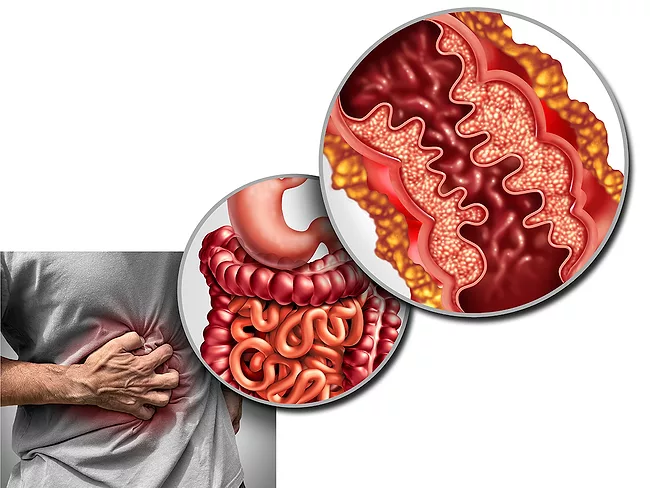
The standard therapy for moderate to severe cases of ulcerative colitis (UC) is treatment with infliximab, but it is estimated that about 40% of patients with UC do not respond to it. An international team of investigators set out to study the causes behind this, which are not clearly understood.
Researchers from Sitryx Therapeutics Ltd. and affiliated organizations presented data from a study that aimed to assess the potential of selective salt-inducible kinase 2 (SIK2) inhibition as a therapeutic strategy for the treatment of ulcerative colitis.
Preventing the interaction between the cellular adhesion integrin α4β7 and endothelial ligand mucosal addressin cell-adhesion molecule-1 (MAdCAM-1) is a validated strategy for Crohn’s disease and ulcerative colitis treatment. Paragon Therapeutics Inc. and Spyre Therapeutics Inc. have reported preclinical efficacy data on SPY-001, a long-acting monoclonal antibody targeting integrin α4β7.
Researchers from Paragon Therapeutics Inc. and Spyre Therapeutics Inc. have reported preclinical data for SPY-002, a novel extended half-life, fully human IgG1 monoclonal antibody (MAb) targeting tumor necrosis factor (TNF)-like ligand 1A (TL1A), being developed for the treatment of inflammatory bowel disease (IBD).
Jasper Therapeutics Inc. has presented data at the AAAAI 2024 conference regarding its CD117-targeting antibody briquilimab and its potential use in allergy and CD117-triggered anaphylactic reactions.
Voyager Therapeutics Inc. has announced the selection of a lead development candidate from its Friedreich’s ataxia program with collaborator Neurocrine Biosciences Inc.
Researchers from Contrafect Corp. have reported on the bactericidal activity of CF-370, a novel engineered lysin with broad-spectrum activity against gram-negative organisms, which are usually more resistant to antibacterial agents than gram-positive bacteria.

 RSS
RSS