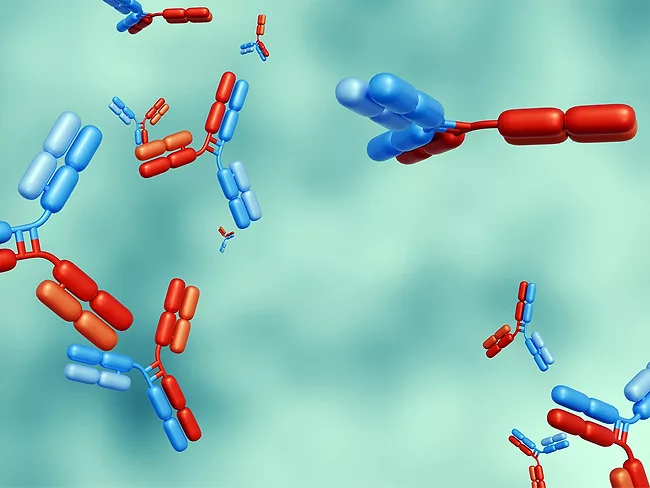
Ferrosa Therapeutics AG has announced a $3.5 million seed financing to support the development of a first-in-class bispecific antibody (FRS-101) to treat anemia of inflammation across chronic kidney disease, autoimmune disease and oncology indications.
Minimal residual disease (MRD) has become a central concept in modern oncology, reshaping how clinicians evaluate response, relapse risk and treatment precision. As increasingly sensitive technologies reveal traces of cancer that persist after therapy, MRD is emerging as both a biological challenge and a clinical opportunity, especially as new data illuminate its complexity across hematologic and solid tumors. This topic was addressed at the 2026 American Association for Cancer Research (AACR) annual meeting.
Chengdu Mfs Pharma Co. Ltd. has prepared and tested compounds for the potential treatment of pain, sleep disorder and status epilepticus epilepsy as well as for use as an anesthetic.
Shanghai Fosun Pharmaceutical Industry Development Co. Ltd. has patented Myt1 kinase (PKMYT1) inhibitors reported to be useful for the treatment of cancer.
Mabwell (Shanghai) Bioscience Co. Ltd. has synthesized antibody-drug conjugates comprising antibody or antigen-binding fragment targeting disintegrin and metalloproteinase domain-containing protein 9 (ADAM9) covalently linked to a cytotoxic drug. They are described as potentially useful for the diagnosis and/or treatment of cancer.
Avacta Life Sciences Ltd. has disclosed drug conjugates consisting of a fibroblast activation protein-α (FAPα) cleavable moiety bonded to camptothecin derivatives through a linker that are potentially useful for the treatment of cancer, inflammation and fibrosis.
The major histocompatibility complex class I polypeptide-related sequences A and B (MICA/B) are frequently expressed by cancer cells. In a recently published study, researchers from Icahn School of Medicine at Mount Sinai hypothesized that the therapeutic efficacy of anti-MICA/B antibodies could be enhanced through Fc optimization with three point mutations in the Fc region: G236A, A330L and I332E (GAALIE).
Researchers from F. Hoffmann-La Roche Ltd. and collaborators reported the preclinical efficacy profile of mosperafenib (RO-7276389), a next-generation BRAF inhibitor designed as an MAPK paradox breaker. The compound selectively inhibits oncogenic RAF signaling while avoiding RAF dimer-driven ERK activation, thereby overcoming a key mechanistic limitation of first-generation BRAF inhibitors.
Incyte Corp. has developed and presented data for their CD70xCD3 bispecific antibody INCA-036873, which was designed to activate T cells and kill tumoral cells expressing CD70.
 RSS
RSS