BioWorld. Link to homepage.

Clarivate
  • BioWorld
  • BioWorld MedTech
  • BioWorld Asia
  • BioWorld Science
  • Data Snapshots
    • BioWorld
    • BioWorld MedTech
    • Infographics: Dynamic digital data analysis
    • Index insights
    • NME Digest
  • Special reports
    • Infographics: Dynamic digital data analysis
    • Trump administration impacts
    • Under threat: mRNA vaccine research
    • BioWorld at 35
    • Biopharma M&A scorecard
    • Bioworld 2025 review
    • BioWorld MedTech 2025 review
    • BioWorld Science 2025 review
    • Women's health
    • China's GLP-1 landscape
    • PFA re-energizes afib market
    • China CAR T
    • Alzheimer's disease
    • Coronavirus
    • More reports can be found here

BioWorld. Link to homepage.

  • Sign In
  • Sign Out
  • My Account
Subscribe
BioWorld - Saturday, December 27, 2025
Home » Topics » Aging, BioWorld Science

Aging, BioWorld Science
Aging, BioWorld Science RSS Feed RSS

Illustration of thymus in relation to lungs and thyroid
Immune

Fibrobiologics’ artificial thymus organoid restores immune function in SCID mouse model

June 26, 2024
Fibrobiologics Inc. has announced the development of a novel artificial thymus organoid that can restore immune function in a severe combined immunodeficiency (SCID) mouse model.
Read More
Person trying to stop hands on clock
Aging

Seragon Biosciences reports preclinical findings with antiaging candidate

May 8, 2024
Seragon Biosciences Inc. has completed a preclinical study with its novel antiaging candidate, SRN-901. This pivotal study in mice evaluated the impact of SRN-901 on aging as well as various health markers.
Read More
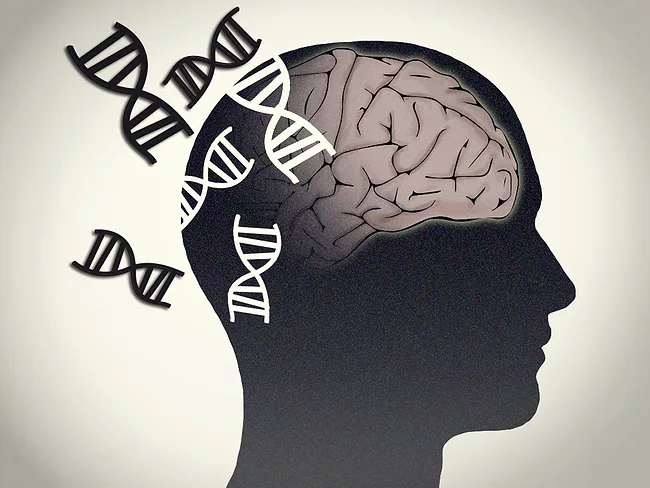
Silhouette of head and brain with DNA double helixes
Neurology/psychiatric

Two copies of APOE4 cause genetic form of Alzheimer’s

May 6, 2024
By Anette Breindl
Based on its analysis of a large cohort of individuals homozygous for the ε4 variant of apolipoprotein E (APOE4), a multinational team of researchers is arguing that homozygosity for APOE4 should be considered a genetic form of Alzheimer’s disease. However, not everyone agrees that the findings warrant reclassifying APOE from risk factor to causal gene. Currently, APOE4 is classified as the strongest risk factor for developing AD. Another variant, the APOE2 variant, is protective, while APOE3 is neutral.
Read More
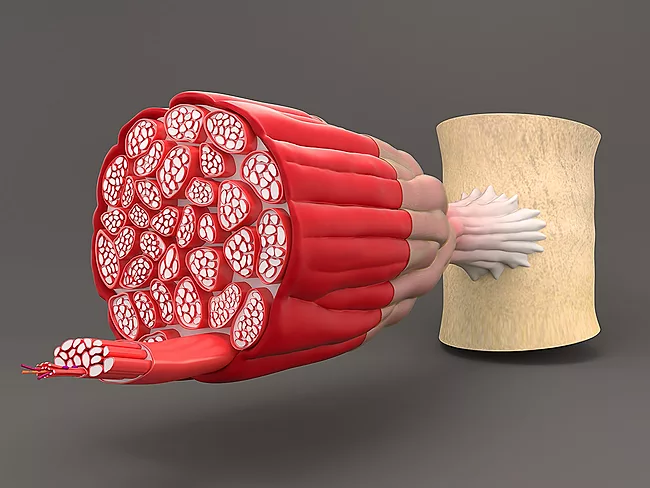
3D cross-section illustration of muscle anatomy
Aging

Preserving autophagy protects from muscle aging

April 26, 2024
By Mar de Miguel
A protein whose expression decreases during aging could be key to preserving cellular maintenance mechanisms and preventing the progressive loss of muscle mass that occurs during aging. Scientists from the Institute for Research in Biomedicine (IRB) and the University of Barcelona (UB) have revealed the role of the TP53INP2 protein in autophagy and the effects of its reduction on skeletal muscle during aging.
Read More
Illustration of muscle anatomy
Musculoskeletal

Human muscle aging atlas unveils damage and repair systems

April 18, 2024
By Mar de Miguel
The first cellular human and mouse map focused on muscle fibers and their microenvironment has revealed both the mechanisms of deterioration of this tissue over time and its adaptive capacity for regeneration. “We intended to map the skeletal muscle, isolating all the cell types, and characterizing how they change with age,” first author Veronika Kedlian from the Wellcome Sanger Institute in Cambridge told BioWorld.
Read More
Image of clock over dna strands
Cancer

AACR 2024: Getting older younger may be driving rise in early-onset cancers

April 8, 2024
By Anette Breindl
As with most common diseases of the developed world, aging is the major risk factor for developing cancer. Most of the half-dozen hallmarks of precancer that were published last week by investigators from Vanderbilt University and the Fred Hutchinson Cancer Research Center are also hallmarks of aging. Unfortunately, scientists reported at the American Association for Cancer Research’s (AACR) 2024 annual meeting this week that accelerated aging is increasing, and may be driving an increase in early-onset cancers.
Read More
Illustration of head with maze that is missing parts
Neurology/Psychiatric

Better drugs for neurodegeneration will take more research, better biomarkers

April 5, 2024
By Anette Breindl
At a recent meeting on “Research priorities for preventing and treating Alzheimer’s disease and related dementias” (ADRD), convened by the National Academies, one consensus priority on ADRD research was that there needs to be more of it at every stage. Several speakers presented stark numbers on the relative volume of research in cancer and neurodegeneration. Research output, measured in peer-reviewed papers, for dementia is estimated to be around 10,000 papers annually, compared to 150,000 for cancer, while AD clinical trials are also few and far between compared to cancer trials. This final installment of BioWorld’s series on Alzheimer’s explores some of the reasons for this discrepancy along with the latest advances and ongoing efforts to accelerate research and drug development in the field.
Read More
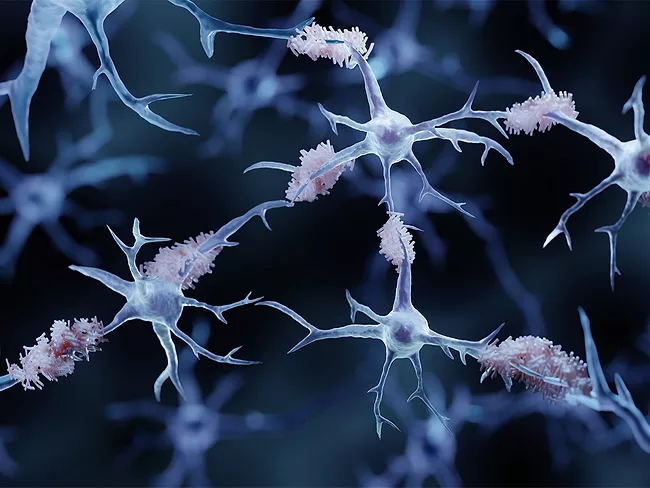
Illustration of amyloid plaques in Alzheimer's disease
Neurology/Psychiatric

After the first approvals, where does amyloid go from here?

April 4, 2024
By Anette Breindl
After decades of trying and dozens of failed trials, amyloid targeting has paid off with the first disease-modifying agents reaching the market. But success does not mean slam dunk. Aduhelm (aducanumab, Biogen Inc.) was dogged by controversy throughout its brief tenure, and Biogen pulled the plug on it in early 2024. Leqembi (lecanemab, Biogen Inc.) has received full approval. In this second installment of a three-part series on Alzheimer’s, BioWorld looks at the nuanced view of amyloid’s role in the disease.
Read More
AI-generated illustration showing a brain in an hour glass with most of the sand at the bottom
Aging

Aging, and aging well, gives clues for dementia drug discovery

April 3, 2024
By Anette Breindl
Ironically, the first person to be diagnosed with what is now Alzheimer’s disease was missing its major risk factor. When she first began showing symptoms of dementia in 1901, Auguste Deter was not particularly old. Despite Deter’s case, aging is the largest risk factor for developing Alzheimer’s, by a large margin. But “geroscience has not been translated into drugs for Alzheimer’s disease,” Howard Fillit, Alzheimer’s Drug Discovery Foundation co-founder and chief scientific officer, told BioWorld. “We’re just starting to see that cross-fertilization now.” This first article of a three-part BioWorld series on Alzheimer’s disease looks at how a group of researchers, as well as some startups, are trying to approach Alzheimer’s via an aging lens.
Read More
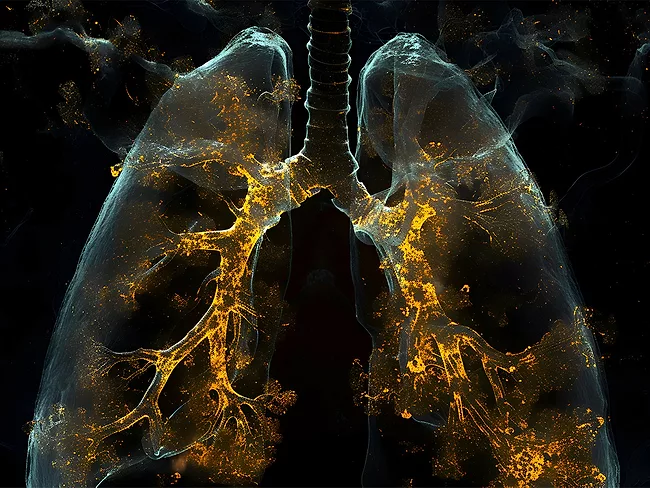
AI-generated image of illustration of MRI of lungs with fibrosis
Respiratory

AI-driven research identifies pulmonary fibrosis target and inhibitor

March 25, 2024
By Mar de Miguel
Deep learning algorithms have enabled the discovery of molecular structures of interest in biomedicine to design treatments against aggressive diseases such as idiopathic pulmonary fibrosis (IPF). Scientists at Insilico Medicine Inc. selected a target for IPF using artificial intelligence (AI), then designed an inhibitor to block it, and tested it in vitro, in vivo, and in clinical trials.
Read More
Previous 1 2 3 4 5 6 7 8 9 10 11 Next

Popular Stories

  • Today's news in brief

    BioWorld
    BioWorld briefs for Dec. 24, 2025.
  • Today's news in brief

    BioWorld MedTech
    BioWorld MedTech briefs for Dec. 24, 2025.
  • Illustration of magnifying glass looking at cancer in the brain

    Researchers discover how glioblastoma tumors dodge chemotherapy

    BioWorld MedTech
    Researchers at the University of Sydney have uncovered a mechanism that may explain why glioblastoma returns after treatment, and the world-first discovery offers...
  • Left: Anthony Fauci. Right: Transmission electron micrograph of HIV-1 virus particles

    HIV research is close to a cure but far from ending the pandemic

    BioWorld
    Advances in antiretroviral therapy (ART) now allow people living with HIV to lead normal lives with undetectable and nontransmissible levels of the virus in their...
  • Illustration of tau accumulating in a neuron cell.

    ADEL wins $1.04B Sanofi deal for tau-targeting Alzheimer’s drug

    BioWorld
    ADEL Inc. closed a year-end licensing deal worth up to $1.04 billion with Sanofi SA for ADEL-Y01, a specific tau-targeting Alzheimer’s disease drug candidate in a...
  • BioWorld
    • Today's news
    • Analysis and data insight
    • Clinical
    • Data Snapshots
    • Deals and M&A
    • Financings
    • Newco news
    • Opinion
    • Regulatory
    • Science
  • BioWorld MedTech
    • Today's news
    • Clinical
    • Data Snapshots
    • Deals and M&A
    • Financings
    • Newco news
    • Opinion
    • Regulatory
    • Science
  • BioWorld Asia
    • Today's news
    • Analysis and data insight
    • Australia
    • China
    • Clinical
    • Deals and M&A
    • Financings
    • Newco news
    • Regulatory
    • Science
  • BioWorld Science
    • Today's news
    • Biomarkers
    • Cancer
    • Conferences
    • Endocrine/Metabolic
    • Immune
    • Infection
    • Neurology/Psychiatric
    • NME Digest
    • Patents
  • More
    • About
    • Advertise with BioWorld
    • Archives
    • Article reprints and permissions
    • Contact us
    • Cookie policy
    • Copyright notice
    • Data methodology
    • Infographics: Dynamic digital data analysis
    • Index insights
    • Podcasts
    • Privacy policy
    • Share your news with BioWorld
    • Staff
    • Terms of use
    • Topic alerts
Follow Us

Copyright ©2025. All Rights Reserved. Design, CMS, Hosting & Web Development :: ePublishing