South Korean researchers led by Lee In-suk of Yonsei University have reported the most complete oral microbiome catalog to date, with more than 72,000 genomes. Detailed in Cell Host & Microbe on Nov. 12, 2025, the database is expected to serve as a universal platform for academia and enable “precision microbiome medicine” for the industry, Lee told BioWorld.
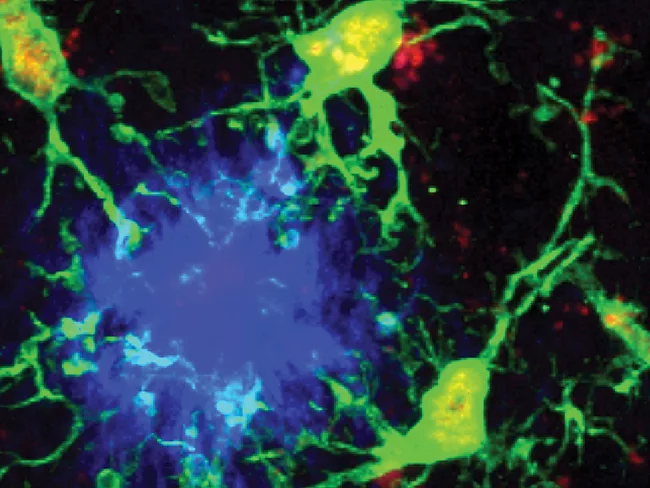
In Alzheimer’s disease, microglia act as a double-edged sword. They can either protect the brain or worsen the damage, depending on their activation state. Inflammatory activation harms healthy neurons. However, a study reveals that a special type of microglia expressing specific receptors and behaving like T cells may help mitigate this neurodegenerative condition.
Bowhead whales (Balaena mysticetus) live year-round in the icy or near-icy waters of the Arctic and sub-Arctic. Although they migrate with the seasonal cycles of ice formation and melting, they never reach the warmer waters visited by other large marine mammals. Their adaptation to low temperatures may have also enabled them to live longer and avoid cancer, a disease closely linked to aging.
Do men’s and women’s brains age equally? Women are more often diagnosed with Alzheimer’s disease (AD) than men. Age is the primary known risk factor for AD prevalence, and both aging and AD are associated with brain atrophy, but it is still not clear whether men and women differ regarding brain decline in aging. There is mixed evidence regarding this topic, since most of the larger studies have shown an abrupt decay of total gray matter and hippocampal volume in men, but other studies have found steeper total gray matter decline in women.
A team of U.S. and South Korean researchers have developed an AI model called MSI-SEER that can not only predict microsatellite instability-high (MSI-H) tumors based on tissue slides, but also flag “what it does not know.” “Have you ever asked ChatGPT anything, and the response was, ‘I don’t know?’” Cheong Jae-ho asked during an interview with BioWorld. “Probably not, and that is the problem with AI now.”
Generating gametes from nonreproductive tissues could help overcome infertility. Previous studies have successfully transformed stem cells into viable oocytes through cellular reprogramming. Scientists at Oregon Health & Science University (OHSU) developed a method to derive them from skin cells via somatic cell nuclear transfer (SCNT), unlocking a mechanism that blends mitosis and meiosis. Now, the researchers have taken another step forward by generating fertilizable eggs from human skin cells.
Is there a link between cellular senescence and multiple sclerosis (MS) progression? Several presentations at this year’s European Committee for Treatment and Research in Multiple Sclerosis 2025 (ECTRIMS 2025) conference, which ends today in Barcelona, addressed this question.
Experts agree that the earlier Alzheimer's disease is detected, the sooner action can be taken. And so, the key to preventing deterioration is identifying the most effective early biomarkers, those that can spot the disorder and help halt its progression. Recent advances in the field have pushed a new era of early detection through blood-based biomarkers and personalized medicine strategies based on each patient’s genetic, immunological and clinical profile.
Tolerance Bio Inc. and Zipcode Bio have established a strategic research and development collaboration aimed at pioneering novel delivery methods for targeted thymus therapeutics.
“The impoverished laboratory environment in which mice and rats are maintained has been very good at increasing experimental replicability,” Steven Austad told the audience at the 12th Aging Research & Drug Discovery Meeting (ARDD) in Copenhagen last week. “But at the cost of sacrificing translational relevance.”
 RSS
RSS