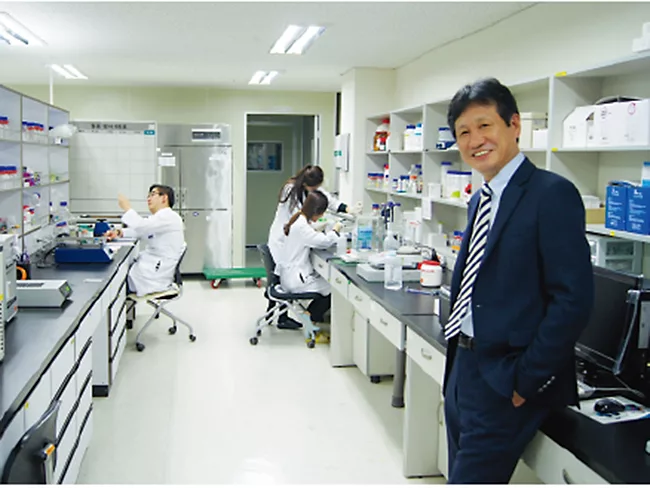
BNC Korea Inc. is picking up exclusive commercial rights to Kariya Pharmaceuticals ApS’ dual GLP-1/GIP agonists for Parkinson’s and Alzheimer’s disease in five countries – a move that comes shortly after BNC Korea dropped $1.5 million into the Danish pharma for a 4.5% stake.
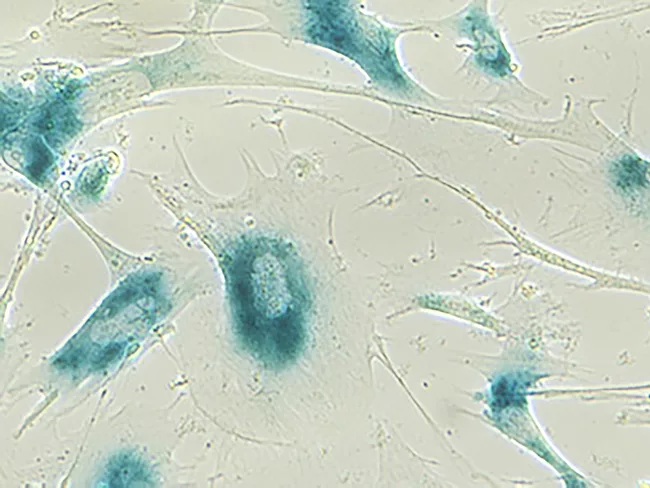
As with most common diseases of the developed world, aging is the major risk factor for developing cancer. Most of the half-dozen hallmarks of precancer that were published last week by investigators from Vanderbilt University and the Fred Hutchinson Cancer Research Center are also hallmarks of aging.
Unfortunately, scientists reported at the American Association for Cancer Research’s (AACR) 2024 annual meeting this week that accelerated aging is increasing, and may be driving an increase in early-onset cancers.
After decades of trying and dozens of failed trials, amyloid targeting has paid off with the first disease-modifying agents reaching the market. But success does not mean slam dunk. Aduhelm (aducanumab, Biogen Inc.) was dogged by controversy throughout its brief tenure, and Biogen pulled the plug on it in early 2024. Leqembi (lecanemab, Biogen Inc.) has received full approval. In this second installment of a three-part series on Alzheimer’s, BioWorld looks at the nuanced view of amyloid’s role in the disease.
At a recent meeting on “Research priorities for preventing and treating Alzheimer’s disease and related dementias” (ADRD), convened by the National Academies, one consensus priority on ADRD research was that there needs to be more of it at every stage. Several speakers presented stark numbers on the relative volume of research in cancer and neurodegeneration. Research output, measured in peer-reviewed papers, for dementia is estimated to be around 10,000 papers annually, compared to 150,000 for cancer, while AD clinical trials are also few and far between compared to cancer trials. This final installment of BioWorld’s series on Alzheimer’s explores some of the reasons for this discrepancy along with the latest advances and ongoing efforts to accelerate research and drug development in the field.
Ironically, the first person to be diagnosed with what is now Alzheimer’s disease was missing its major risk factor. When she first began showing symptoms of dementia in 1901, Auguste Deter was not particularly old. Despite Deter’s case, aging is the largest risk factor for developing Alzheimer’s, by a large margin. But “geroscience has not been translated into drugs for Alzheimer’s disease,” Howard Fillit, Alzheimer’s Drug Discovery Foundation co-founder and chief scientific officer, told BioWorld. “We’re just starting to see that cross-fertilization now.”
After decades of trying and dozens of failed trials, amyloid targeting has paid off with the first disease-modifying agents reaching the market. But success does not mean slam dunk. Aduhelm (aducanumab, Biogen Inc.) was dogged by controversy throughout its brief tenure, and Biogen pulled the plug on it in early 2024. Leqembi (lecanemab, Biogen Inc.) has received full approval. In this second installment of a three-part series on Alzheimer’s, BioWorld looks at the nuanced view of amyloid’s role in the disease.
Ironically, the first person to be diagnosed with what is now Alzheimer’s disease was missing its major risk factor. When she first began showing symptoms of dementia in 1901, Auguste Deter was not particularly old. Despite Deter’s case, aging is the largest risk factor for developing Alzheimer’s, by a large margin. But “geroscience has not been translated into drugs for Alzheimer’s disease,” Howard Fillit, Alzheimer’s Drug Discovery Foundation co-founder and chief scientific officer, told BioWorld. “We’re just starting to see that cross-fertilization now.” This first article of a three-part BioWorld series on Alzheimer’s disease looks at how a group of researchers, as well as some startups, are trying to approach Alzheimer’s via an aging lens.
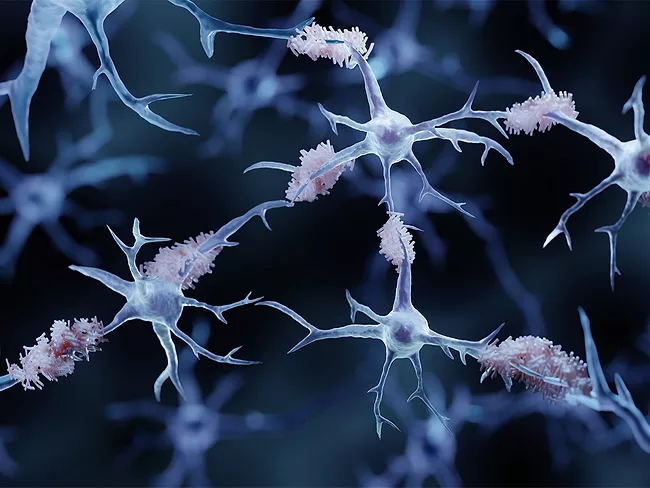
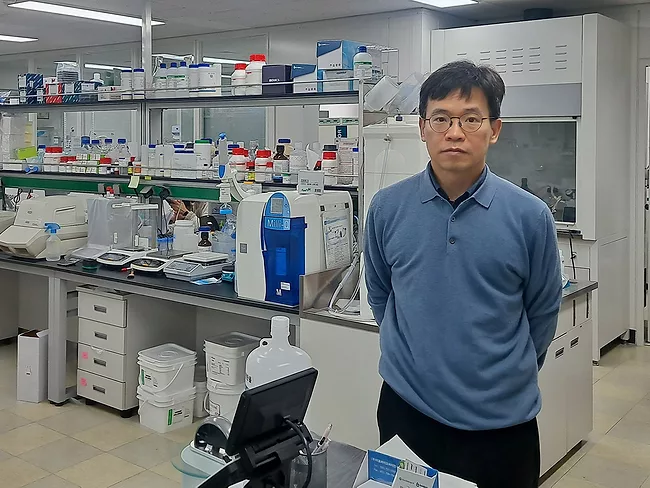
Alzheimer’s disease (AD) is recognized worldwide for its debilitating symptoms of declining cognitive function and gradual memory loss. What remains less clear is exactly what causes the neurodegenerative disease, and how to treat it. “Alzheimer’s disease is characterized by two key pathologies – beta-amyloid plaques and tau neurofibrillary tangles.” Seung-Yong Yoon, CEO of Adel Inc., told BioWorld. “Adel is looking to develop a tau-targeting drug, considering tau has been more correlated with AD symptom progression, and the industry’s need for tau pipelines.”
Deep learning algorithms have enabled the discovery of molecular structures of interest in biomedicine to design treatments against aggressive diseases such as idiopathic pulmonary fibrosis (IPF). Scientists at Insilico Medicine Inc. selected a target for IPF using artificial intelligence (AI), then designed an inhibitor to block it, and tested it in vitro, in vivo, and in clinical trials.
Senisca Ltd., a spinout from the University of Exeter, has raised an additional £3.7 million (US$4.7 million) in funding to support the development of RNA-based senotherapeutics to treat age-related disease.
 RSS
RSS