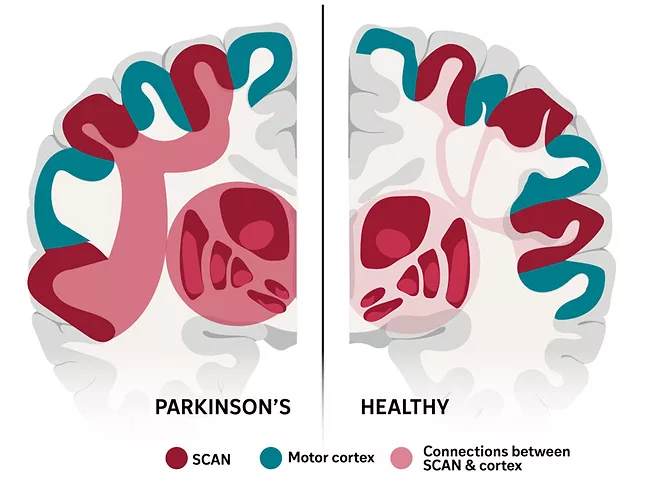
Parkinson’s disease is a neurodegenerative disorder that affects movement, and tremor is one of its signatures. But it is a much more wide-ranging disorder, and patients experience problems with cognitive and emotional processes as well. SCAN, the somato-cognitive action network identified in 2023, could reshape the definition of PD. Treating this circuit can improve outcomes.
Insight Lifetech Co. Ltd. listed on the Shanghai Stock Exchange’s STAR market via an unprofitable biotech track reinstated last year, with the Feb. 5 IPO raising ¥998.64 million (US$143.93 million).
Insight Lifetech Co. Ltd. listed on the Shanghai Stock Exchange’s STAR market via an unprofitable biotech track reinstated last year, with the Feb. 5 IPO raising ¥998.64 million (US$143.93 million).
Parkinson’s disease (PD) is a neurodegenerative disorder that affects movement, and tremor is one of its signatures. But it is a much more wide-ranging disorder, and patients experience problems with cognitive and emotional processes as well. SCAN, the somato-cognitive action network identified in 2023, could reshape the definition of PD. Treating this circuit can improve outcomes.
Zylox-Tonbridge Medical Technology Co. Ltd. plans to expand globally with M&As, company chairman and CEO Jonathon Zhong Zhao told BioWorld, starting with a stepwise acquisition of Optimed Holding GmbH and its subsidiaries, including Optimed Medizinische Instrumente GmbH.
The prevalence of asthma differs between men and women, and furthermore, the difference changes over the lifespan. “Asthma is more common in boys than girls, but more common in women than men,” Clare Lloyd told BioWorld. Females are particularly susceptible to asthma during developmental periods of hormonal changes, also known as puberty, pregnancy and menopause.
The prevalence of asthma differs between men and women, and furthermore, the difference changes over the lifespan. “Asthma is more common in boys than girls, but more common in women than men,” Clare Lloyd told BioWorld. Females are particularly susceptible to asthma during developmental periods of hormonal changes, also known as puberty, pregnancy and menopause.
The sea anemone Stichodactyla helianthus, which carpets the Caribbean seafloor, may hold the key to eliminating the senescent cells that survive cancer therapy. A collaboration led by Spanish scientists across several international research centers has discovered a new type of toxin that selectively eliminates senescent cancer cells.
The sea anemone Stichodactyla helianthus, which carpets the Caribbean seafloor, may hold the key to eliminating the senescent cells that survive cancer therapy. A collaboration led by Spanish scientists across several international research centers has discovered a new type of toxin that selectively eliminates senescent cancer cells.
The sea anemone Stichodactyla helianthus, which carpets the Caribbean seafloor, may hold the key to eliminating the senescent cells that survive cancer therapy. A collaboration led by Spanish scientists across several international research centers has discovered a new type of toxin that selectively eliminates senescent cancer cells.
 RSS
RSS