With three rare pediatric disease priority review vouchers (RPD PRVs) awarded just since the end of March, the nearly year-and-a-half lapse in the program’s reauthorization seems to have had little short-term impact. The three new vouchers bring the total RPD PRVs granted so far this year to seven – one more than the agency issued all last year and down two from the nine given in 2024.
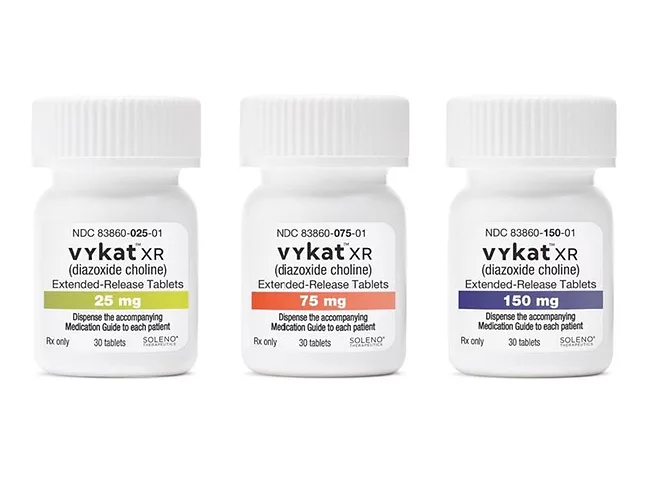
A proposal to buy out Soleno Therapeutics Inc. didn’t wait for European approval of Vykat XR (diazoxide choline) to treat hyperphagia in Prader-Willi syndrome, as Neurocrine Biosciences Inc. is putting on the table $53 per share in cash, which equates to an equity value of $2.9 billion.
Chiesi Group’s idebenone faced a regulatory setback last month after the U.S. FDA issued a complete response letter (CRL) to the company’s NDA for Leber hereditary optic neuropathy (LHON), a rare inherited disorder that causes sudden vision loss.But a chance missed for Chiesi may be an opportunity for gene therapies, including Gensight Biologics SA’s lenadogene nolparvovec (Lumevoq; GS-010).
In a win for the rare disease space, the U.S. FDA granted accelerated approval for Rocket Pharmaceuticals Inc.’s Kresladi (marnetegragene autotemcel) as the first gene therapy option for treating severe leukocyte adhesion deficiency-I (LAD-I), an ultrarare genetic immune disorder characterized by an immunodeficiency predisposing those affected to recurrent and fatal infections.
With the U.S. FDA’s approval of GSK plc’s ileal bile acid transporter (IBAT) inhibitor, Lynavoy (linerixibat), patients with primary biliary cholangitis no longer need off-label treatments for a debilitating internal itch symptom called cholestatic pruritus.
Rare disease drug development companies battle with economic challenges and small patient populations, but new technology alongside a human connection are helping researchers and marketers identify patients, educate physicians and build networks. At Pharma USA, a Reuters Events meeting in Philadelphia March 16-17, executives from Astrazeneca plc and UCB SA discussed their successes with rare disease launches, presenting their playbooks for building trust and driving adoption among patients.
The regulatory clouds that have been darkening the U.S. FDA landscape of late for Uniqure NV’s gene therapy AMT-130 in Huntington’s disease may be parting a bit with the announced departure of Vinay Prasad as director of the agency’s CBER at the end of April.
At the current pace of innovation in the U.S. rare disease space, developing and approving therapies for just half of the 10,000-plus known rare diseases would take more than 160 years, Bradley Campbell, president and CEO of Amicus Therapeutics Inc., recently told the Senate Committee on Aging.
A lot of distance lies between talking regulatory flexibility and actually being flexible. That message was driven home again after Uniqure NV disclosed in its latest earnings report March 2 that the U.S. FDA wants a sham-controlled study before it will consider approval of the company’s gene therapy AMT-130 in Huntington’s, a rare disease currently affecting about 41,000 people in the U.S.
Another phase III failure of Theravance Biopharma Inc.’s norepinephrine reuptake inhibitor ampreloxetine to treat symptomatic neurogenic orthostatic hypotension, this time in patients with the rare disease multiple system atrophy, means the end of the company’s R&D efforts. Cutting its workforce in half and terminating all development of ampreloxetine, its only pipeline product, the Dublin-based company’s shares (NASDAQ:TBPH) sank by 26%, or $4.99, to close March 3 at $13.96.
 RSS
RSS