Investors including SOSV, Cultivate(MD), Wavemaker360 Health, Blu Venture Investors and Broad Street Angels are backing Strados Labs LLC with $4.5 million. The pre-series A funding will be used to accelerate development of the company’s smart sensor platform Resp. The funding comes after Strados received FDA clearance for the product in December 2021 and brings its total raised to $7 million.
Protein profiling startup Nomic Bio has secured $17 million in an oversubscribed series A financing led by Lux Capital. The funds will be used to expand the company’s servicing and manufacturing labs in Montreal and Boston, to broaden access to its proteomic platform by scaling profiling capacity to 100,000 samples per quarter starting in the second quarter of 2022 and by scaling its protein-detection method, called nELISA, to 500 on-boarded proteins.
Israeli startup Ophthalmic Sciences Ltd. is targeting 2023 for regulatory clearance of its artificial intelligence (AI)-based contactless intraocular pressure (IOP) measuring device, IO Perfect. The technology, which combines AI visual analysis in a virtual reality headset, enables remote monitoring of glaucoma. The device is designed to be used at home, in eye clinics, emergency room departments, pharmacies and primary physician settings.
Newly launched startup Somne Inc. plans to give CPAP machines a run for their money by replacing CPAP masks and hoses for treating obstructive sleep apnea with a gentler collar encircling the patient’s neck. The new device uses variable negative pressure to ensure users get a good night’s sleep instead of positive airway pressure employed by companies such as Resmed Inc. and Philips Respironics Inc.
TORONTO – Fluid Biotech Inc. has raised $4.7 million in oversubscribed seed funding to further develop and commercialize the world's first hybrid polymer-metal flow-diverting brain stent for curing brain aneurysms that can lead to stroke. Following successful preclinical studies of the stent, attention now turns to applying this fresh capital to hiring contract manufacturers to prepare for first-in-human implantation and production of the mostly polymer-constructed stent.
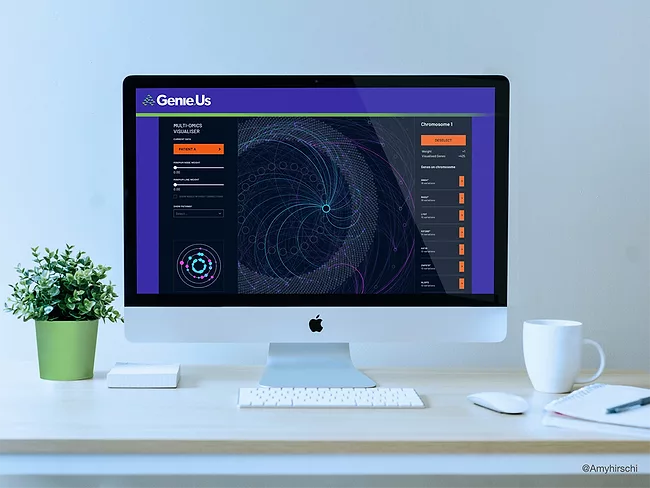
PERTH, Australia – Bioinformatic and cell technology company Genieus Genomics Ltd. is using the power of the human genome to build a platform for neurodegenerative diseases to develop diagnostic tests for personalized medicines.
Steven Roy, CEO of Convergence Medical Sciences Inc., has designed a low-cost device that boosts the number of patients on a single ventilator to four simultaneously. To do this, he is collaborating with Calgary-based consulting engineers, Exergy Solutions Inc., to take the international Red Dot design winner through the Health Canada approval process.
Merck KGaA is partnering with Neuroloop GmbH, a subsidiary of B. Braun SE, to develop a neurostimulator device that can complement existing drug therapies for people with chronic inflammatory diseases. The collaboration aims to adapt Neuroloop’s neurostimulation platform to enable targeted treatment of chronic inflammatory ailments. The new bioelectronics program intends to open up new technologies and markets that are close to Merck’s electronics and health care business sectors.
Princeton University spinout Neutigers Inc. is launching a study to explore the use of artificial intelligence (AI) and everyday wearables to flag early symptoms of sickle cell anemia vaso-occlusive crisis (VOC) before they get worse and land patients in the hospital. The aim is to reduce deaths and facilitate interventions to address the entire continuum of care for patients with the inherited red blood cell disorder, Adel Laoui, founder and CEO, told BioWorld.
 RSS
RSS