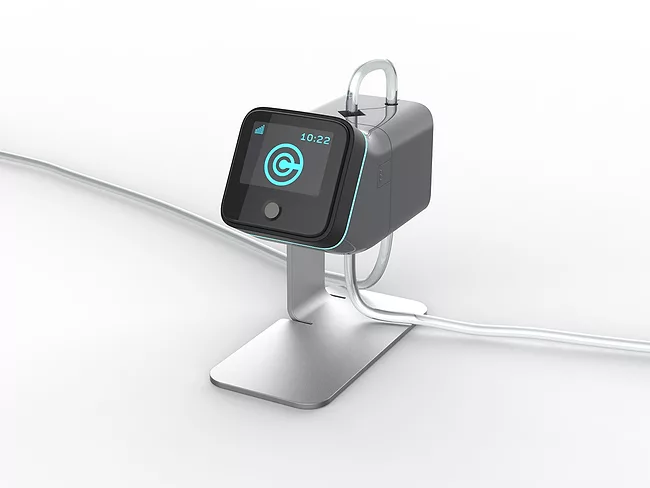
San Francisco-based startup Cloudcath has raised a $12 million series A round to support commercialization of its first product that enables remote, real-time monitoring for at-home peritoneal dialysis patients. The expectation is that the notifications it offers to health care providers will enable earlier intervention to avoid complications, including infection. The Cloudcath system is pending U.S. FDA clearance.
PERTH, Australia – With new funding in hand from Yamaha Motor Ventures & Laboratory Silicon Valley Inc., Loop+ founders and sisters Kath Hamilton and Clare Conroy and are on their way to commercializing a pressure and movement tracking device they developed for wheelchair-bound patients.
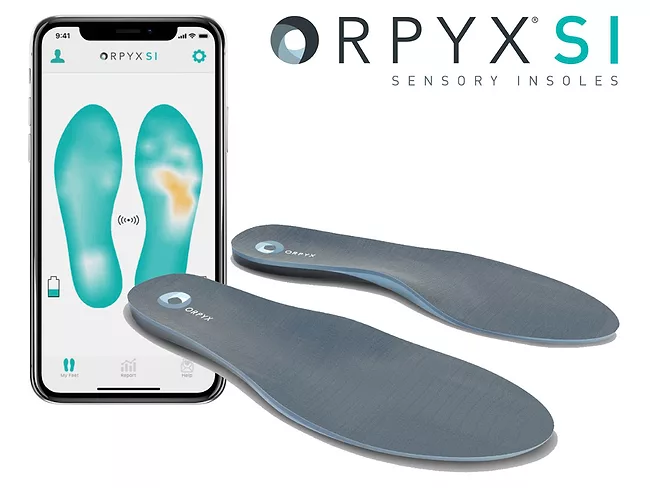
TORONTO – Calgary, Alberta-based Orpyx Medical Technologies Inc. has launched a sensory insole with remote patient monitoring to prevent potentially fatal diabetic foot ulcers (DFU) and neuropathy-related ulcers. According to Orpyx CEO Breanne Everett, development of the Orpyx SI sensory insole system follows years of study on how DFUs occur and how best to share information with patients and doctors so they can react quickly to first signs of the condition.
Boulder, Colo.-based startup Arpeggio Biosciences Inc. scooped up $3.2 million in seed funding in a round led by Khosla Ventures, with participation by Fundersclub, Fifty Years, TechU and Y Combinator.
BOGOTA, Colombia – A startup in Mexico has developed an intelligent glove to diagnose cardiac diseases in seconds just by touching a patient’s chest. The invention could become available on the market by the end of 2020, when Soluciones Kenko, from Jalisco, Mexico, expects to hit the Mexican market with a futuristic solution for the health care sector.
A single injection of SOD1-targeting RNA into the subpial space, which is below the innermost meningeal layer, was able to spread throughout the spinal cord and, via retrograde delivery, into brain centers that project to the spinal cord in several animal models, including primates.
TORONTO – Imagin Medical Inc., which has a presence near Boston and in Vancouver, British Columbia, will have verified and built a device in early January that meets all functional, electrical safety and radiated emission requirements for a new way of visualizing bladder cancer. Jim Hutchens, Imagin Medical’s president and CEO, said the i/blue imaging system should dramatically improve surgeons’ ability to visualize cancerous bladder cells by producing higher quality images more quickly compared with current methods.
TORONTO – “I don’t want this to die in the lab. We’re putting a lot of effort into this and we have to commercialize it.” With those words Oleksandr Bubon, chief technology officer of Thunder Bay, Ontario-based startup Radialis Inc., in 2016 reported ambitious plans for an imaging device that detects early stage cancer tumors in the densest breast tissue. Not only will its novel “gapless” design prevent radiation needed to treat cancer cells from escaping, a common problem in conventional positron emissions tomography (PET), its manufacture and commercialization starts here in a northern Ontario city of just over 110,000 people.
HONG KONG – Matricelf Ltd., an Israeli medical 3D printing company based in Tel Aviv, has won a SEED AWARD and the ¥1 million (US$143,000) that goes with the prize. The Global Final of the SEED AWARD 2019 was held in Shenzhen, China. The organizer Seedland Group, China’s leading real estate company promoting technology innovation, said that Matricelf is working toward one day being able to manufacture the world’s first functional 3D printed human heart.
BEIJING – Infection diagnostics specialist Genskey Technologies Co. Ltd., of Beijing, closed a series B financing round to secure ¥100 million (US$14 million) to advance pathogen testing using next generation sequencing. The series B round was joined by SB China Capital, Shanghai Lin Chong Investment Management, and Juyuan Capital.
 RSS
RSS