Following news of U.S. President Donald Trump’s 10% across-the-board tariffs on Australian exports to the U.S., Australia’s Securities Exchange shed nearly AU$55 billion in losses Thursday morning. Even so, pharmaceuticals have escaped the tariffs for now. In China, Trump’s tariffs are not a big concern for China’s health care because drugs and active pharmaceutical ingredients are exempted from the tariffs. Even if tariffs are imposed in the future, Chinese pharmaceutical companies have already significantly de-risked themselves in recent months by increasing out-licensing models with U.S. partners.
At first glance, it appears that biopharmaceuticals dodged the latest U.S. tariff bullet; med-tech, not so much. According to the executive order President Donald Trump signed in the Rose Garden late yesterday, pharmaceuticals are one of the few things exempt from the new country-by-country reciprocal tariffs that will be going into effect over the next week. However, U.S.-based manufacturers of both drugs and devices could face supply chain disruptions, further market restrictions and increased operating costs as the new tariffs take effect and other countries retaliate.
After several on-again, off-again tariff threats, U.S. President Donald Trump made it official April 2: Beginning immediately, the U.S. will levy “kind reciprocal” tariffs on countries across the world. Focusing on the numbers, Trump didn’t mention whether any goods would be exempt from the new tariffs, and the executive order he signed at the Rose Garden ceremony wasn’t available as of press time. However, in concluding his remarks, Trump said the pharmaceutical industry would “come roaring back” in the U.S., because if biopharma companies don’t, they will be facing big taxes.
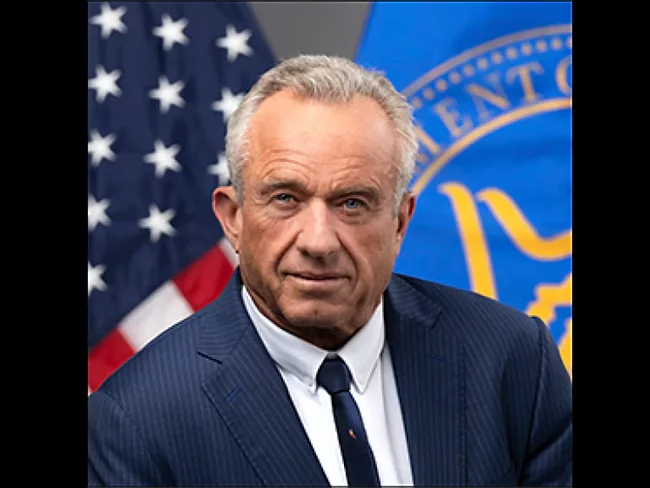
U.S. Sens. Bill Cassidy, R-La., and Bernie Sanders, I-Vt., invited Robert Kennedy to testify April 10 before the Senate Health, Education, Labor and Pensions (HELP) Committee for the first time in his capacity as Health and Human Services (HHS) secretary. The HELP invitation went out April 1 amid an outcry as thousands of employees across HHS agencies were being notified of their immediate termination and many lawmakers demanded answers about the mass layoffs.
As the U.S. Department of Health and Human Services begins implementing its reorganization and reduction-in-force plan by sending out termination notices this week to 10,000 more employees across its agencies, top Democrats in Congress are demanding details about the plan.
Peter Marks’ March 28 letter giving one week’s notice of his resignation as director of the U.S. FDA’s Center for Biologics Evaluation and Research (CBER) is sending more ripples of uncertainty throughout the industry. Marks, who has helmed CBER for nearly a decade, blamed his departure on recently confirmed Health and Human Services (HHS) Secretary Robert Kennedy, who has made a career out of his anti-vaccine stance.
Australia’s top universities are looking more to Asia for research collaborations following threats from the Trump administration to stop funding research at institutions that don’t comply with U.S. narratives.
The U.S. Department of Health and Human Services HHS reported a plan to reduce staffing by 10,000 in an immediate reduction, which when paired with retirement initiatives will drop staffing by as many as 20,000.
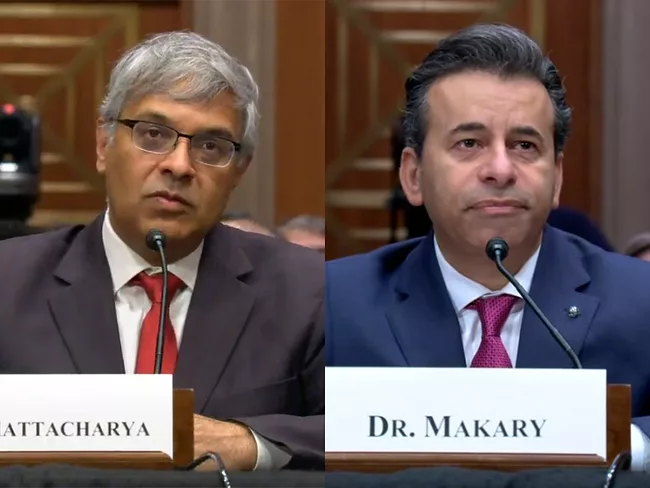
The U.S. Senate has approved the nominations of two key members of the Trump administration, Marty Makary as FDA commissioner and Jay Bhattacharya as NIH director. While these are two of the most critical appointments for the Trump administration, the Senate still has two other important appointments in queue, including the directors of the Centers for Medicare & Medicaid Services and the CDC.
Mehmet Oz, the Trump administration’s pick to lead the U.S. Centers for Medicare & Medicaid Services (CMS), appeared for a second time in the Senate for the CMS administrator’s job.
 RSS
RSS