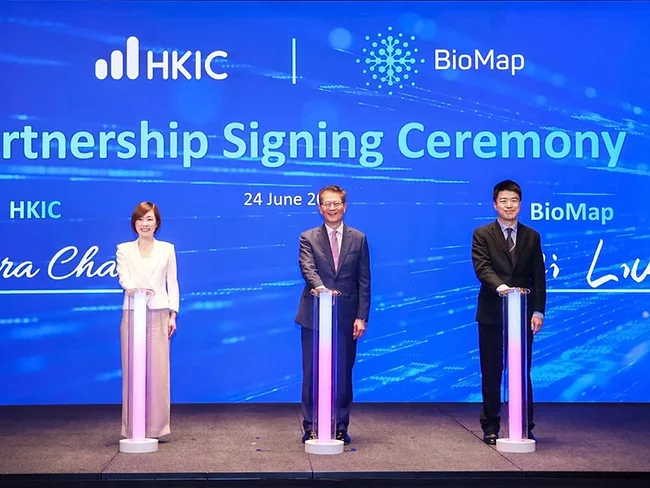
Silicon Valley-based Biomap is setting up a new global biocomputing innovation hub, dubbed Biomap Innohub, in Hong Kong as the local government ramps up investment to build supercomputing prowess, Vicky Qu, senior vice president of Biomap, told BioWorld. The goal is to accelerate novel drug product development and commercialization with biocomputing.
In the recently cast shadow of the U.S. Supreme Court’s Loper Bright decision that unraveled Chevron deference for federal agencies, the FTC’s broad rule banning noncompete employment clauses is on shaky ground. The first tremor hit July 3 when the U.S. District Court for the Northern District of Texas temporarily enjoined the FTC Noncompete Rule that is scheduled to go into effect Sept. 4 on the grounds that the agency overstepped its authority.
Soligenix Inc. investors were extremely enthusiastic about the positive interim update for the company’s cancer therapy and light device, Hybryte, for treating for treating early stage cutaneous T-cell lymphoma. The Princeton, N.J.-based company’s stock (NASDAQ:SNGX) soared a whopping 464% before closing at a more modest but still massive of 271% increase to $7.42 each on July 9.
Confidence in working with Chinese biopharma companies has dropped by 30% to 50% for U.S.-based life sciences companies, with Chinese contract development and manufacturing organizations the hardest hit, according to a recent LEK survey of global life sciences companies on the impact of the pending U.S. Biosecure Act.
The U.S. Department of Health and Human Services (HHS) and the FDA already are getting a glimpse of the post-Chevron world and how the Supreme Court’s June 28 unwinding of the 40-year-old Chevron deference could rein in agency policies that defy Congress’ expressed intent.
In a ruling delivered June 28, the U.S. Supreme Court brought an end to four decades of a practice of judicial deference to federal government agencies in litigation under the Chevron doctrine, a practice that some argue has enabled regulatory mischief.
In a 5-4 decision June 27, the U.S. Supreme Court scuttled a Purdue Pharma LP’s bankruptcy plan that would have discharged any claims against the Sackler family, which owned and controlled the company that made billions of dollars from its sales of Oxycontin (oxycodone).
Radiopharm Theranostics Ltd. announced a AU$70 million (US$46.69 million) institutional placement, and as part of that capital raise, radiopharma company Lantheus Holdings, Inc., has agreed to make an initial equity investment of AU$7.5 million.
 RSS
RSS