Boundless Bio Inc. got a lukewarm welcome on Nasdaq after pricing its IPO of 6.25 million shares at the midpoint price of $16 per share, raking in about $100 million in gross proceeds to advance its pipeline of ecDNA-driven drugs targeting oncogene-amplified tumors.
Scientists from the Australian National University have discovered the gene mutation responsible for causing psoriasis, and the findings could lead to improved diagnosis and treatment for patients with psoriasis and psoriatic arthritis, a chronic inflammatory skin disease. “We were able to identify the gene that could be important in enabling this progression from a skin-only condition to a skin-and-joint condition,” lead study author Chelisa Cardinez told BioWorld.
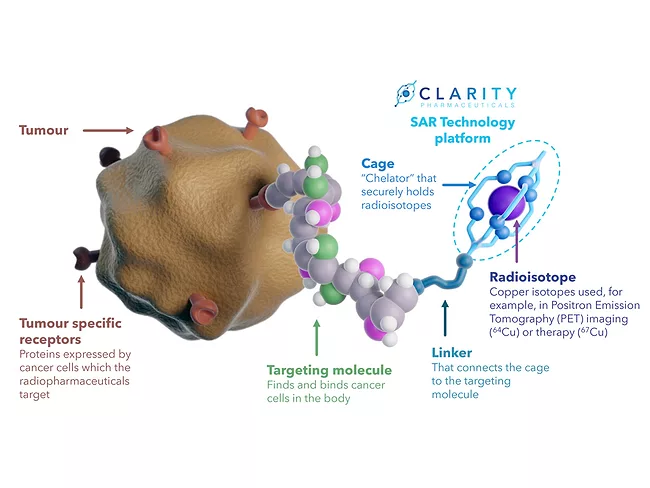
Clarity Pharmaceuticals Ltd. raised AU$121 million (US$79.29 million) through a private placement that will fund the company’s radiopharma pipeline comprising targeted copper therapies out to early 2026.
China’s National Medical Products Administration has cleared China Grand Pharmaceutical and Healthcare Holdings Ltd. to advance radiopharmaceutical agent ITM-11 (177Lu-edotreotide) to phase III trials in gastroenteropancreatic-neuroendocrine tumors
Eledon Pharmaceuticals Inc.’s tegoprubart, an investigational anti-CD40 ligand antibody, was used as part of the immunosuppressive regimen after the first-ever transplant of a kidney from a genetically modified pig to a human. The tegoprubart procedure was done March 16 at Massachusetts General Hospital on a 62-year-old man with end-stage renal disease.
Serac Healthcare Ltd.’s imaging agent, 99m Tc-maraciclatide, enables visualization of early-stage endometriosis, preliminary data from a study presented last week at the Society for Reproductive Investigation conference in Vancouver demonstrated. With millions of women suffering from the debilitating condition globally, maraciclatide has the potential to not only help with diagnosis but also with the development of new therapeutics, David Hail, CEO of Serac, told BioWorld.
Validating Fusion Pharmaceuticals Inc.’s radiopharmaceutical technology and manufacturing capabilities, Astrazeneca plc offered to buy the firm for $2 billion up front in cash, plus a contingent value right that could raise the total deal value by another $400 million.
Techbio specialist Relation Therapeutics Ltd has raised $35 million in new seed funding, bringing total seed money to $60 million, as it advances development of its in silico/wet lab platform for identifying drug targets in the non-coding parts of the genome. The company is building a “lab in the loop” system where in depth ‘omics profiles of single cells from fresh patient tissues are analyzed by its machine learning engine to uncover the genetic basis of clinical phenotypes and identify novel targets.
Wuxi Apptec quit its membership in the Biotechnology Innovation Organization (BIO) after U.S. Congressman Rep. Mike Gallagher (R-Wis.) sent a March 5 letter to Attorney General Merrick Garland, asking the Department of Justice to investigate BIO because its lobbying efforts on behalf of Wuxi suggested it was operating as an unregistered agent of a foreign company while advancing the interests of the People’s Republic of China and the Chinese Communist Party.

 RSS
RSS