Research into the regulation of gene expression experienced a significant breakthrough with the discovery of microRNA, small RNA molecules that do not code for proteins but control their translation. This finding has earned its authors Victor Ambros and Gary Ruvkun the 2024 Nobel Prize in Physiology or Medicine.
Radiopharmaceutical company Telix Pharmaceuticals Ltd. is continuing its buying spree to shore up dominance in the radiopharmaceutical market with its latest acquisition of RLS Radiopharmacies for $250 million to expand its U.S. manufacturing presence and establish a next-generation radiometal production network.
With an eye on shutting down national security threats and securing American innovation, the U.S. House overwhelmingly passed the Biosecure Act Sept. 9 with a vote of 306-81. The next stop on the bill’s path to enactment is a Senate vote and, if it gets that, then on to the president’s desk.
Confidence in working with Chinese biopharma companies has dropped by 30% to 50% for U.S.-based life sciences companies, with Chinese contract development and manufacturing organizations the hardest hit, according to a recent LEK survey of global life sciences companies on the impact of the pending U.S. Biosecure Act.
Radiopharm Theranostics Ltd. announced a AU$70 million (US$46.69 million) institutional placement, and as part of that capital raise, radiopharma company Lantheus Holdings, Inc., has agreed to make an initial equity investment of AU$7.5 million.
The U.S. Trade Representative (USTR) once again called out the usual cast of characters in this year’s Special 301 Report for not playing by the rules when it comes to protecting intellectual property. And once again, industry asked the USTR to go further by placing new players on the list.
The U.S. FDA granted fast track designation to Telix Pharmaceutical Ltd.’s TLX101-CDx for glioma imaging as the firm prepares to file its NDA in the first half of 2024, a Telix spokesperson told BioWorld.
Alzheimer’s disease (AD) is recognized worldwide for its debilitating symptoms of declining cognitive function and gradual memory loss. What remains less clear is exactly what causes the neurodegenerative disease, and how to treat it. “Alzheimer’s disease is characterized by two key pathologies – beta-amyloid plaques and tau neurofibrillary tangles.” Seung-Yong Yoon, CEO of Adel Inc., told BioWorld. “Adel is looking to develop a tau-targeting drug, considering tau has been more correlated with AD symptom progression, and the industry’s need for tau pipelines.”
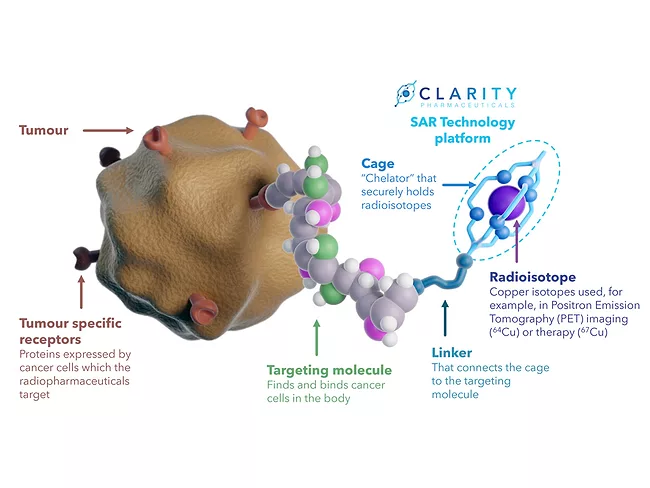
Clarity Pharmaceuticals Ltd. raised AU$121 million (US$79.29 million) through a private placement that will fund the company’s radiopharma pipeline comprising targeted copper therapies out to early 2026.
In a move to build up its dominance in the radiopharma market, Telix Pharmaceuticals Ltd. said it plans to acquire radioisotope production technology firm Artms Inc. and its advanced cyclotron-based isotope production platform, manufacturing plant and stockpile of ultra-pure rare metals.

 RSS
RSS